
ProducePay Business Model: Transforming Fresh Produce Supply Chains with Predictable Commerce
Discover how ProducePay’s innovative business model is revolutionizing the global fresh produce supply chain with fintech, transparency, and sustainability—empowering growers, marketers, and retailers through Predictable Commerce Programs.
In the heart of Mexico’s agricultural valleys, a fourth-generation farmer named Pablo Borquez Schwarzbeck saw firsthand the volatility and inefficiency plaguing the global fresh produce trade. After returning from Cornell University with an MBA and a vision, Pablo founded ProducePay—a company determined to eliminate the economic and food waste that so often undermined growers and buyers alike.
ProducePay’s journey began with a simple but powerful insight: small and medium-sized growers, especially in Latin America, struggled to access working capital and reliable markets. Meanwhile, retailers and marketers faced unpredictable supply, quality issues, and a lack of transparency. The result? Billions lost to spoilage, rejected shipments, and missed opportunities.
As global demand for fresh produce soared and consumers demanded more traceable, sustainable food, the need for a new model became urgent. According to industry reports, food waste in the supply chain accounts for up to 30% of global production, and supply chain disruptions have only increased post-pandemic. ProducePay’s solution—combining fintech, data-driven insights, and a digital trading platform—directly addresses these pain points.
Today, ProducePay’s Predictable Commerce Platform bundles working capital, sourcing, and end-to-end visibility, creating a more connected, sustainable, and profitable supply chain for all stakeholders. By aligning incentives and leveraging technology, ProducePay is not just financing crops—it’s transforming the way fresh produce moves from farm to table.

Pablo Borquez Schwarzbeck
Founder at Produce Pay Inc.
Image source: LinkedIn profile of Pablo Borquez Schwarzbeck – founder of ProducePay.
Make it stand out
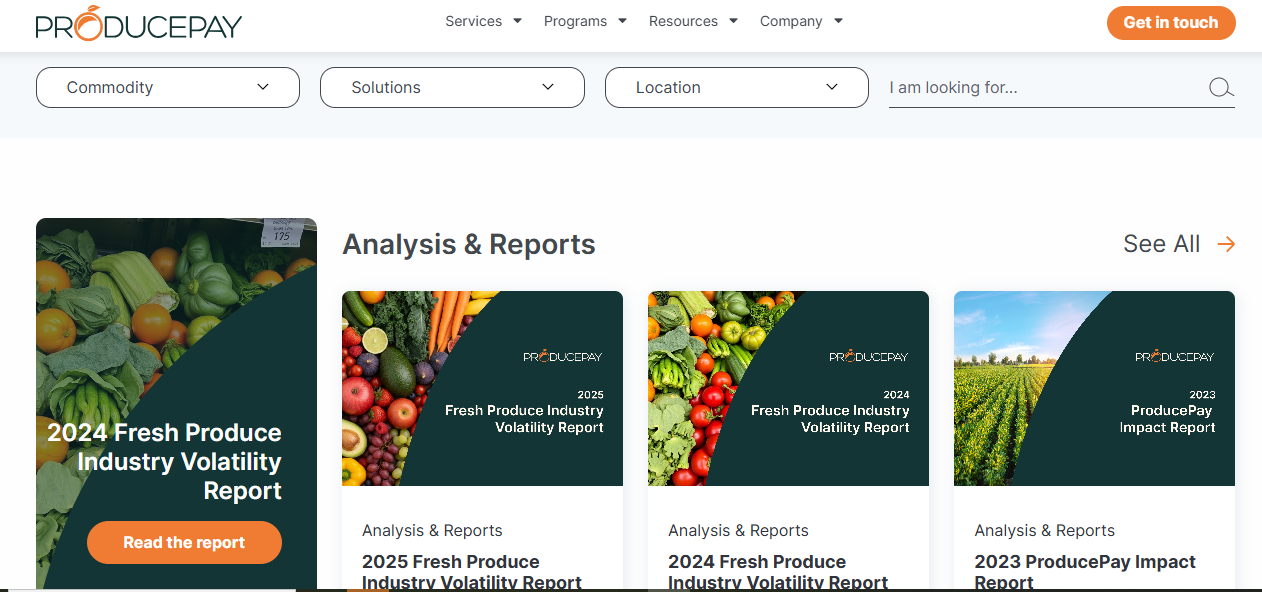
ProducePay Predictable Commerce Platform and supply-chain visibility dashboard
Image credit: ProducePay – Predictable Commerce Platform and supply-chain visibility dashboard. (https://producepay.com/resource-center/ )Used for illustrative purposes; all rights reserved by ProducePay.
Introduce the IFAL Business Model Framework
At IFAL, business model potential is assessed around four critical elements:
Value Proposition: Defines the core target customer/consumer segment and the key product/service attributes the targeted segment pays for.
Distribution Strategy: The revenue model offered to the channels through which the product/service is delivered to the target customer/consumer segment.
Complementary Partnerships: External alliances and interdependencies that are critical to produce and deliver the value proposition at optimal scale and profitable unit economics.
Sustainability Elements: Economic, social, and environmental outcomes delivered by the value proposition.
Target Segment & Value Proposition
ProducePay’s core value proposition is to make the global fresh produce supply chain predictable, transparent, and sustainable. The platform primarily serves:
Growers (especially small and medium-sized in Latin America): Access to pre-season and quick-pay working capital, rapid payments, and reliable offtake.
Marketers/Exporters: Reliable supply programs, integrated financing, and shipment visibility.
Retailers: Assured 52-week supply, predictable pricing, lower rejection rates, and traceability.
Investors/Development Partners: De-risked, bankable exposure to agricultural working capital.
Differentiators:
Bundled Predictable Commerce Programs integrating finance, sourcing, and visibility.
Rapid payments (up to 96% of shipment value within 24 hours).
End-to-end digital visibility and data-driven insights.
Shared risk models aligning incentives across the chain.
Distribution Strategy
ProducePay’s distribution strategy is built on a digital platform that connects growers, marketers, and retailers through:
Direct digital trading and sourcing: Reducing reliance on traditional middlemen.
Program-based supply chains: Structured, multi-party programs for specific commodities and retailers.
Integrated visibility and quality tools: Supporting predictable supply and reducing rejections.
Geographic expansion: Focused on Latin America, the U.S., and now Europe.
Future Channels:
- Expansion into more commodities (avocados, berries, citrus).
- Scaling Predictable Commerce Programs to new regions and retail partners.
Complementary Partnerships
ProducePay’s model thrives on partnerships:
Integrated supplier and retailer programs: Co-developing Predictable Commerce Programs with major growers and retailers.
Development finance partners: Collaborations with organizations like IDB Invest to fund working capital for SME growers.
Technology and logistics partners: Enhancing platform capabilities and supply chain reliability.
On-the-ground agronomists: Supporting quality and risk management.
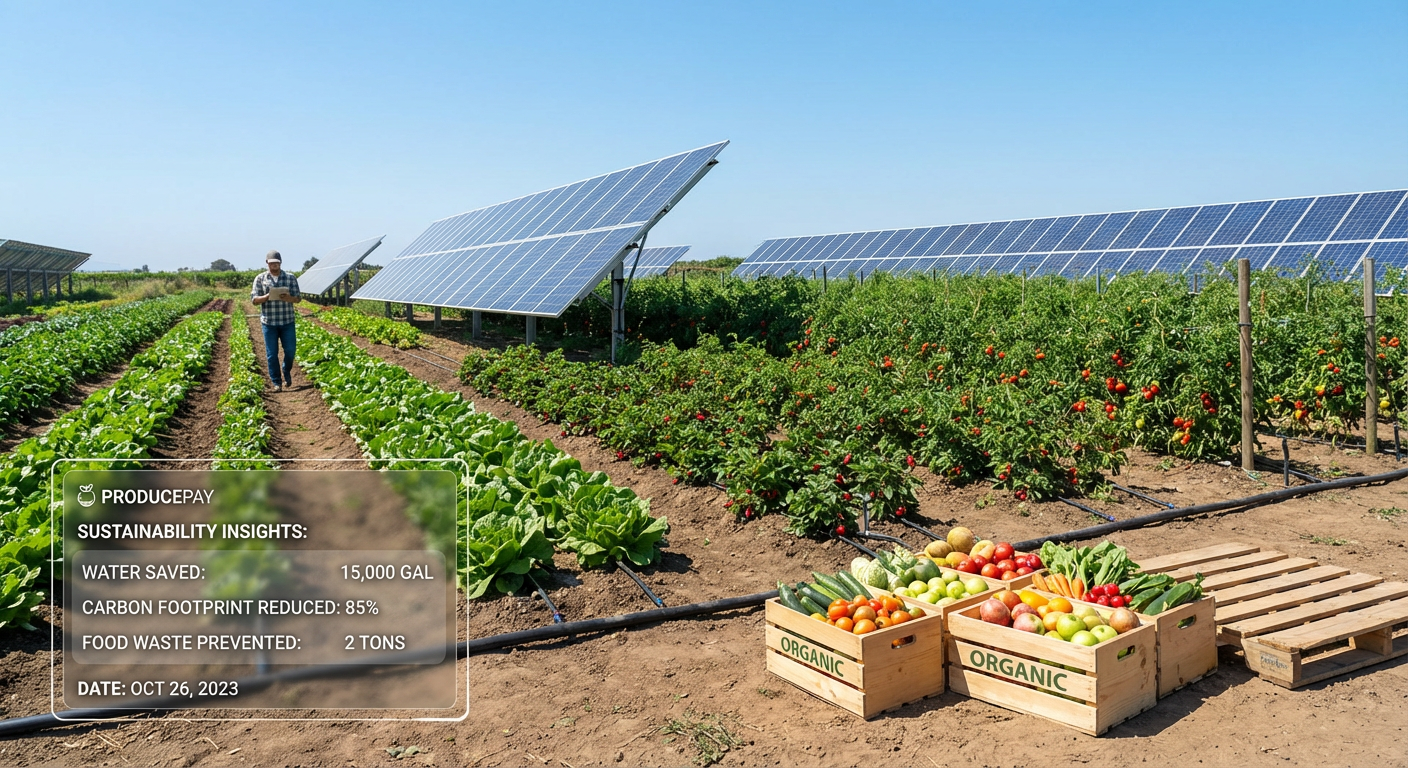
Sustainability at the Core of the Business Model
Sustainability is embedded in ProducePay’s DNA:
Reducing food and economic waste: Achieved a 90% reduction in retail rejections, 31% fewer days in transit, and 41% fewer days in storage.
Supporting sustainable farming: Stable financing and predictable programs enable better planning and community outcomes.
Traceability and transparency: Digital tools provide end-to-end visibility, supporting responsible sourcing and consumer trust.
Strategic Dilemmas
Scaling value proposition: Balancing rapid growth with quality and risk management.
Distribution challenges: Managing channel conflict and value dilution as the platform expands.
Partnership complexity: Aligning incentives and managing diverse partner needs across regions.
Sustainability trade-offs: Ensuring all supply chain partners uphold environmental and social standards.
Key Takeaways
ProducePay’s Predictable Commerce Platform is redefining fresh produce supply chains.
Integrated finance, sourcing, and visibility create value for all stakeholders.
Partnerships and technology are central to scaling and sustainability.
Strategic dilemmas remain around scale, distribution, and partner alignment.
Call to Action
Leading an Agribusiness and ready to design your business model with the IFAL framework while aligning your execution team?
Connect with us here👉https://www.ifal.ac/contact-us
References
-ProducePay Official Website https://producepay.com
- TechCrunch: ProducePay raises $38M to tackle produce supply chain waste https://techcrunch.com/2024/02/05/producepay-raises-38m-to-tackle-produce-supply-chain-waste/
- AgFunderNews: ProducePay discusses growth, partnerships, and middlemen https://agfundernews.com/qa-following-a-38m-raise-producepay-discusses-growth-partnerships-and-the-boogeyman-of-the-supply-chain
- BusinessWire: ProducePay Launches Visibility Solution https://www.businesswire.com/news/home/20240314695622/en/ProducePay-Launches-Visibility-Solution-to-Improve-Transparency-and-Reduce-Waste-in-Fresh-Produce-Supply-Chain
- IDB Invest: ProducePay https://idbinvest.org/en/projects/producepay
- Cornell eLab: ProducePay Closes $43 Million Series C Funding https://www.elabstartup.com/produce-pay-closes-43-million-series-c-funding/
Disclaimer
This article is for educational and informational purposes only. We are not affiliated with or endorsed by ProducePay or any company mentioned. All trademarks and images are the property of their respective owners, and readers use this information at their own risk.
