
Chobani Business Model: How Better Food for More People Disrupted Dairy
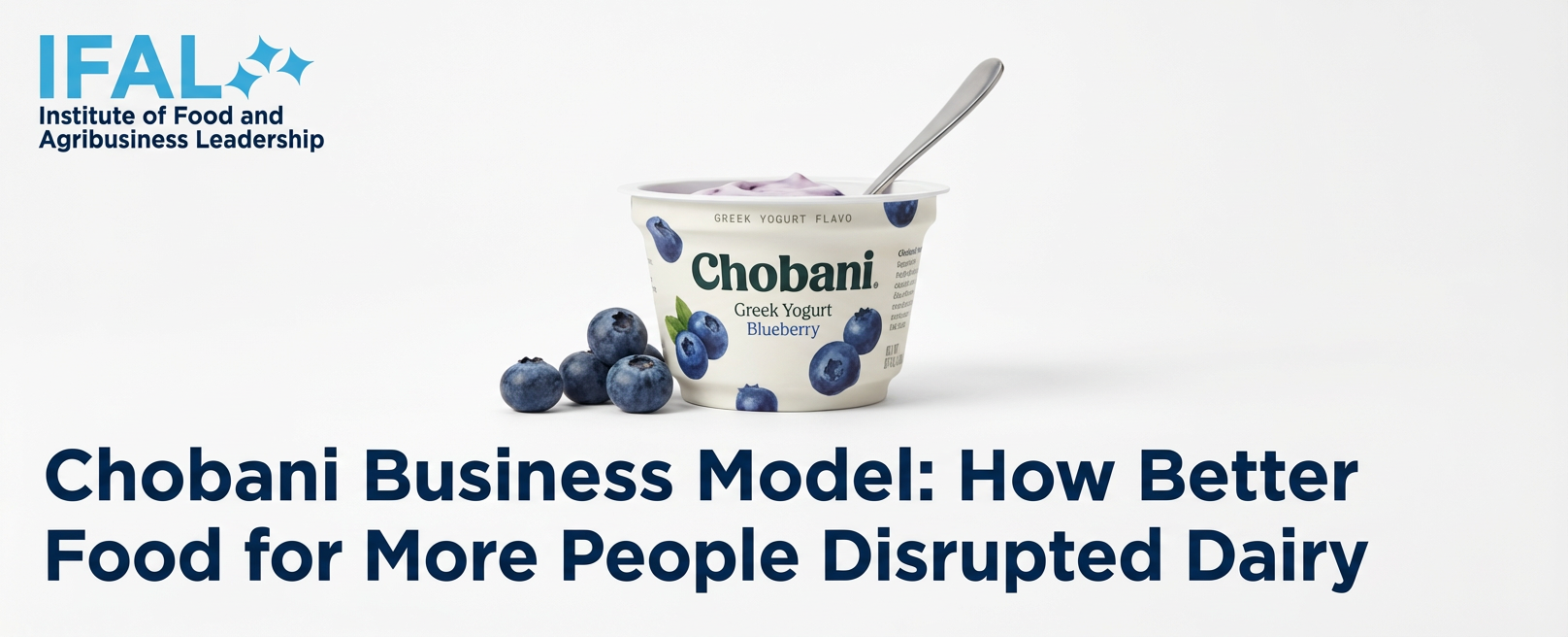
Discover how Chobani’s innovative business model transformed the U.S. yogurt market, championing natural ingredients, wide distribution, and sustainability. Explore their value proposition, partnerships, and strategic dilemmas through the IFAL framework.
Introduction: The Chobani Story
In 2005, Hamdi Ulukaya, a Turkish immigrant with a passion for authentic dairy, saw a gap in the American market: yogurt was bland, overly sweet, and lacked the rich, creamy texture he remembered from home. With a small loan and a bold vision, Ulukaya purchased a defunct yogurt plant in upstate New York. He hired five employees from the local community and set out to create a product that would change the way Americans thought about yogurt.
Chobani’s journey is a classic tale of disruption. By introducing thick, protein-rich Greek yogurt made from natural ingredients, Chobani not only revived a struggling factory town but also ignited a yogurt revolution across the U.S. The company’s mission—“Better food for more people”—resonated with a new generation of health-conscious consumers seeking transparency, quality, and authenticity.
The market opportunity was immense. U.S. yogurt consumption was growing, but most options were sugary and lacked nutritional value. Chobani’s focus on simple ingredients, high protein, and no GMOs met unmet needs for healthier, more satisfying snacks. As trends shifted toward wellness, clean labels, and plant-based alternatives, Chobani expanded into oat milk, dairy creamers, and probiotic drinks, capturing even more market share.
Today, Chobani is a household name, available in supermarkets nationwide and celebrated for its commitment to social impact, sustainability, and employee welfare. The company’s value proposition—delivering delicious, nutritious food while doing good—continues to align with evolving consumer expectations.

*Image source: Pexels / Jenna Hamra*
Introducing the IFAL Business Model Framework
At IFAL, we assess business model potential around four critical elements:
Value Proposition: Defines the core target customer/consumer segment and the key product/service attributes the targeted segment pays for.
Distribution Strategy: The revenue model offered to the channels through which the product/service is delivered to the target customer/consumer segment.
Complementary Partnerships: External alliances and interdependencies that are critical to produce and deliver the value proposition at optimal scale and profitable unit economics.
Sustainability Elements: Economic, social, and environmental outcomes delivered by the value proposition.
Target Segment & Value Proposition
Chobani’s primary target segment is health-conscious consumers—families, young professionals, and fitness enthusiasts—seeking nutritious, convenient, and great-tasting food. What sets Chobani apart is its unwavering commitment to:
All-natural ingredients (no artificial flavors, preservatives, or GMOs)
High protein content and creamy texture
Transparent sourcing and local milk partnerships
Expanding product lines (Greek yogurt, oat milk, creamers, probiotic drinks)
Chobani’s value proposition is built on trust, quality, and innovation, making it the go-to brand for those who want better food without compromise.

Distribution Strategy
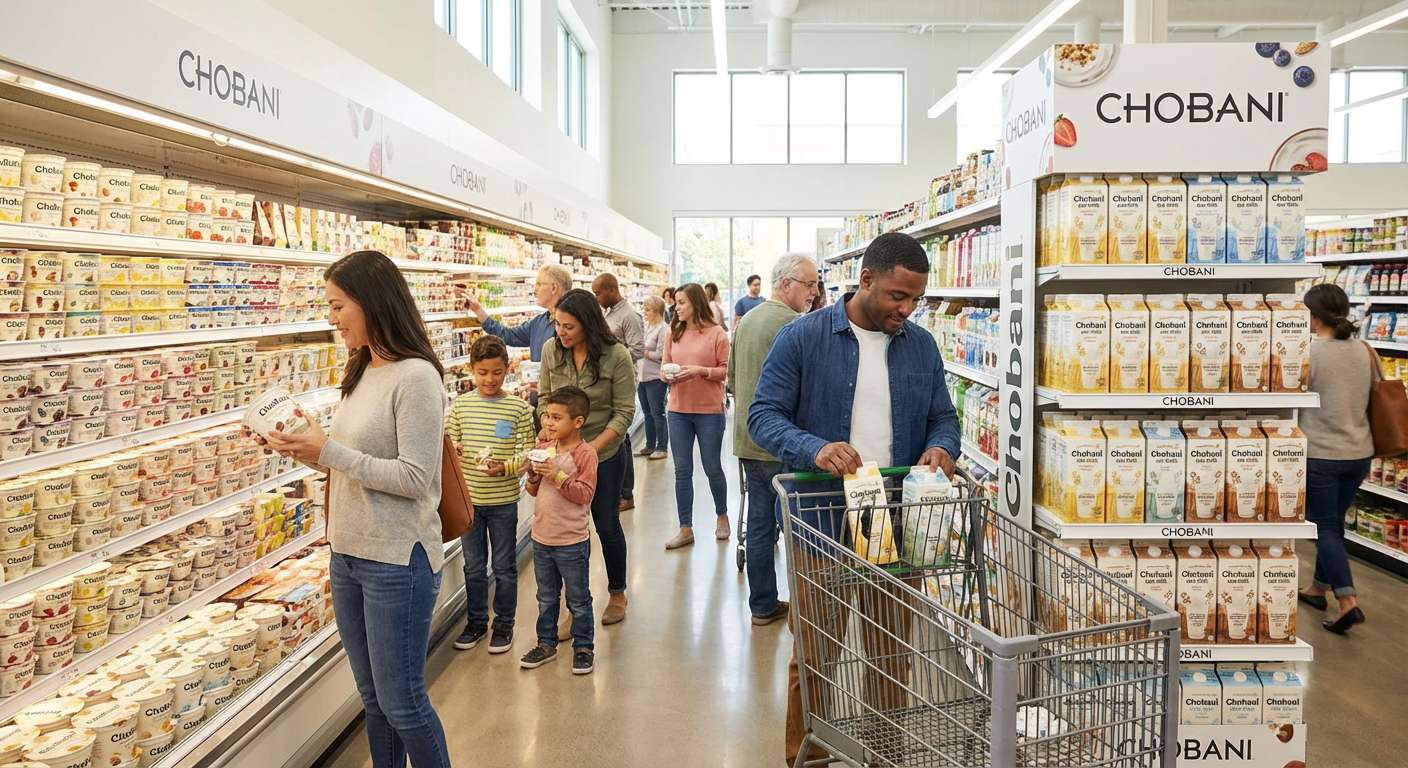
Chobani’s distribution strategy is a masterclass in scale and accessibility. From the outset, Chobani prioritized placement in major grocery chains, big-box retailers, and food service channels, ensuring its products were available wherever consumers shopped.
The company leverages:
Nationwide retail partnerships (Walmart, Target, Kroger, etc.)
Food service and convenience channels
Direct-to-consumer options via online platforms
This omnichannel approach maximizes reach and brand visibility, supporting rapid growth and consumer loyalty.
Complementary Partnerships
Chobani’s success is rooted in strong partnerships:
Local Dairy Farmers: Sourcing high-quality milk and supporting rural economies.
Retailers & Distributors: Ensuring shelf space and nationwide availability.
Innovation Partners: Collaborating on new product development (e.g., plant-based lines).
Community Organizations: Advancing social impact and food access initiatives.
These alliances enable Chobani to deliver on its promise of quality, scale, and positive impact.
Sustainability at the Core of the Business Model
Sustainability is woven into Chobani’s DNA. The company’s initiatives include:
Supporting local agriculture and fair labor practices
Reducing environmental footprint (energy-efficient plants, waste reduction)
Investing in recyclable packaging and renewable energy
Championing social causes (refugee hiring, food donations)
Chobani’s holistic approach delivers economic, social, and environmental value, setting a benchmark for responsible food business.
Strategic Dilemmas
Scaling Quality: Maintaining product quality and sourcing standards as the company grows.
Distribution Complexity: Managing channel conflict and value dilution in a crowded retail landscape.
Partnership Risks: Ensuring alignment with partners on sustainability and ethical sourcing.
Sustainability Trade-offs: Balancing cost pressures with investments in sustainable practices.
Key Takeaways
Chobani’s business model thrives on authenticity, quality, and social impact.
Omnichannel distribution fuels rapid growth and brand loyalty.
Strategic partnerships are essential for scale and innovation.
Sustainability is a core differentiator and operational priority.
Navigating scale and sustainability remains an ongoing challenge.
Call to Action
Inspired by Chobani’s journey? Learn how to build sustainable, high-impact food businesses with IFAL’s Mini MBA in Sustainable Food Supply Chains.
👉 Explore IFAL Programs: https://www.ifal.ac
References
Chobani Official Website: https://www.chobani.com
Chobani - Wikipedia: https://en.wikipedia.org/wiki/Chobani
Business Case Study: Chobani Yogurt Company - Causeartist: https://www.causeartist.com/case-study-chobani-yogurt-company/
Chobani’s Founder on Growing a Start-Up Without Outside Investors - HBR: https://hbr.org/2013/10/chobanis-founder-on-growing-a-start-up-without-outside-investors
Chobani doubles down on corporate impact strategy - Axios: https://www.axios.com/2024/03/28/chobani-impact-strategy
Disclaimer: This article is for educational and informational purposes only. We are not affiliated with or endorsed by Chobani or any company mentioned. All trademarks and images are the property of their respective owners, and readers use this information at their own risk.
