
McCarty Family Farms Business Model: Sustainable Dairy Innovation at Scale
Introduction
In the rolling hills of Pennsylvania, the McCarty family’s dairy journey began over a century ago with just a handful of cows and a red barn. Fast forward to today, and McCarty Family Farms stands as a beacon of sustainable dairy innovation, operating across Kansas and Nebraska with nearly 20,000 cows and a state-of-the-art on-farm processing plant. The transformation from a small, family-run operation to a high-tech, vertically integrated dairy powerhouse is a testament to the vision and grit of Tom and Judy McCarty and their four sons—Clay, Mike, Dave, and Ken.
The family’s bold move from Pennsylvania to Kansas in the early 2000s was driven by a desire to expand and innovate. They saw an opportunity to build a dairy business that could not only scale but also set new standards for animal welfare, environmental stewardship, and community impact. Today, McCarty Family Farms is recognized as one of the few large-scale dairies in the world to achieve B Corp certification, reflecting its commitment to verified social and environmental performance.
The market opportunity for sustainable, traceable dairy ingredients has never been greater. With consumer demand for transparency and lower-carbon food options on the rise, major brands like Danone have turned to McCarty Family Farms as a model supplier. Their unique value proposition—high-quality, consistent milk produced with a lower environmental footprint—aligns perfectly with the needs of food companies seeking to meet ambitious ESG and Scope 3 targets.
But the McCarty story is about more than just milk. It’s about pioneering on-farm water reclamation, investing in animal welfare, and ensuring every team member earns a living wage. It’s about building a business that honors its rural roots while leading the way in regenerative agriculture and sustainable supply chains.
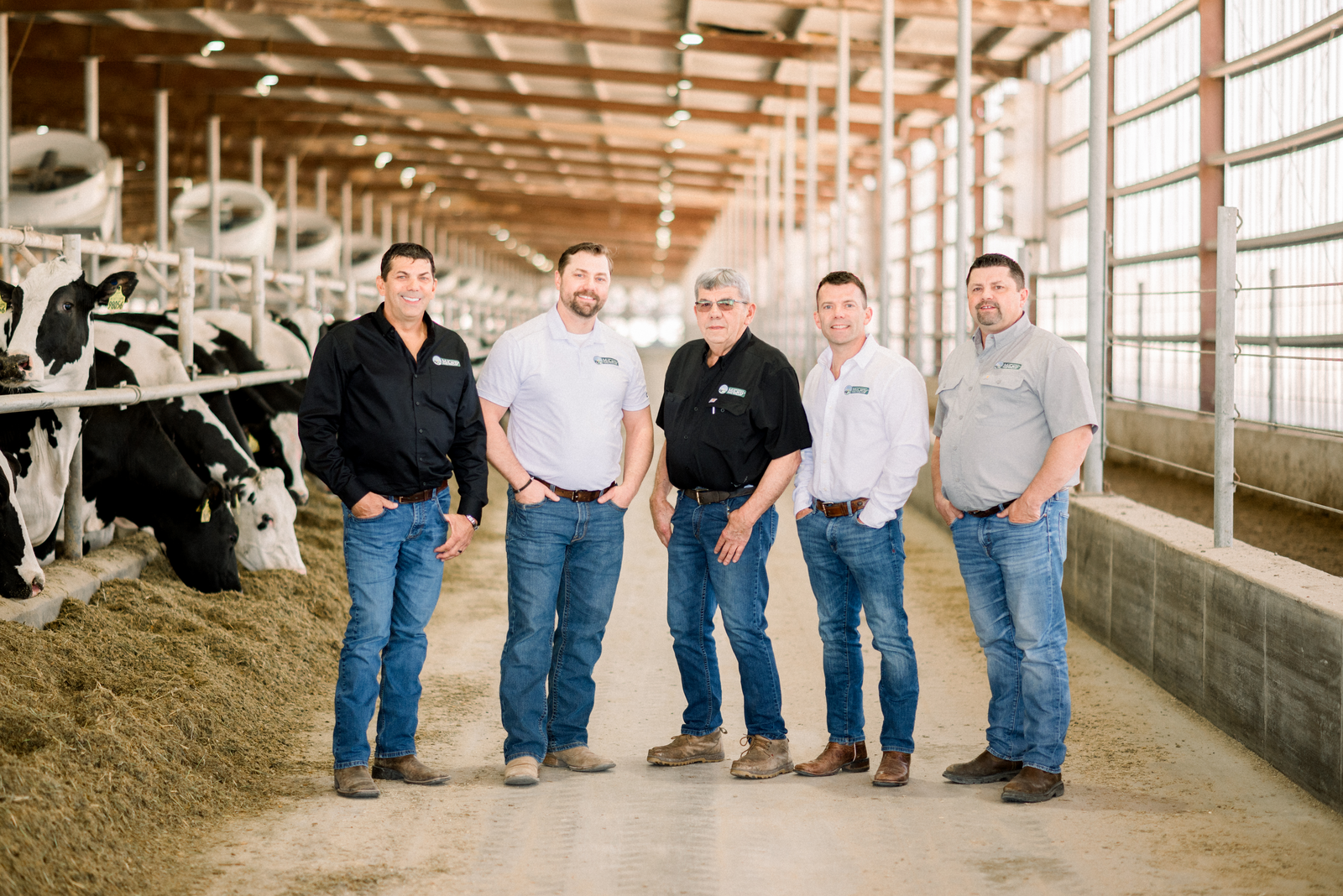
McCarty Family
Image source: The Bullvine – “The McCarty Magic: How a Family Farm Became the Dairy Industry’s Brightest Star”
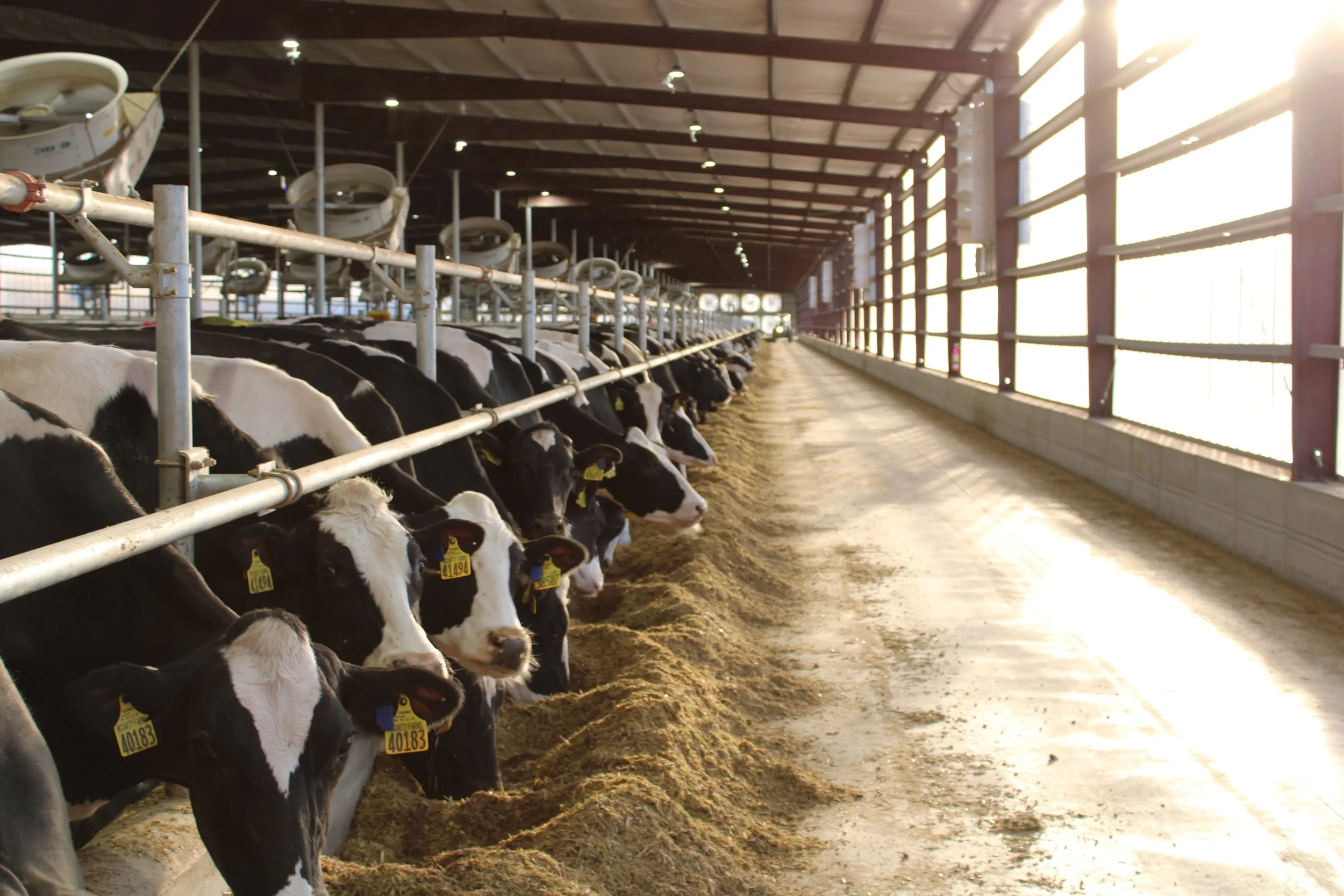
McCarty Family Farms Dairy Cows
Image courtesy of McCarty Family Farms, used from the McCarty Family Farms official website.
IFAL Business Model Framework
At IFAL, we assess business model potential around four critical elements:
Value Proposition: Defines the core target customer/consumer segment and the key product/service attributes the targeted segment pays for.
Distribution Strategy: The revenue model offered to the channels through which the product/service is delivered to the target customer/consumer segment.
Complementary Partnerships: External alliances and interdependencies that are critical to produce and deliver the value proposition at optimal scale and profitable unit economics.
Sustainability Elements: Economic, Social and Environmental outcomes delivered by the value proposition.
Target Segment & Value Proposition
McCarty Family Farms’ primary customers are major food companies—most notably Danone North America—seeking high-quality, consistent, and sustainably produced dairy ingredients. Their value proposition is built on:
Consistent, high-quality milk with food safety and traceability.
Lower environmental footprint (CO₂e, water, animal welfare) verified by third parties.
Cost and logistics efficiencies via on-farm milk condensing.
Community and employee impact—100% living wage, local donations, rural job creation.
Their competitive advantage lies in vertical integration, B Corp certification, and a proven ability to help partners meet ESG goals.
Distribution Strategy
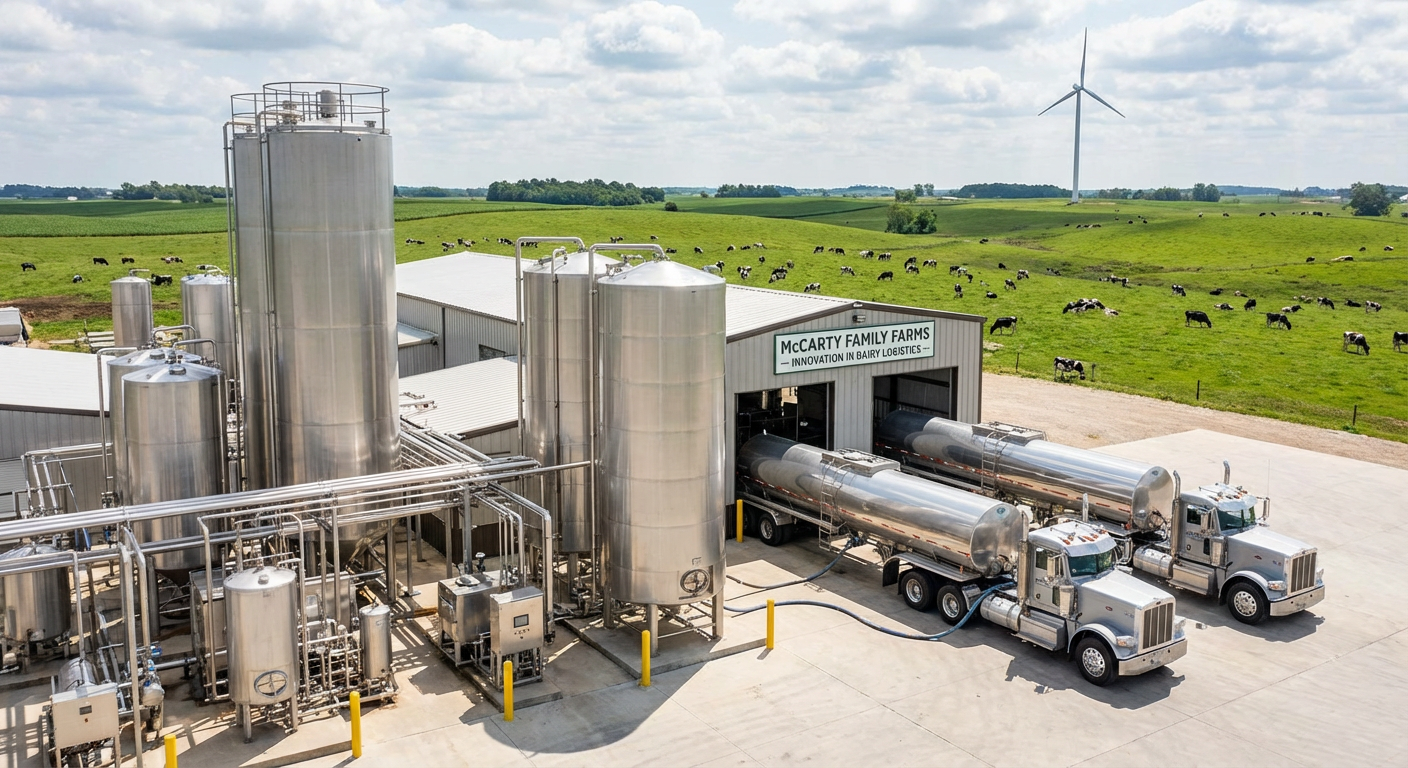
McCarty Family Farms’ distribution strategy centers on vertical integration and direct, long-term supply agreements. Milk is condensed on-site, reducing transport volume by 75% and slashing emissions and costs. The condensed milk is shipped directly to Danone’s processing plants, bypassing volatile spot markets and ensuring stable, traceable supply.
Future opportunities may include expanding to other CPG partners or leveraging their model for branded ingredient storytelling.
Complementary Partnerships
Key partnerships are central to McCarty’s model:
Danone North America: Long-term, direct supply and joint sustainability initiatives.
Eocene Environmental Group: Third-party verification of sustainability metrics.
Kansas State University: R&D on sand reclamation and environmental systems.
MVP Dairy: Sister operation mirroring sustainability and welfare practices.
These alliances enable McCarty to scale innovation, verify impact, and deliver on their value proposition.
Sustainability at the Core of the Business Model
Sustainability is woven into every aspect of McCarty Family Farms:
B Corp certification across all operations.
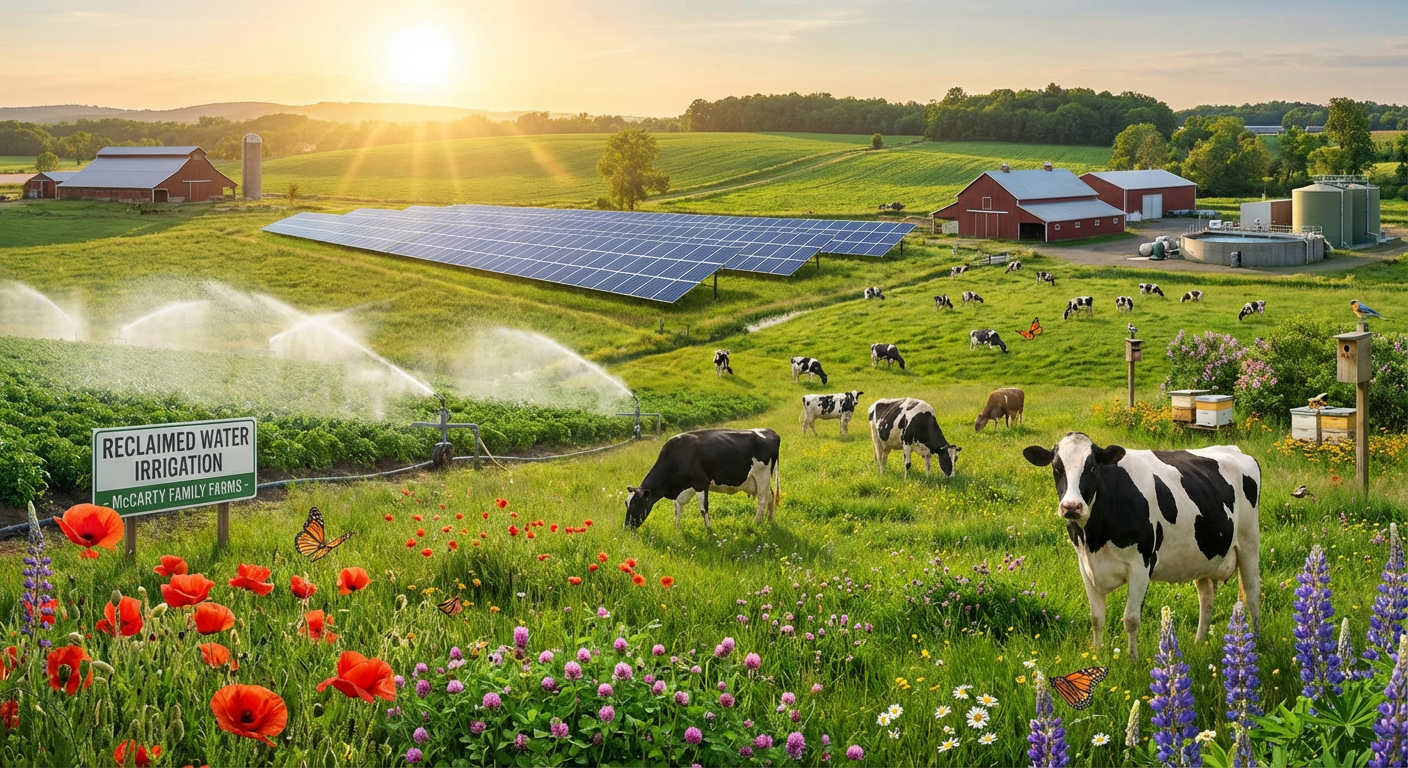
Water reclamation—recovering water from milk for crop irrigation.
Manure management—cutting greenhouse gases and recycling nutrients.
Soil health and biodiversity—cover crops, pollinator habitats, wildlife boxes.
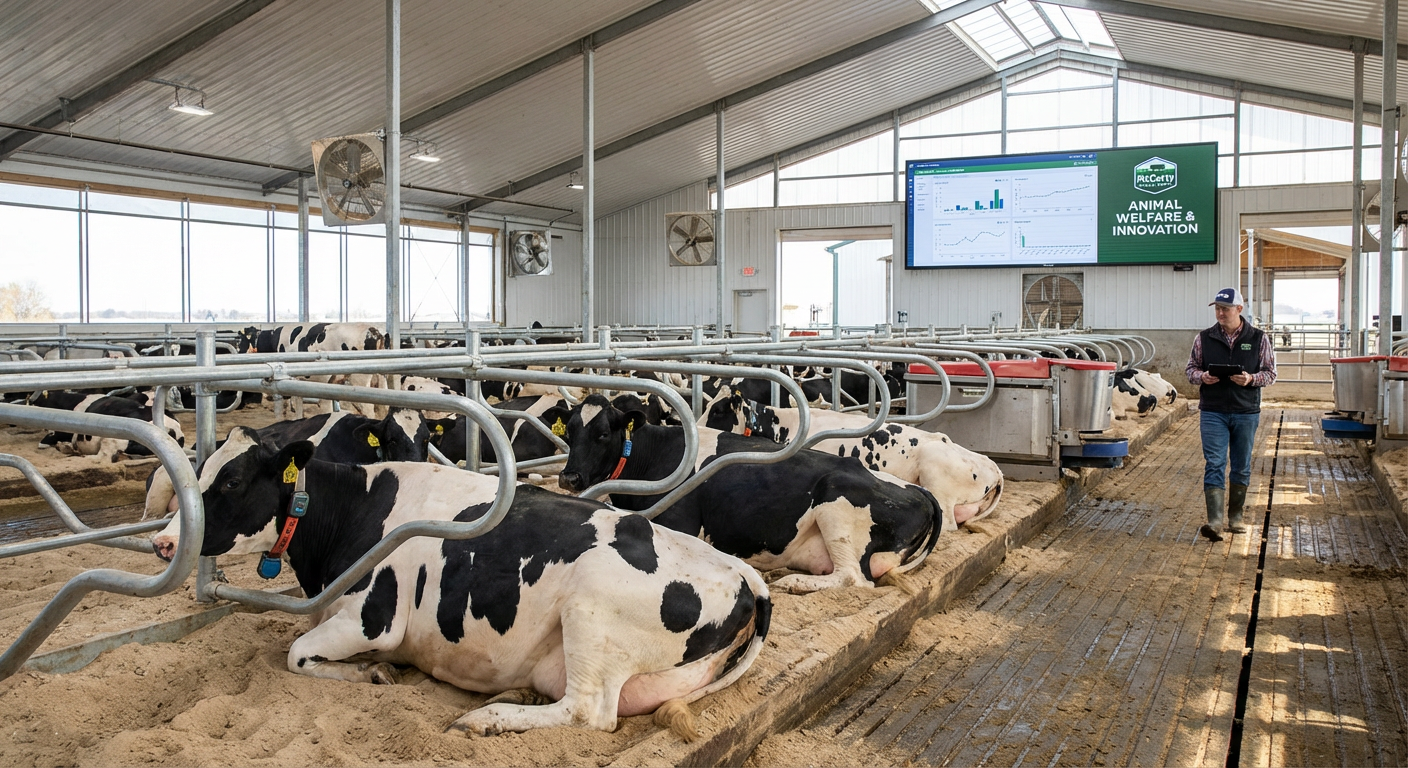
Animal welfare—highest Validus certification, low-stress handling.
Living wage and community investment—100% of employees at or above living wage, $65,000+ donated annually.
Strategic Dilemmas
Scaling value proposition: Maintaining quality and sustainability as operations grow.
Distribution challenges: Managing logistics, potential channel conflict if expanding beyond Danone.
Partnership complexity: Balancing partner requirements and maintaining independence.
Sustainability trade-offs: Continuous improvement needed to address any unsustainable components (e.g., methane, feed sourcing).
Key Takeaways
Vertical integration and B Corp certification set McCarty apart in the dairy industry.
Direct partnerships with major brands enable stable, high-value supply chains.
Sustainability is not just a value add—it’s core to the business model.
Continuous innovation in animal welfare, water, and resource management drives competitive advantage.
Continuing the Learning Journey
IFAL works with universities to deliver applied programmes for professionals and teams across food and agribusiness value chains.
You can explore our university partner programmes here, or connect with us here to discuss learning pathways for your organisation.
References
Disclaimer
This article is for educational and informational purposes only. We are not affiliated with or endorsed by McCarty Family Farms or any company mentioned. All trademarks and images are the property of their respective owners, and readers use this information at their own risk.