
Gene Editing for a Sustainable Food System: Inari Business Model
Introduction
Inari’s story begins in 2016, spun out of Flagship Pioneering, with a bold vision: to unlock the full potential of seeds and transform the global food system. Co-founded by Ignacio Martinez (founding CEO), David Berry, Dr. George Church, and Dr. Steve Jacobsen, Inari set out to address one of agriculture’s greatest challenges—feeding a growing population while reducing environmental impact.
The company’s SEEDesign™ platform combines artificial intelligence, genomics, and multiplex gene editing to design seeds that deliver higher yields with less land, water, and nitrogen. This approach directly addresses the stagnation in crop yield growth and the urgent need for sustainable intensification in agriculture.
The market opportunity is immense. Global demand for food is projected to rise by 50% by 2050, yet arable land and water resources are finite. Traditional breeding methods are slow and resource-intensive, often failing to keep pace with climate change and evolving pest pressures. Inari’s technology promises to accelerate genetic improvement, enabling farmers to produce more with less.
Recent funding rounds—$103M in 2024 and $144M in 2025—underscore investor confidence in Inari’s scalable, tech-driven approach. Strategic collaborations, such as with InterGrain in Australia, further expand their reach and impact.
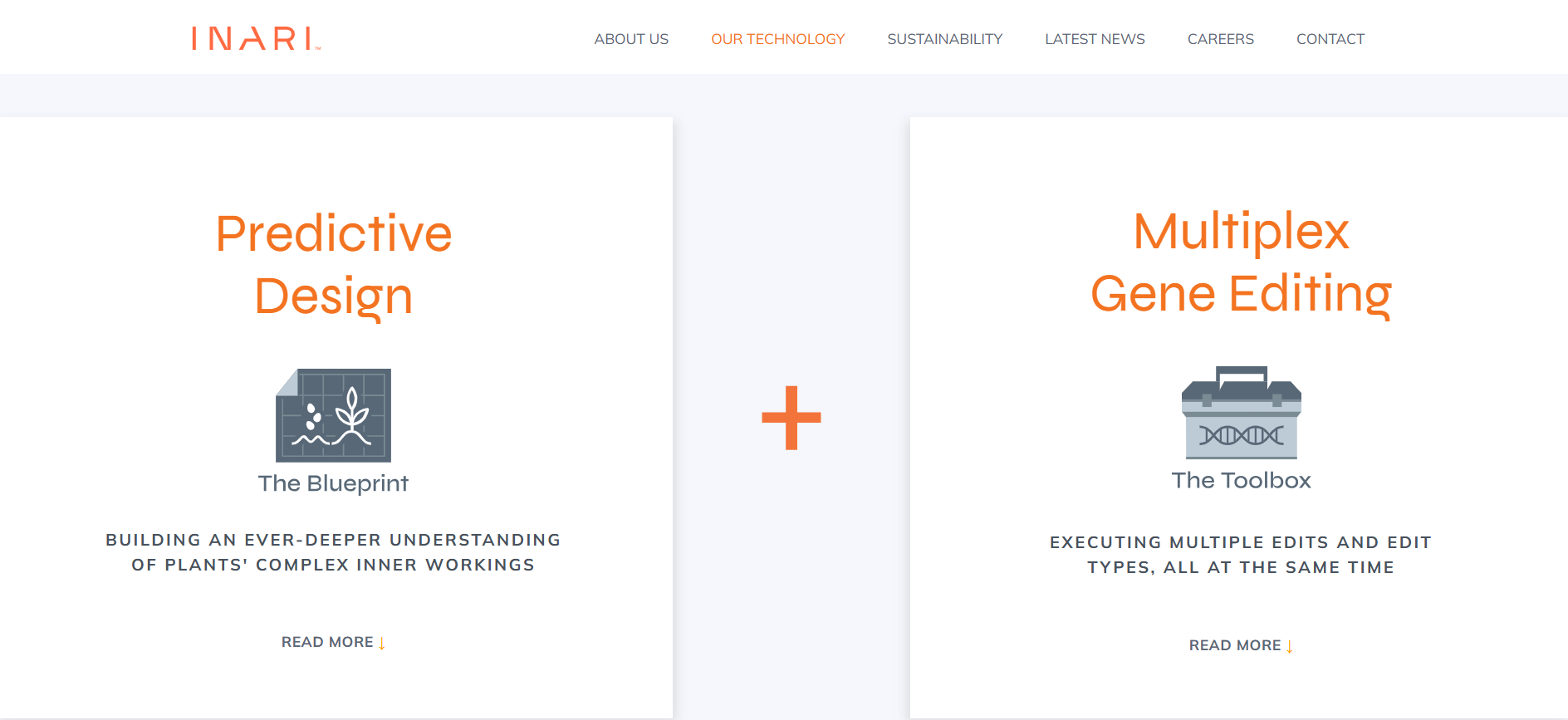
Image source: Inari website, Our Technology
Introducing the IFAL Business Model Framework
At IFAL, business model potential is assessed around four critical elements:
Value Proposition: Defines the core target customer/consumer segment and the key product/service attributes the targeted segment pays for.
Distribution Strategy: The revenue model offered to the channels through which the product/service is delivered to the target customer/consumer segment.
Complementary Partnerships: External alliances and interdependencies that are critical to produce and deliver the value proposition at optimal scale and profitable unit economics.
Sustainability Elements: Economic, Social, and Environmental outcomes delivered by the value proposition.
Target Segment & Value Proposition
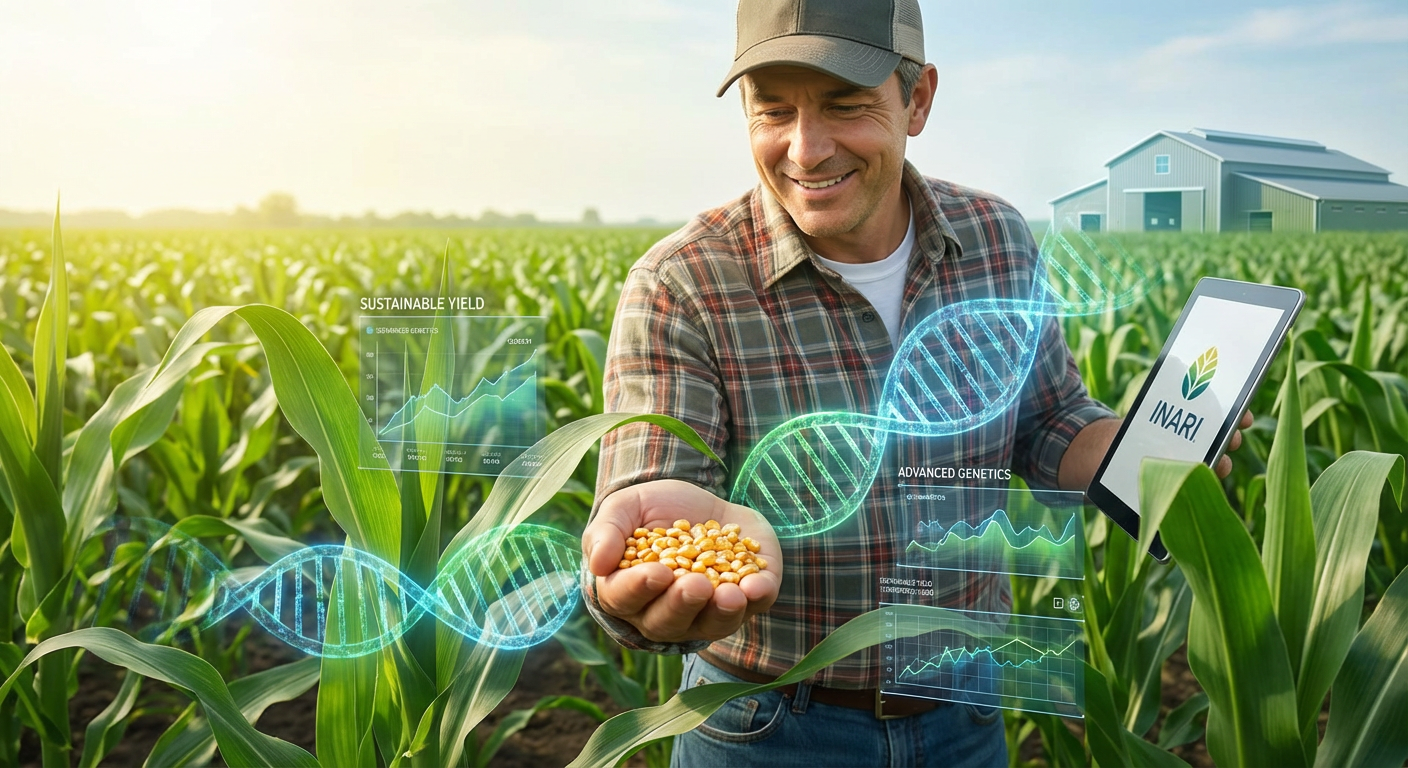
Inari’s primary customers are large-scale row crop farmers, seed companies, and agricultural cooperatives seeking higher yields, input efficiency, and climate resilience. What sets Inari apart is its ability to deliver:
Multiplex gene-edited seeds (corn, soy, wheat) with tailored traits for yield, water, and nitrogen efficiency.
Rapid innovation cycles using AI-driven predictive design, reducing time-to-market for new seed varieties.
Nature-positive outcomes—higher productivity with less environmental impact.
Farmers and seed companies pay for the promise of more robust, resilient crops that require fewer resources, directly translating to improved profitability and sustainability.
Distribution Strategy
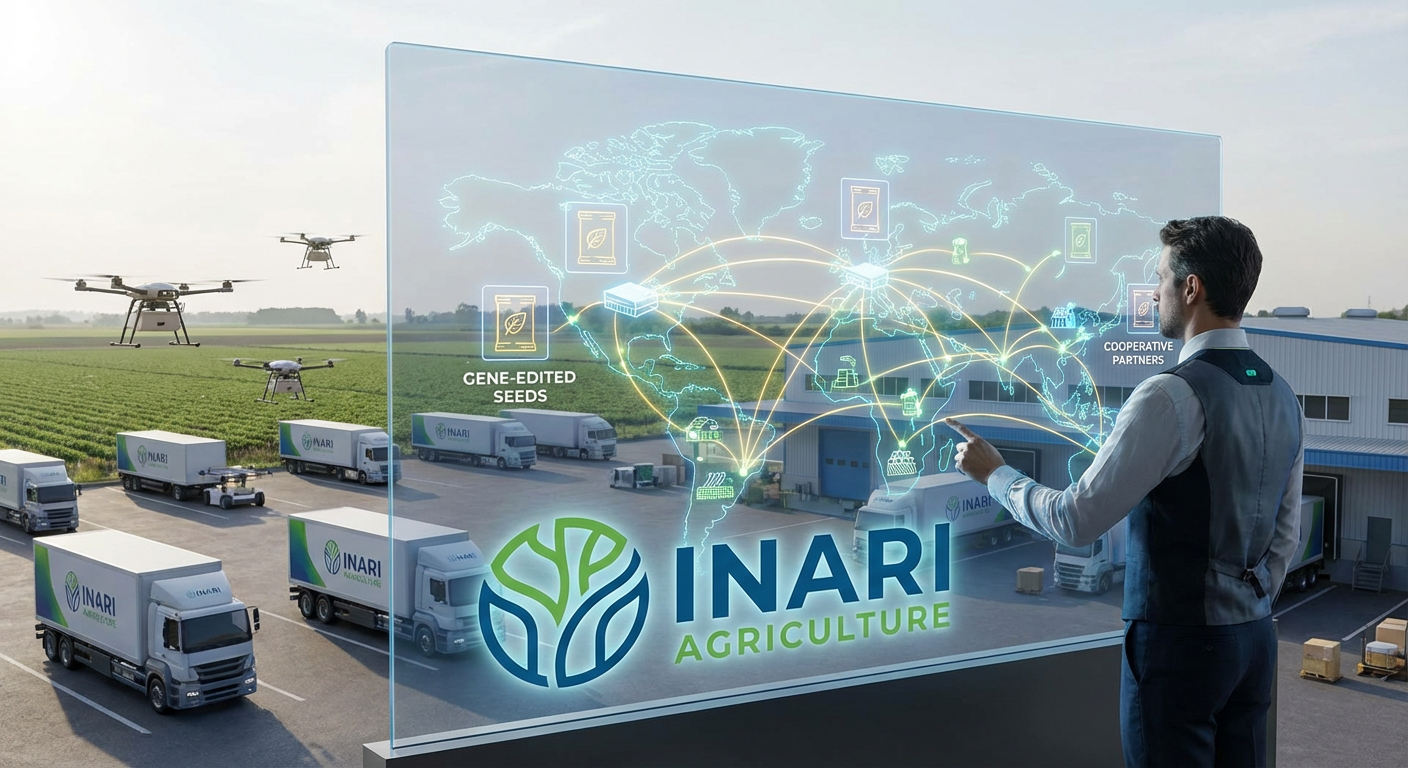
Inari’s go-to-market strategy is B2B-focused, partnering with established seed companies, distributors, and cooperatives. Their model leverages:
Direct sales to seed companies who integrate Inari’s genetics into their branded offerings.
Strategic collaborations (e.g., InterGrain in Australia) to access new markets and accelerate adoption.
Potential future channels include licensing the SEEDesign™ platform to regional breeders and direct-to-farmer digital platforms.
This multi-channel approach ensures broad market reach while maintaining control over product quality and brand reputation.
Complementary Partnerships
Partnerships are central to Inari’s business model:
R&D alliances with universities and research institutes to advance gene editing and AI applications.
Seed company collaborations (e.g., InterGrain) for market access and local adaptation.
Technology partners for data analytics, genomics, and supply chain integration.
Advisory relationships with agronomists and sustainability experts to ensure real-world impact.
These partnerships enable Inari to scale innovation, access diverse germplasm, and deliver value at competitive unit economics.
Sustainability at the Core of the Business Model
Sustainability is not an add-on for Inari—it’s the foundation. Their innovation delivers:
Economic: Higher yields and input efficiency drive farmer profitability.
Environmental: Reduced land, water, and nitrogen use; lower greenhouse gas emissions.
Social: Enhanced food security and resilience for farming communities.
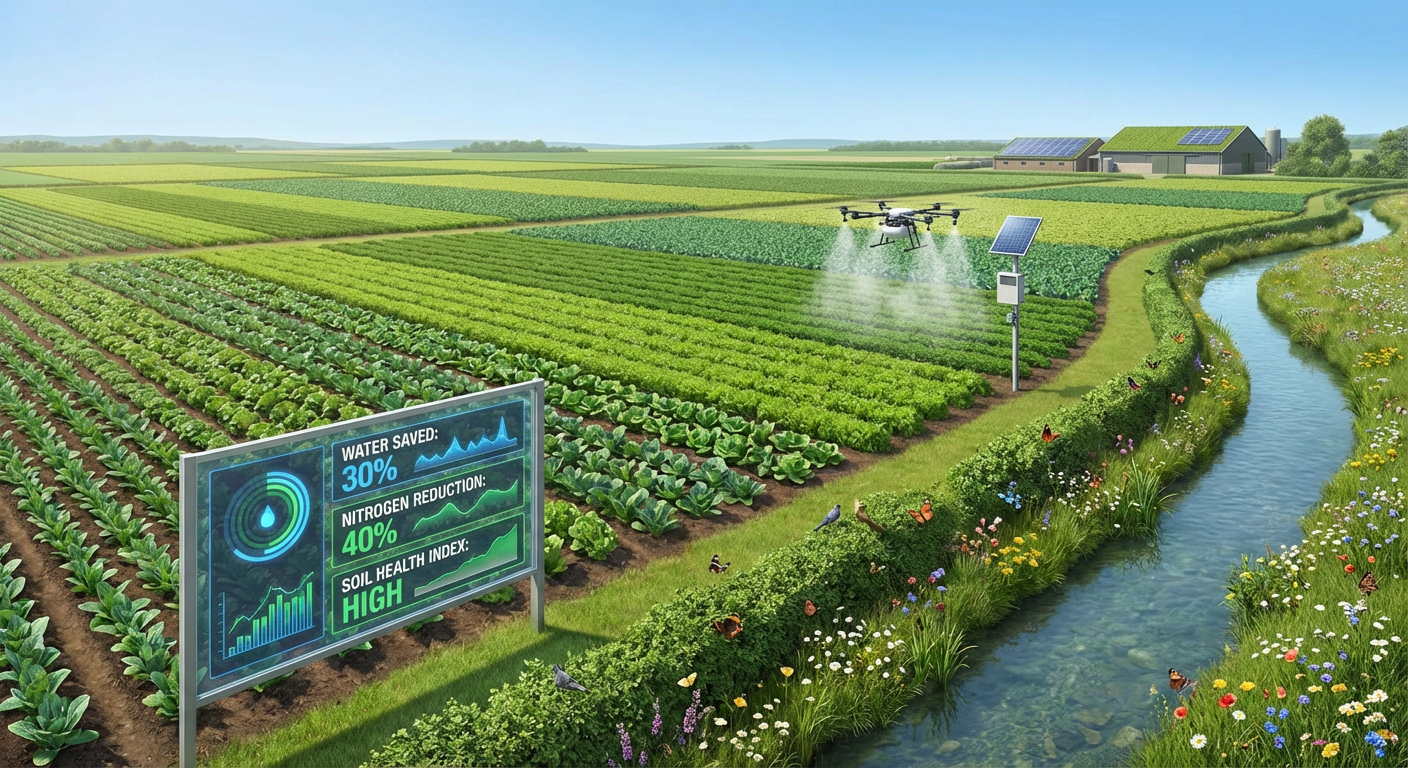
By designing seeds that do more with less, Inari supports regenerative agriculture and a more resilient food system.
Strategic Dilemmas
Scaling gene editing: Balancing speed of innovation with regulatory compliance and public acceptance.
Distribution at scale: Managing channel conflict and ensuring value is not diluted through intermediaries.
Partnership complexity: Aligning incentives and IP rights with diverse partners.
Sustainability trade-offs: Ensuring all components (e.g., supply chain, inputs) align with sustainability goals.
Key Takeaways
Inari’s SEEDesign™ platform is a game-changer for sustainable crop improvement.
Multiplex gene editing and AI enable rapid, targeted innovation.
Strategic partnerships and B2B distribution drive market reach.
Sustainability is embedded in both product and business model.
Scaling and regulatory navigation remain key challenges.
Continuing the Learning Journey
Want to understand how innovative food businesses create value, build resilient distribution, and scale sustainably across agribusiness and food systems?
Explore Foundation Certificate in Agribusiness Value Chains:
👉 https://www.avila.edu/avila-agribusiness-programs/foundation-certificate-in-agribusiness-value-chains/
References
Disclaimer
This article is for educational and informational purposes only. We are not affiliated with or endorsed by Inari or any company mentioned. All trademarks and images are the property of their respective owners, and readers use this information at their own risk.