
Huel Business Model: Why Danone Acquired a Complete Nutrition Brand
Introduction: When a Modern Food Problem Becomes a Strategic Asset
In March 2026, Huel moved from being a disruptive nutrition brand to becoming a strategic signal for the global food industry: Danone agreed to acquire the company, reportedly in a deal valued at around €1 billion. That headline matters because it says something bigger than “startup success.” It suggests that convenient, plant-based, nutritionally engineered food is no longer a niche. It is becoming central to the future of mainstream food portfolios.
Huel’s rise began with a familiar frustration. Modern consumers are busy, health-conscious, and increasingly aware of sustainability, yet the food options available to them often force trade-offs. Fast food is convenient but often nutritionally weak. Cooking from scratch can be healthier but takes time, planning, and energy. Snacking is easy but not always balanced. Into that gap stepped Huel.
Founded in 2015 by Julian Hearn, and developed with nutrition expert James Collier, Huel was built on a simple premise: create food that is nutritionally complete, convenient, affordable, and lower impact than many conventional meal choices. The company launched with powder-based meals, then expanded into ready-to-drink beverages, bars, Hot & Savory meals, and daily nutrition products. Over time, that portfolio helped Huel evolve from a meal replacement startup into a broader platform for modern nutrition.
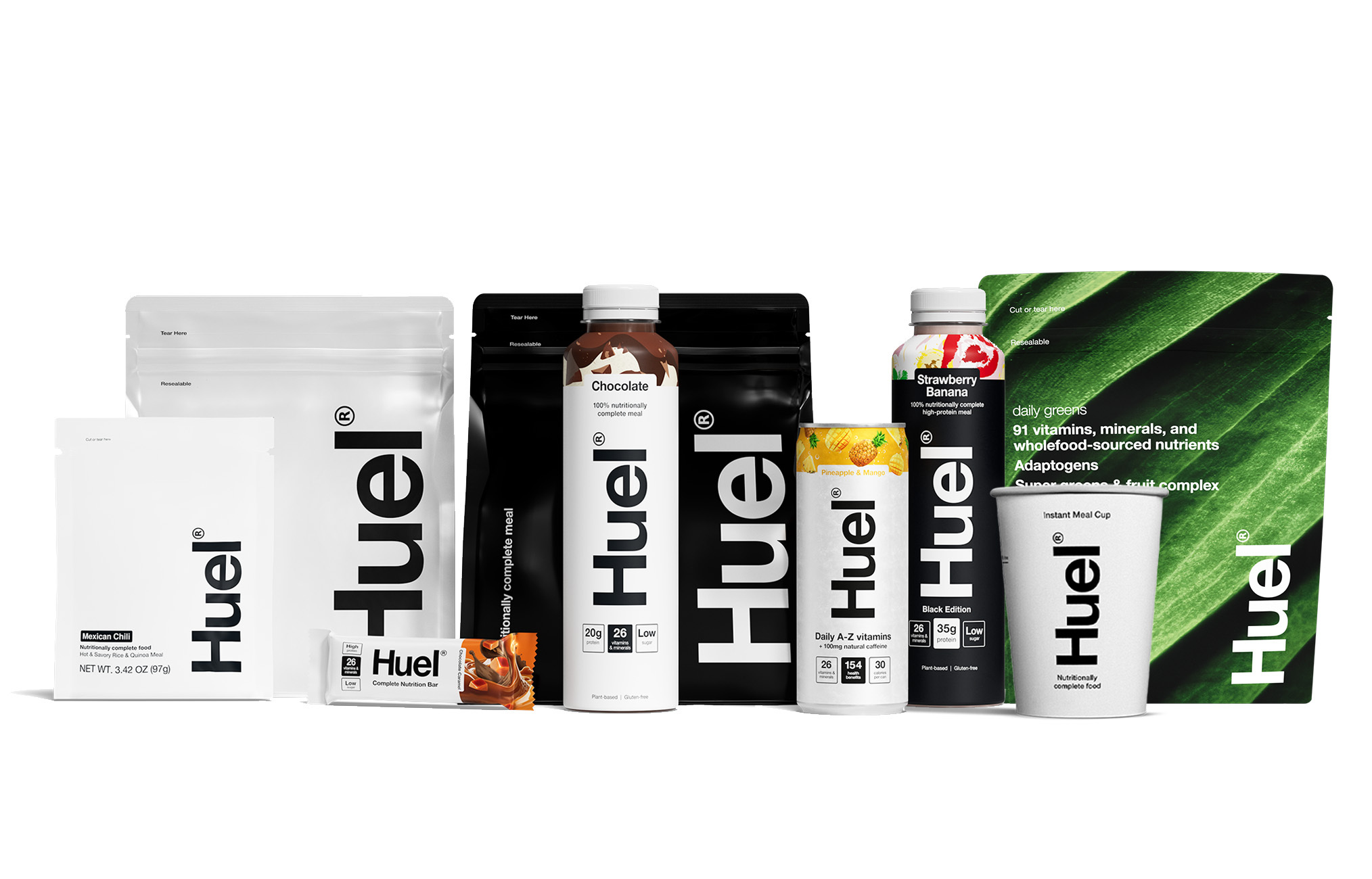
Source: Huel Website
The market opportunity was real and growing. Consumers across the UK, US, and Europe were shifting toward plant-based eating, functional health products, protein-rich formats, and subscription-friendly convenience. Hybrid work, urban living, fitness culture, and digital commerce all helped create demand for food that fits a fast lifestyle without completely abandoning health goals. Public reporting indicates Huel crossed £200 million in annual revenue in FY2024, with retail growth accelerating and international expansion continuing.
What Danone appears to have acquired, then, is not just a product line. It is a business model designed around one of the defining unmet needs in modern food systems: how to make everyday eating more efficient, nutritionally credible, scalable, and sustainable.
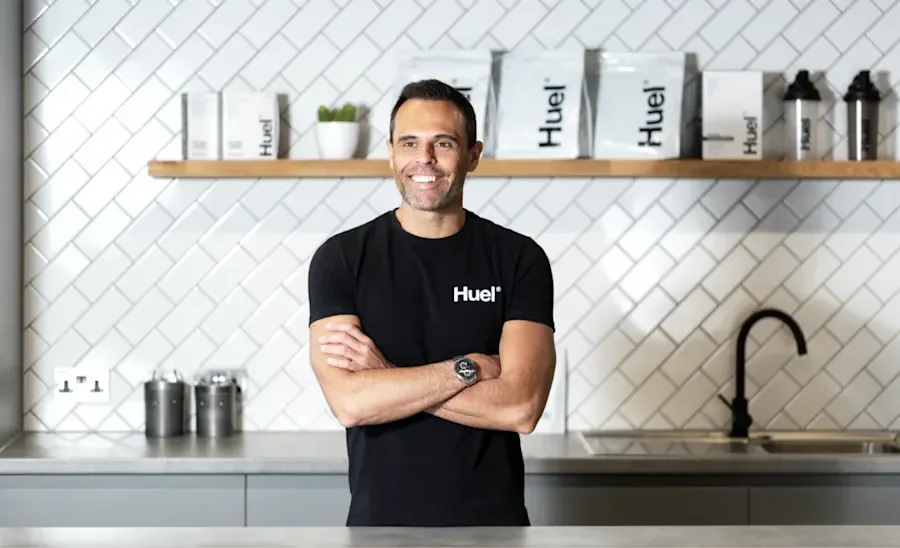
Founder: Julian Hearn
Source: Huel Website
Introducing the IFAL Business Model Framework
At IFAL, business model potential is assessed around four critical elements:
Value Proposition: Defines the core target customer/consumer segment and the key product/service attributes the targeted segment pays for
Distribution Strategy: The revenue model offered to the channels through which the product/service is delivered to the target customer/consumer segment
Complementary Partnerships: External alliances and interdependencies that are critical to produce and deliver the value proposition at optimal scale and profitable unit economics
Sustainability Elements: Economic, Social and Environmental outcomes delivered by the value proposition
Using this framework, Huel can be understood not simply as a food brand, but as a modern agrifood business model built at the intersection of convenience, nutrition science, digital commerce, and sustainability.
Target Segment & Value Proposition
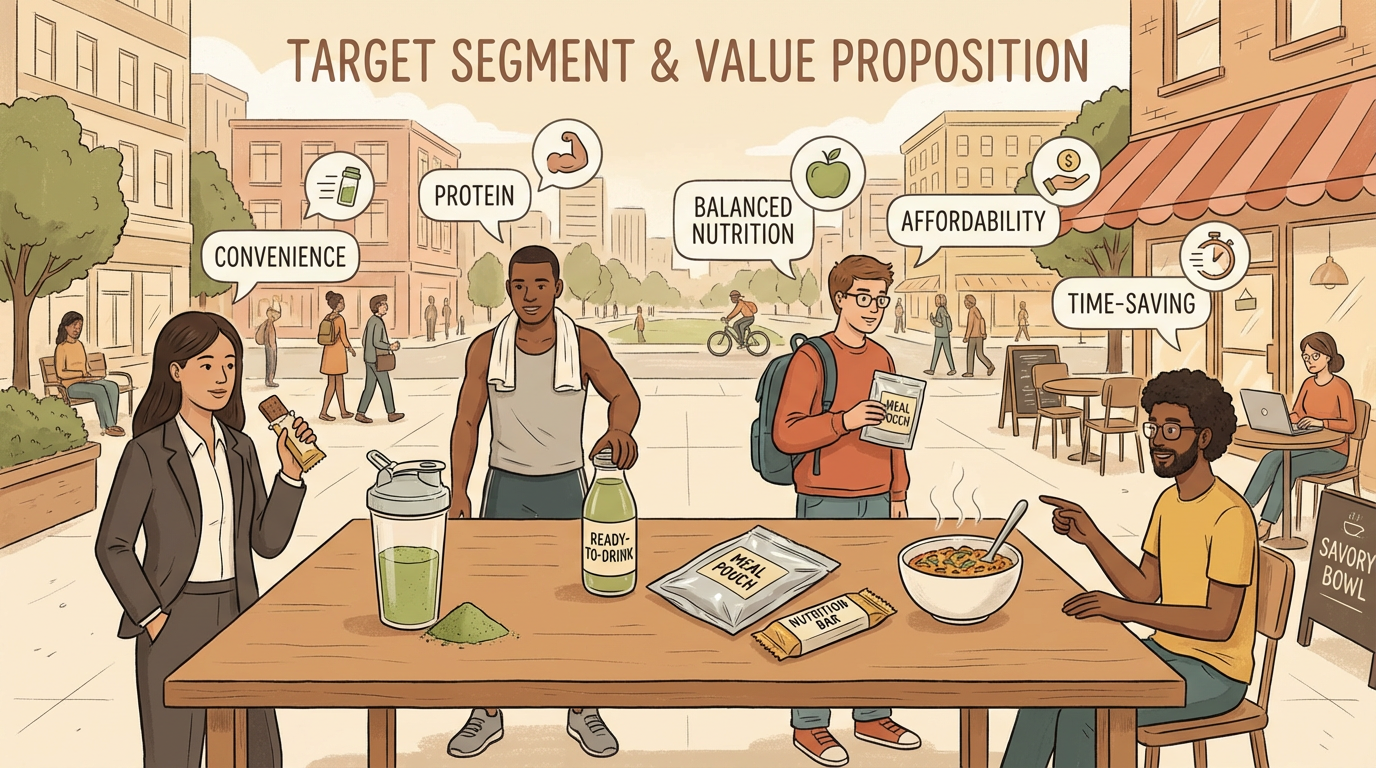
Huel’s value proposition starts with a clear understanding of who struggles most with the modern meal problem.
Its core target segments likely include:
Busy professionals with limited time for meal preparation
Students seeking affordable and convenient nutrition
Gym-goers and active consumers focused on protein and performance
Remote workers who want easy meal routines at home
Consumers shifting toward plant-based diets
People looking for greater nutritional consistency and portion control
These consumers are not only buying food. They are buying certainty.
They pay for Huel because it promises:
Convenient meals in minutes or less
A nutritionally complete formulation
Plant-based ingredients
Functional health benefits such as protein and micronutrient density
Longer shelf life than many fresh alternatives
Reduced decision fatigue in everyday eating
A brand identity that signals health, efficiency, and modern living
This is what makes Huel strategically interesting. It is not just competing with protein shakes or meal replacement brands. It is competing against a broad set of substitutes:
Skipped meals
Fast casual lunches
Office snacks
Convenience-store food
Grab-and-go retail meals
Basic meal prep options
Its differentiated advantage lies in combining multiple attributes that are often separated in the market:
Nutrition credibility
Convenience
Affordability
Portability
Plant-based sustainability
Brand trust
For some consumers, it is a breakfast solution. For others, a gym recovery product. For others still, an emergency lunch, a travel staple, or a structured dieting aid. This flexibility increases usage frequency and broadens the addressable market.
From an IFAL perspective, Huel’s value proposition is strong because the targeted segment is willing to pay not only for the product itself, but for the removal of friction from daily life.
Distribution Strategy
Huel’s distribution strategy has been one of its greatest strengths and likely one reason it became attractive to Danone.
The company built its brand through a direct-to-consumer model, using digital channels to acquire customers, explain the product in detail, and drive repeat purchasing. This approach was especially important in the early years because Huel’s proposition required education. Consumers needed to understand what “complete nutrition” meant, how the products fit into daily routines, and why they were worth buying.
The DTC model gave Huel several advantages:
Control over brand storytelling
Access to first-party customer data
Better feedback loops for product development
Higher margin potential than pure retail
Stronger repeat-purchase and subscription economics
This is particularly important for a food brand built around habit formation. Once customers adopt Huel into a routine—breakfast, post-workout, lunch at work, or a backup pantry meal—the probability of repeat purchase rises significantly.
However, Huel did not remain purely online. As the brand matured, it expanded into retail and wholesale, especially through ready-to-drink products that fit impulse and convenience occasions more naturally than powder alone. Public reporting suggests the company’s store presence expanded sharply, giving Huel access to supermarket shelves, convenience channels, and new consumer trial points.
That omnichannel logic matters:
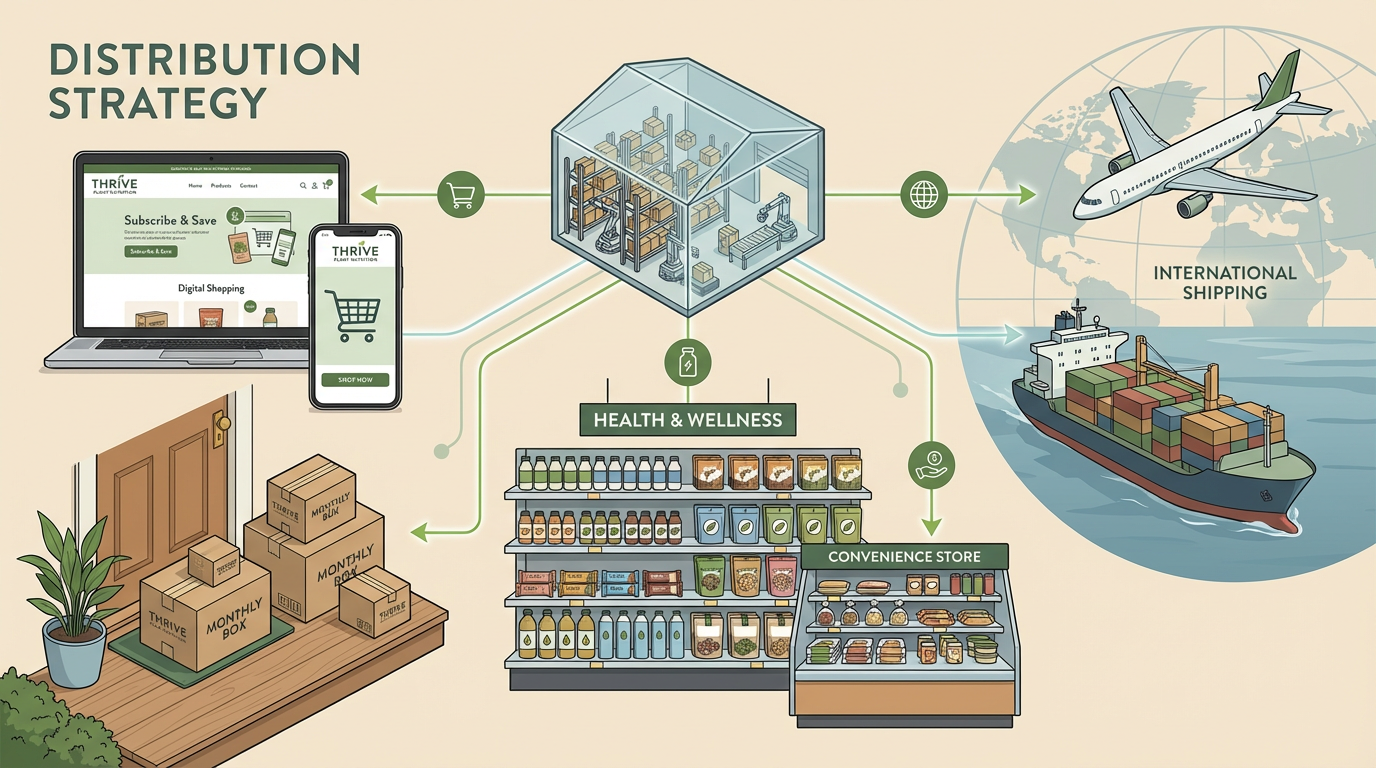
Why DTC worked
Ideal for education-heavy products
Better for bundles and subscriptions
Higher customer lifetime value potential
Easier to cross-sell between powders, bars, RTDs, and savory meals
Why retail matters
Increases visibility and brand discovery
Reaches consumers who may never order online first
Supports single-unit trial
Builds presence in everyday food environments
Strengthens category legitimacy
The strategic challenge is balancing the two. Retail growth can expand reach, but it may also create tension through:
Lower margins
Less customer data
Potential channel conflict
Price comparison pressure
Reduced brand control at shelf level
Danone’s ownership could accelerate Huel’s distribution reach even further. With access to global scale, commercial infrastructure, and retail relationships, Huel may be able to move from a digitally native nutrition brand to a much broader international convenience nutrition platform. But that same scale raises a critical question: can Huel preserve the premium, mission-led clarity of its original model while integrating into a global food company?
Complementary Partnerships
No company like Huel scales alone. Its business model depends on a network of complementary partnerships that make the value proposition possible.
1. Ingredient and sourcing partnerships
Huel’s products rely on a consistent supply of plant-based ingredients such as:
Oats
Pea protein
Rice protein
Flaxseed
Coconut
Sunflower
Cocoa and flavor ingredients
This means sourcing partnerships are central not just for supply continuity, but also for product quality, price stability, and sustainability credibility.
2. Manufacturing partnerships and operational capability
For a business built around formulated nutrition, manufacturing quality is not a back-office detail. It is part of the product promise. Public reporting has highlighted Huel’s manufacturing investments, including in-house capability, which can improve:
Product consistency
Speed of innovation
Cost control
Margin improvement
Supply chain resilience
3. Nutrition science and R&D
Huel’s entire brand depends on trust in the science behind its formulations. Expertise in:
Human nutrition
Dietetics
Food science
Ingredient functionality
Regulatory compliance
Shelf-life testing
is essential to maintaining the “complete nutrition” proposition.
4. Retail and channel partnerships
As Huel expands into supermarkets and convenience retail, those channel partners become critical to scaling. Shelf placement, merchandising, promotional support, and category positioning all shape the economics of retail growth.
5. Logistics and fulfillment partners
A business serving both e-commerce and retail must manage fulfillment efficiently. Inventory reliability, shipping speed, packaging integrity, and international distribution all affect customer experience and profitability.
6. Strategic ownership and growth partnerships
Danone’s acquisition changes the partnership story dramatically. What used to be an independent scale-up with external commercial relationships now potentially gains access to:
Global distribution capabilities
Procurement leverage
Manufacturing expertise
Regulatory know-how
Market-entry infrastructure
Larger-scale retail access
From an IFAL lens, this is highly significant. Complementary partnerships are not optional add-ons; they are core enablers of unit economics and scalable delivery. In Huel’s case, Danone may become the most important complementary partner of all.
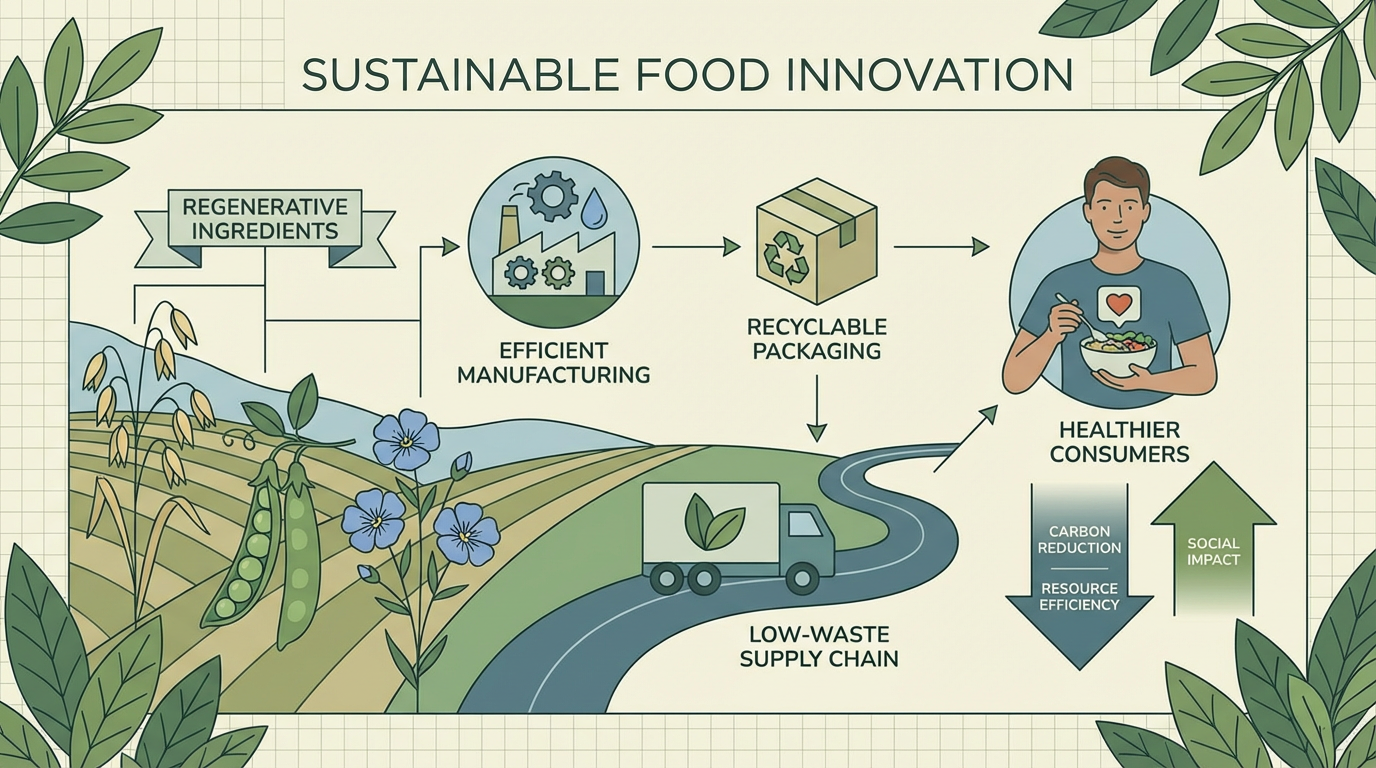
Sustainability at the Core of the Business Model
Sustainability is one reason Huel stands out in the broader convenience food landscape.
Traditional convenience food systems often struggle with multiple issues:
High packaging waste
Nutritional weakness
Heavy reliance on animal-based ingredients
Short shelf life
Cold-chain intensity
Food waste from perishability
Huel attempts to redesign that equation.
Environmental outcomes
As a plant-based nutrition brand, Huel positions itself as a lower-impact alternative to many animal-based and heavily prepared meal formats. Plant-based ingredients generally require fewer resources than many livestock-based proteins, and shelf-stable products can reduce some forms of spoilage and waste.
The company also emphasizes responsible sourcing and has highlighted initiatives such as B Corp certification and ethical sourcing partnerships. These help strengthen its environmental narrative, though the credibility of such claims always depends on transparent measurement and ongoing improvement.
Social outcomes
Huel addresses a growing social need: access to dependable nutrition in fast-paced lifestyles. Many people struggle not because they do not care about health, but because they lack time, planning capacity, or convenient healthy options. Huel’s model reduces those barriers.
For some consumers, especially students, shift workers, founders, and professionals with demanding schedules, that can be genuinely valuable. The product does not solve every dietary issue, but it does improve access to structured, nutritionally dense food.
Economic outcomes
Shelf-stable, standardized, repeat-purchase products can create more efficient business economics than many fresh-food models. Huel benefits from:
Longer shelf life
Easier inventory management
Lower spoilage risk
Habit-driven repeat purchasing
Cross-selling opportunities across the portfolio
This makes sustainability part of business viability, not just a moral add-on.
Still, Huel’s sustainability case is not without complexity. It may reduce impact in some areas while facing questions in others:
Packaged foods still create packaging burdens
Highly processed formats can face consumer skepticism
Ingredient sourcing at scale can create traceability challenges
International shipping adds emissions considerations
So the real strategic question is not whether Huel is perfectly sustainable. It is whether Huel offers a better and more scalable sustainability trade-off than many mainstream convenience food alternatives. That appears to be one reason why the model has resonated with both consumers and strategic acquirers.
Strategic Dilemmas
Even strong business models face tensions. Huel’s next chapter under Danone may intensify several of them.
1. Can Huel scale without losing brand distinctiveness?
Many acquired challenger brands struggle after joining large corporations. Huel must preserve the clarity, trust, and mission-driven identity that made it attractive in the first place.
2. Can it balance DTC with mass retail effectively?
Retail can accelerate growth, but it can also:
compress margins
reduce direct consumer relationships
increase pricing pressure
weaken educational storytelling
3. Can “complete nutrition” remain credible as the audience broadens?
Early adopters may be highly engaged and willing to learn. Mainstream consumers may be more skeptical or less patient with a proposition that feels too technical or unconventional.
4. How should Huel address criticism around ultra-processed foods?
Even if nutritionally strong, the brand operates in a category that may attract criticism from consumers and experts who prioritize minimally processed whole foods.
5. How can sustainability claims remain robust at larger scale?
As Huel grows under Danone, scrutiny will increase around:
sourcing transparency
packaging impact
lifecycle emissions
ingredient ethics
manufacturing footprint
6. How much portfolio expansion is too much?
A wider product portfolio can increase relevance, but too many adjacent launches can blur the brand and complicate operations.
7. Will Danone use Huel as a niche premium platform or a mass-market growth engine?
This may be the biggest strategic dilemma of all. The answer will shape pricing, innovation, channel strategy, and brand identity over the next decade.
Key Takeaways
Huel built its business around a real and growing consumer pain point: the difficulty of eating well consistently in modern life
Its value proposition combines complete nutrition, convenience, affordability, and plant-based sustainability
The company’s early direct-to-consumer model helped it educate consumers, build habit-driven demand, and capture stronger economics
Retail expansion widened awareness and created trial opportunities, especially for ready-to-drink products
Complementary partnerships in sourcing, manufacturing, science, logistics, and retail are essential to scalable delivery
Sustainability is embedded in the business model, though it remains an area that requires ongoing transparency and improvement
Danone’s acquisition suggests Huel’s model is strategically valuable not just as a brand, but as a platform for the future of convenient nutrition
The next challenge is maintaining authenticity and trust while scaling inside a global food company
Continuing the Learning Journey
IFAL works with universities to deliver applied programmes for professionals and teams across food and agribusiness value chains. You can explore Avila Agribusiness Programs (Powered by IFAL) or connect with us here to discuss learning pathways for your organisation.
References
Huel, About Us — https://huel.com/pages/about-us
Huel, Our Story — https://huel.com/pages/our-story
Huel, Huel joins Danone — https://huel.com/pages/huel-joins-danone
TechCrunch, Plant-based food brand Huel valued at $560M following Idris Elba investment — https://techcrunch.com/2022/11/30/huel-idris-elba-plant-based/
Retail Week, Huel posts record sales and triples profits in year of “strengthening our foundations” — https://www.retail-week.com/grocery/huel-posts-record-sales-and-triples-profits-in-year-of-strengthening-our-foundations/7047563.article
FoodNavigator, Danone snaps up Huel to expand complete nutrition portfolio — https://www.foodnavigator.com/Article/2026/03/23/danone-snaps-up-huel-to-expand-complete-nutrition-portfolio/
Reuters coverage via TradingView, Danone to buy protein products maker Huel for close to $1.15 bln — https://www.tradingview.com/news/reuters.com,2026:newsml_L8N40B0F7:0-danone-to-buy-protein-products-maker-huel-for-close-to-1-15-bln-sources-say/
Wikipedia, Huel — https://en.wikipedia.org/wiki/Huel
Disclaimer
This article is for educational and informational purposes only. We are not affiliated with or endorsed by Huel, Danone, or any company mentioned. All trademarks and images are the property of their respective owners, and readers use this information at their own risk.