
Business Model Analysis: How ButcherBox Delivers Ethical Meat to America’s Doorsteps
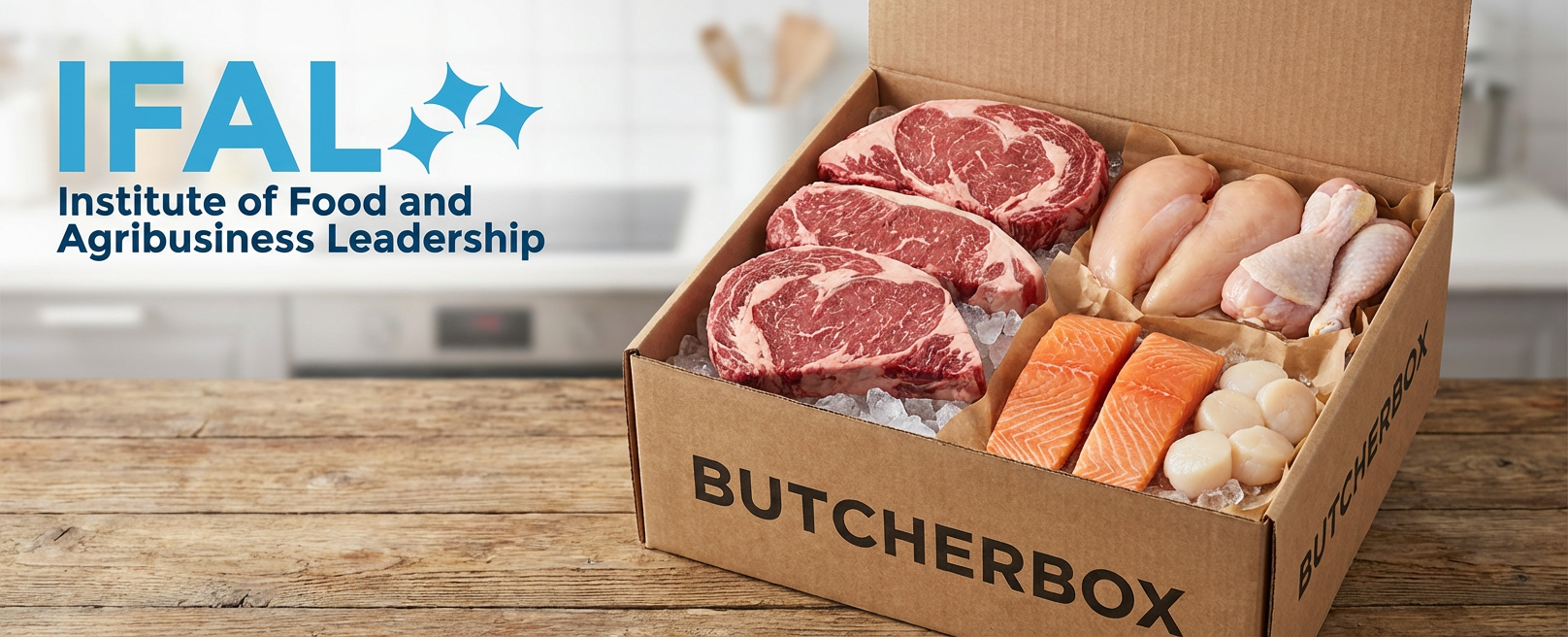
Introduction: The ButcherBox Story—From Kitchen Table to National Movement
In 2015, Mike Salguero set out to solve a problem he’d encountered firsthand: finding high-quality, ethically sourced meat was difficult, expensive, and inconvenient for most Americans. Inspired by a local farmer’s quarterly meat deliveries in Boston, Salguero realized there was a market hungry for better options. With just $10,000 of his own money and a wildly successful Kickstarter campaign that raised $215,000, ButcherBox was born.
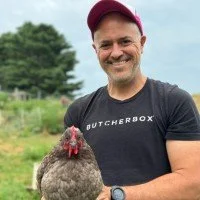
Mike Salguero: Founder, Butcherbox
ButcherBox’s mission was clear from the start: make grass-fed beef, free-range organic chicken, and wild-caught seafood accessible to everyone—delivered straight to their doorsteps. Early on, the company learned that variety was key, expanding beyond beef to include chicken and pork. A happy accident—free bacon included in every box due to a coding error—became a viral marketing hook and a symbol of the brand’s customer-first ethos.
The timing was perfect. As consumers grew more conscious of animal welfare, sustainability, and food transparency, ButcherBox’s direct-to-consumer subscription model resonated. By 2023, the company had shipped to over 1.5 million households and reached $500 million in annual sales—all while remaining bootstrapped and profitable.
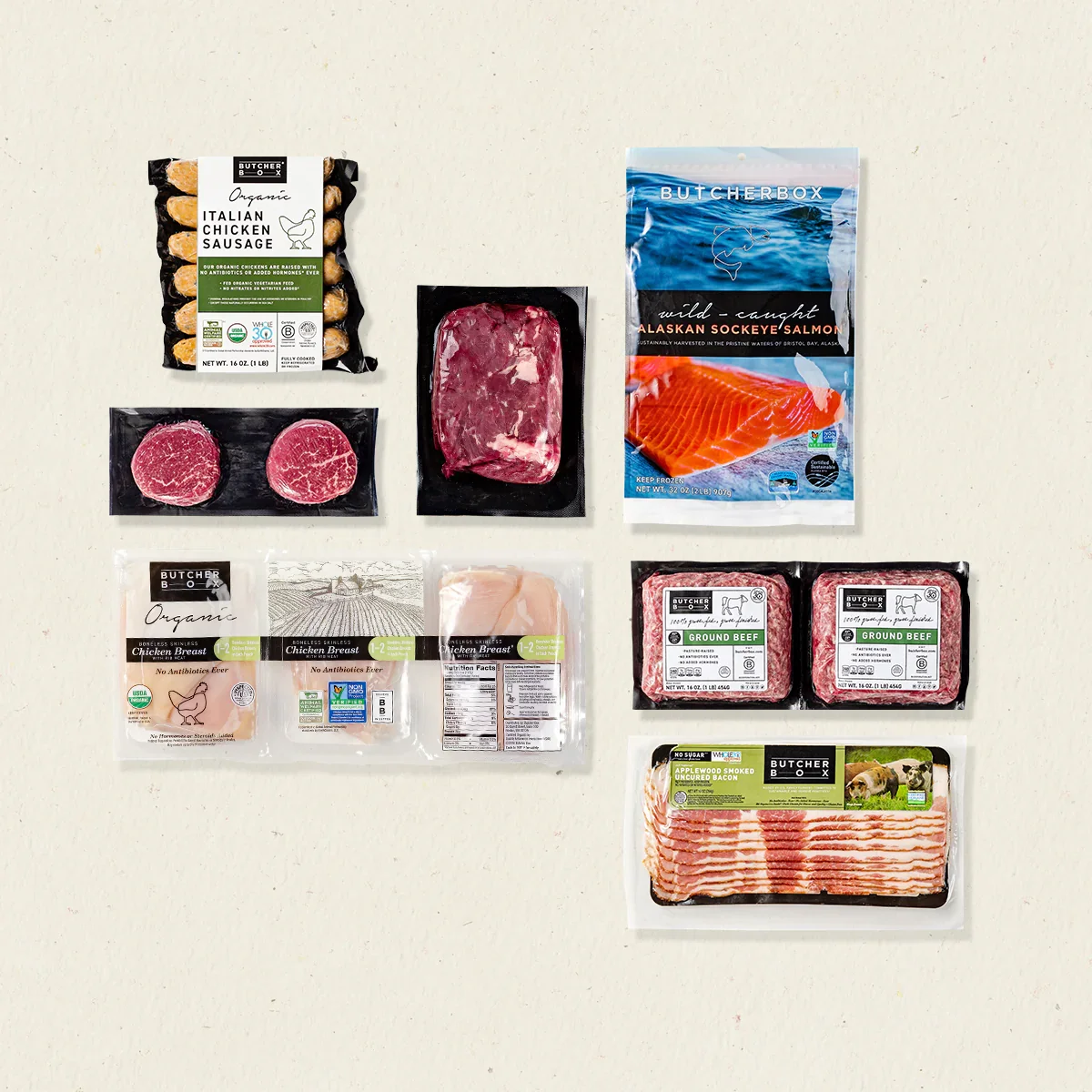
Image source: ButcherBox official website
The IFAL Business Model Framework
At IFAL, we assess business model potential around four critical elements:
Value Proposition: Defines the core target customer/consumer segment and the key product/service attributes the targeted segment pays for.
Distribution Strategy: The revenue model offered to the channels through which the product/service is delivered to the target customer/consumer segment.
Complementary Partnerships: External alliances and interdependencies that are critical to produce and deliver the value proposition at optimal scale and profitable unit economics.
Sustainability Elements: Economic, Social, and Environmental outcomes delivered by the value proposition.
🎯 Target Segment & Value Proposition
ButcherBox targets health-conscious, ethically minded consumers who value transparency, animal welfare, and convenience. Their customers are willing to pay a premium for:
100% grass-fed beef, free-range organic chicken, wild-caught seafood, and humanely raised pork.
Subscription convenience—curated or customizable boxes delivered monthly.
Assurance of third-party certifications (Certified Humane, GAP, B Corp).
ButcherBox’s competitive edge lies in its unwavering commitment to quality, transparency, and ethical sourcing—attributes that resonate with a growing segment of US households seeking to align their food choices with their values.
🛒 Distribution Strategy
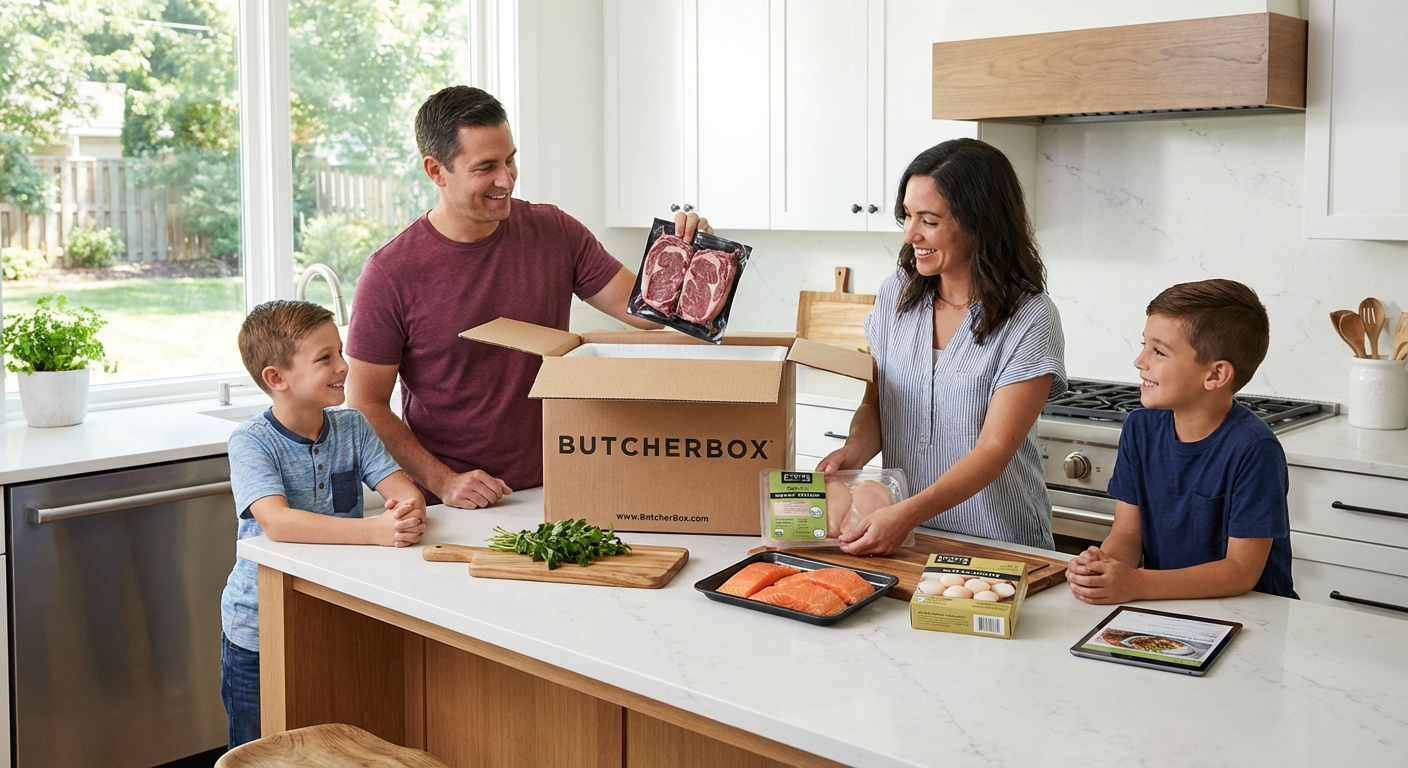
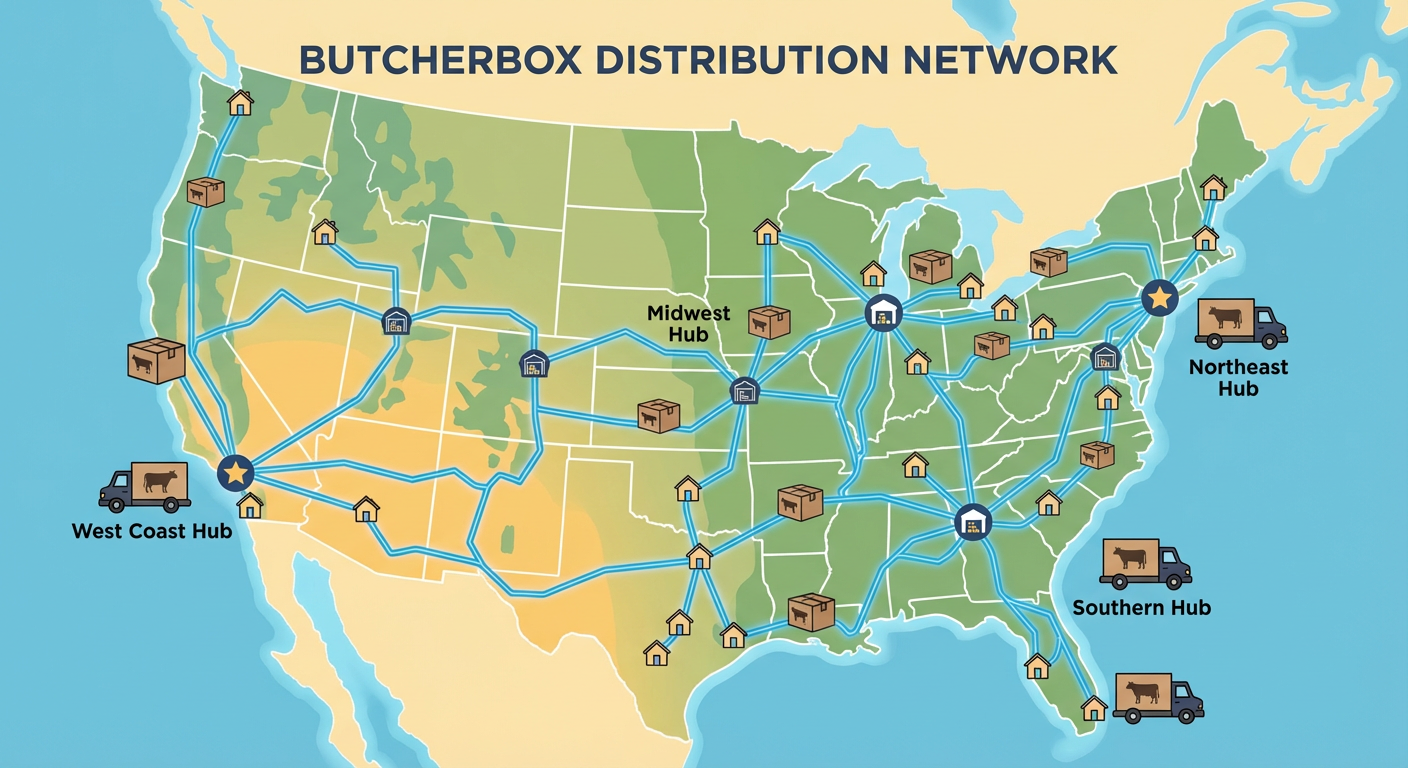
ButcherBox’s primary distribution channel is its direct-to-consumer subscription model. Customers select curated or custom boxes online, which are shipped frozen via regional fulfillment centers using FedEx, UPS, and other carriers. Key features:
Flexible subscription plans (monthly, bi-monthly).
Expansion into digital marketplaces (Instacart, Target Plus, DoorDash) for broader reach and convenience.
Logistics optimization to minimize carbon footprint and ensure timely delivery.
This approach allows ButcherBox to control the customer experience, gather valuable data, and scale efficiently without owning physical retail or logistics infrastructure.
🤝 Complementary Partnerships
ButcherBox’s business model is powered by a network of strategic partnerships:
Suppliers: Long-term relationships with Certified Humane and GAP-certified farmers and ranchers (e.g., Niman Ranch).
Processing: USDA-inspected facilities following animal welfare standards.
E-commerce: Partnerships with Instacart, Target Plus, and DoorDash for expanded digital distribution.
Advisory & Impact: Collaborations with organizations like the National Black Food and Justice Alliance and investments in the Niman Next Generation Fund.
These partnerships enable ButcherBox to scale rapidly, maintain quality, and reinforce its mission-driven brand.
🌎 Sustainability at the Core of the Business Model
Sustainability is embedded in every aspect of ButcherBox’s operations:
Sourcing: Only meat with rigorous third-party certifications (Certified Humane, GAP, B Corp).
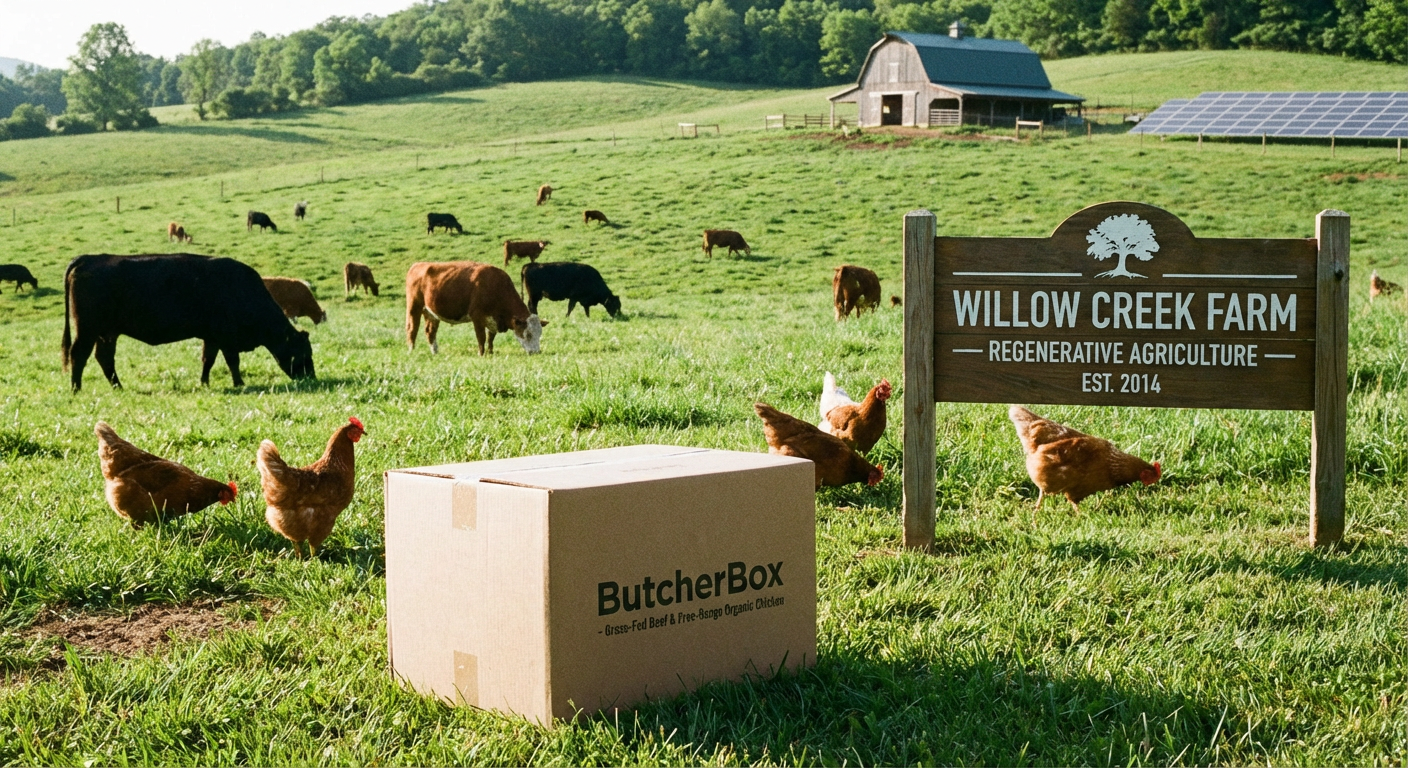
Animal Welfare: Grass-fed, pasture-raised, and crate-free standards.
Environmental Impact: Carbon emissions reduction through logistics optimization, reshipment reduction, and carbon offsets (via Carbon by Indigo and Truterra).
Broader Commitments: Support for sustainable agriculture, soil health, and responsible fishing.
ButcherBox’s B Corp certification and transparent reporting set a high bar for accountability and continuous improvement.
Strategic Dilemmas
Scaling Ethically: Maintaining rigorous sourcing and animal welfare standards as demand grows.
Distribution Complexity: Balancing cost, speed, and sustainability in last-mile delivery.
Channel Conflict: Managing relationships with digital marketplaces while preserving direct customer loyalty.
Supplier Dependence: Ensuring supply chain resilience amid market and climate disruptions.
Sustainability Trade-offs: Navigating the tension between growth and environmental impact.
Key Takeaways
ButcherBox’s business model is built on ethical sourcing, transparency, and convenience.
Strategic partnerships and a flexible distribution strategy enable rapid, capital-efficient growth.
Sustainability is not just a value but a core operational principle.
The company’s approach offers a blueprint for mission-driven, direct-to-consumer brands in food and agriculture.
Call to Action
Ready to build or scale a sustainable food business?
Explore the Mini MBA in Sustainable Food Supply Chains at IFAL and join a global community of food system innovators!