
Propagate Business Model Case Study: Solving Farm Profitability Through Agroforestry
In agriculture, some of the most interesting businesses are not inventing entirely new foods or machines. They are rethinking land itself. That is what makes Propagate such a compelling company to study.
Propagate operates in regenerative agriculture with a focus on agroforestry — the integration of trees into productive farm systems. At a time when many farmers face shrinking margins, weather volatility, soil degradation, and pressure to adopt more sustainable practices, Propagate is trying to answer a practical question: can farms become more profitable by planting trees strategically rather than maximizing only short-term annual production?
The company’s answer is yes — but only if the transition is made easier, more investable, and more operationally manageable.
Founded in New York and led by Ethan Steinberg, Propagate has built a business around helping farmland owners design, plant, manage, and finance regenerative tree-based systems. Instead of selling agroforestry as an abstract sustainability concept, it positions it as a commercial pathway to stronger farm economics, land resilience, and long-term value creation.
This matters because agroforestry has often struggled to scale despite strong scientific and environmental support. Farmers may see the ecological benefits, but adoption is slowed by real constraints: upfront costs, delayed returns, system complexity, operational uncertainty, and limited technical capacity. Propagate’s business model is designed to address exactly those bottlenecks.
The broader market context is also favorable. Food companies, climate-focused investors, public funders, and land stewards are all showing stronger interest in regenerative agriculture and nature-based solutions. In that sense, Propagate is not just building a farm services business. It is building infrastructure for a different kind of agricultural growth.

Ethan Steinberg
Chief Executive Officer
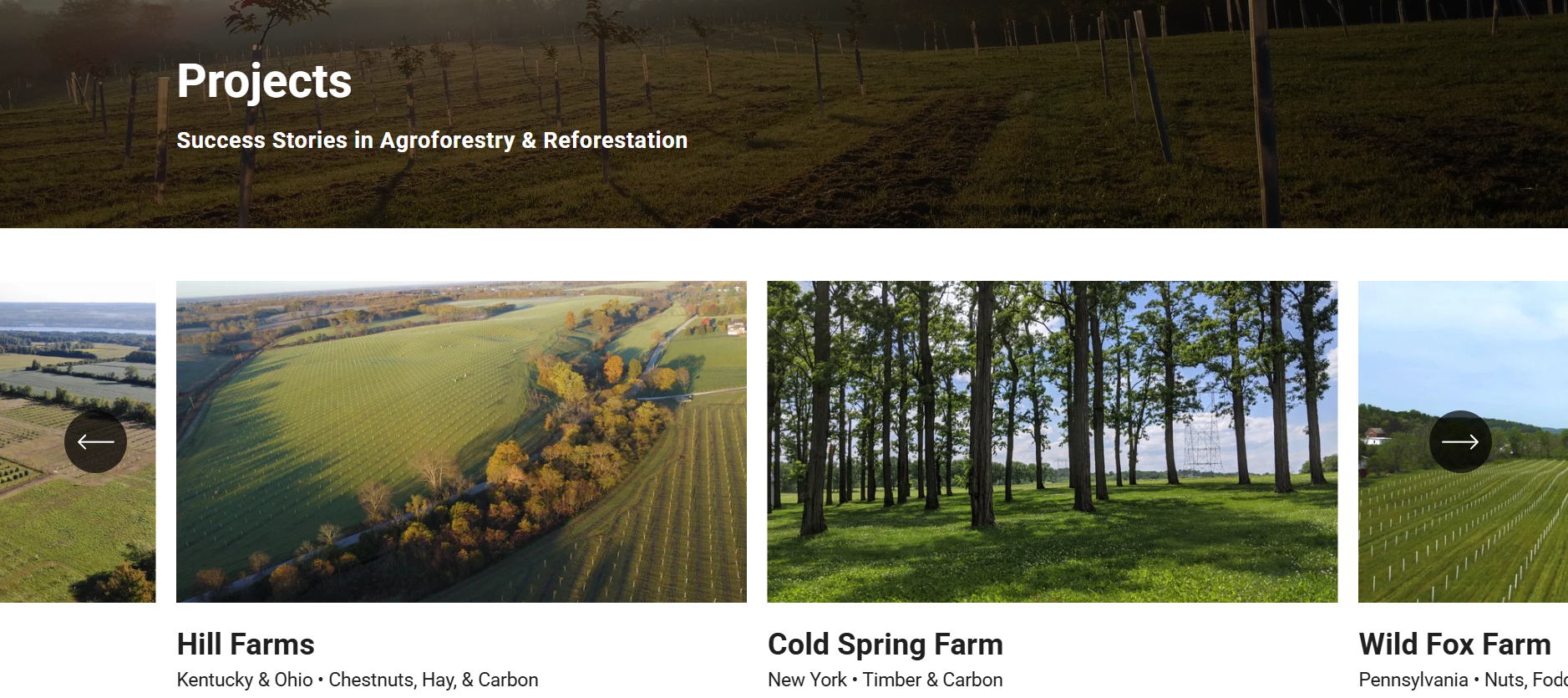
Image courtesy: propagateag.com
The IFAL Business Model Framework
At IFAL, business model potential is assessed around four critical elements:
Value Proposition: Defines the core target customer/consumer segment and the key product/service attributes the targeted segment pays for
Distribution Strategy: The revenue model offered to the channels through which the product/service is delivered to the target customer/consumer segment
Complementary Partnerships: External alliances and interdependencies that are critical to produce and deliver the value proposition at optimal scale and profitable unit economics
Sustainability Elements: Economic, Social and Environmental outcomes delivered by the value proposition
Using this framework, Propagate stands out as a business that sits at the intersection of farm productivity, ecological restoration, and platform-enabled execution.
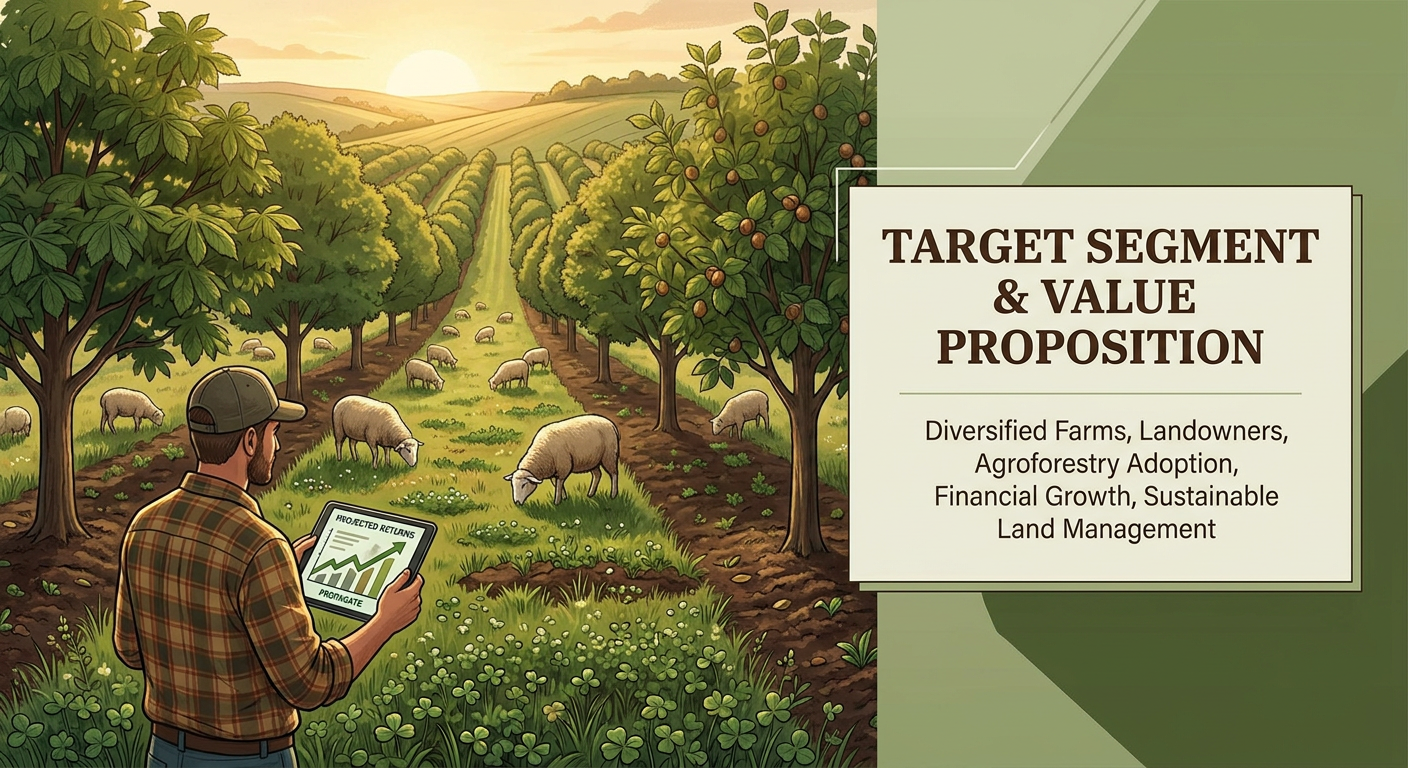
Target Segment & Value Proposition
Propagate’s core target segment appears to be farmland owners and operators who want to improve returns, diversify income, and transition into regenerative agriculture without having to navigate agroforestry complexity on their own.
The company also appears strategically relevant to:
Farmland investors looking for long-term land value creation
Food and CPG brands interested in regenerative sourcing
Public agencies and climate-focused funders
Producers with underutilized or transition-ready acreage
Its central value proposition is compelling: help farms generate more profit per acre through agroforestry while reducing transition risk.
That is important because agroforestry often has a credibility gap between theory and practice. The concept is attractive, but implementation is difficult. Tree crops may take years to mature. System design must fit local agronomy. Labor, equipment, and management requirements change. And many producers do not have the confidence or internal capacity to make those decisions alone.
Propagate appears to reduce that friction through an integrated offer that includes:
Agroforestry planning and design
Software-enabled modeling and management
Project development support
Tree planting and operational services
Investment and financing pathways
Its differentiation lies in combining software, farm services, and financing logic into one business model. That gives it a stronger position than a pure consultant, a pure software company, or a pure sustainability advisor.
Customers are willing to engage because the expected value is multidimensional:
Improved long-term profitability
New revenue streams from tree crops
Better use of underperforming acreage
Greater climate resilience
Improved soil, water, and biodiversity outcomes
Less uncertainty during the transition period
Distribution Strategy
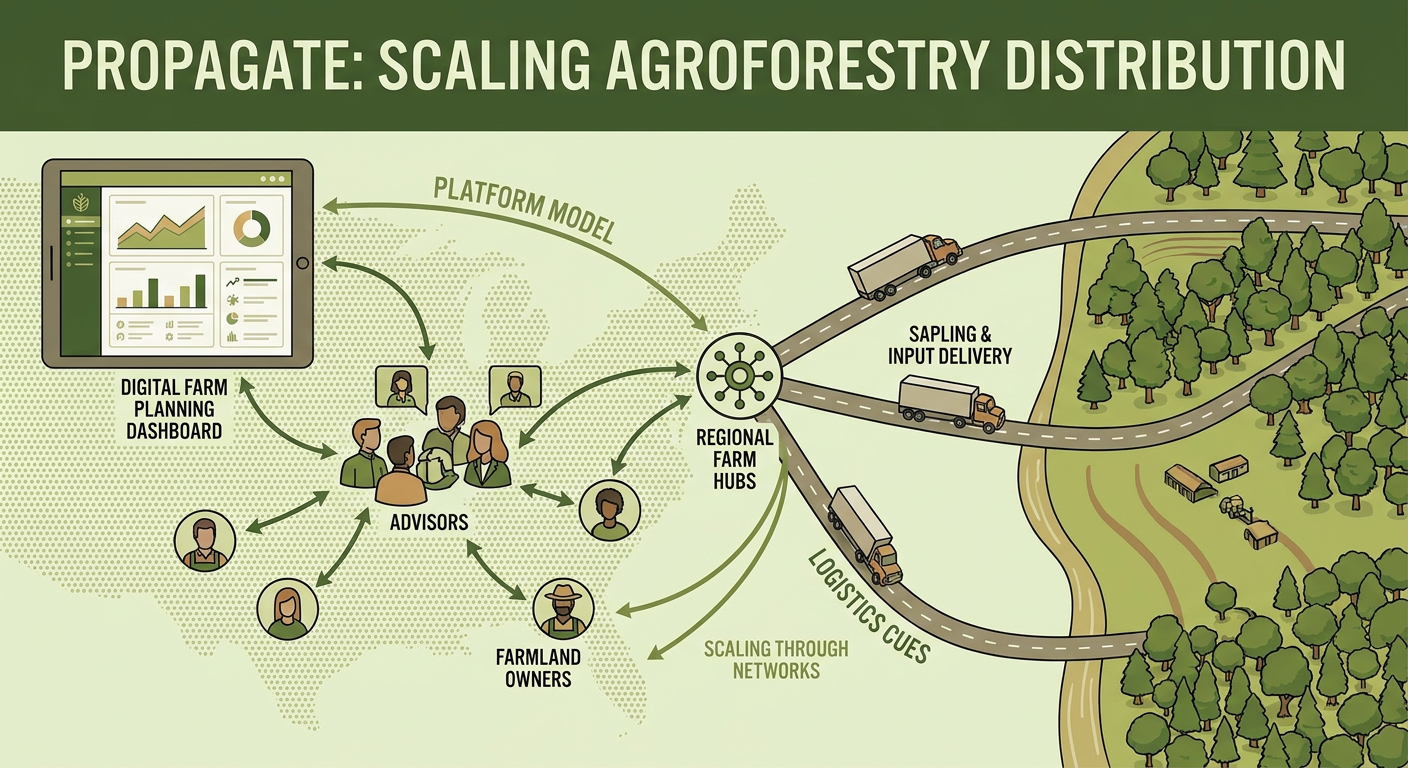
Propagate’s distribution strategy is not built like a typical agricultural input company. It does not simply move a physical product through dealers and distributors. Instead, it distributes a land transition model.
That makes the go-to-market approach far more consultative and relationship-based.
The company appears to acquire customers through direct engagement with farmland owners, operators, investors, and potentially downstream stakeholders such as brands. Public descriptions suggest a mix of software, advisory support, implementation services, and capital facilitation. This is important because agroforestry adoption requires trust, education, and operational confidence — not just awareness.
Its effective distribution model likely includes:
Direct customer acquisition
Relationship-led advisory sales
Regionally delivered implementation support
Software-assisted planning and monitoring
Investor-aligned project development
Brand-facing collaboration for regenerative supply chains
This approach is strategically coherent because regenerative transitions are complex and highly contextual. However, it also creates a classic growth challenge: high-touch models are harder to scale than standardized product distribution.
For future growth, Propagate could expand distribution through:
Land managers and farmland operators
Agricultural lenders and insurers
Regenerative sourcing programs with food brands
Regional implementation partners
Embedded digital tools for agronomists and advisors
The strength of Propagate’s distribution strategy is that it meets customers where the real friction lives — in execution. The risk is that service complexity could pressure margins unless the company can codify and scale its delivery systems over time.
Complementary Partnerships
Complementary partnerships are essential to Propagate’s business model because agroforestry is not a single-product transaction. It is a coordinated system involving biology, finance, field operations, long-term monitoring, and market alignment.
Several partnership categories appear especially important:
Public funding and program partners
Propagate has publicly highlighted a $24.6 million USDA-NRCS Regional Conservation Partnership Program award tied to agroforestry and reforestation on working lands. These partnerships can reduce transition barriers and improve farm-level economics.
Investors and capital partners
The company has also attracted venture funding, including a reported $10 million Series A, which supports platform development and growth. Capital is critical because agroforestry projects often require long time horizons and upfront coordination.
Nursery and supply chain partners
Reliable access to planting material, crop genetics, and delivery logistics is fundamental to any tree-based farm expansion strategy.
Farm operations and implementation partners
Regional service capability matters. Agroforestry must be adapted to local conditions, and implementation quality strongly affects long-term project performance.
Brands and downstream market partners
Propagate’s website includes a page focused on brands and CPGs, suggesting that food companies could become important commercial partners in regenerative sourcing, storytelling, and future procurement strategies.
Research and technical partners
Because agroforestry performance depends on agronomy, system design, and long-term biological outcomes, research-backed partnerships can strengthen credibility and decision quality.
In short, Propagate’s partnerships do not just support the business model. They help make the model possible.
Sustainability at the Core of the Business Model
Propagate is a strong example of a company where sustainability is not just a message layer — it is part of the operating thesis.
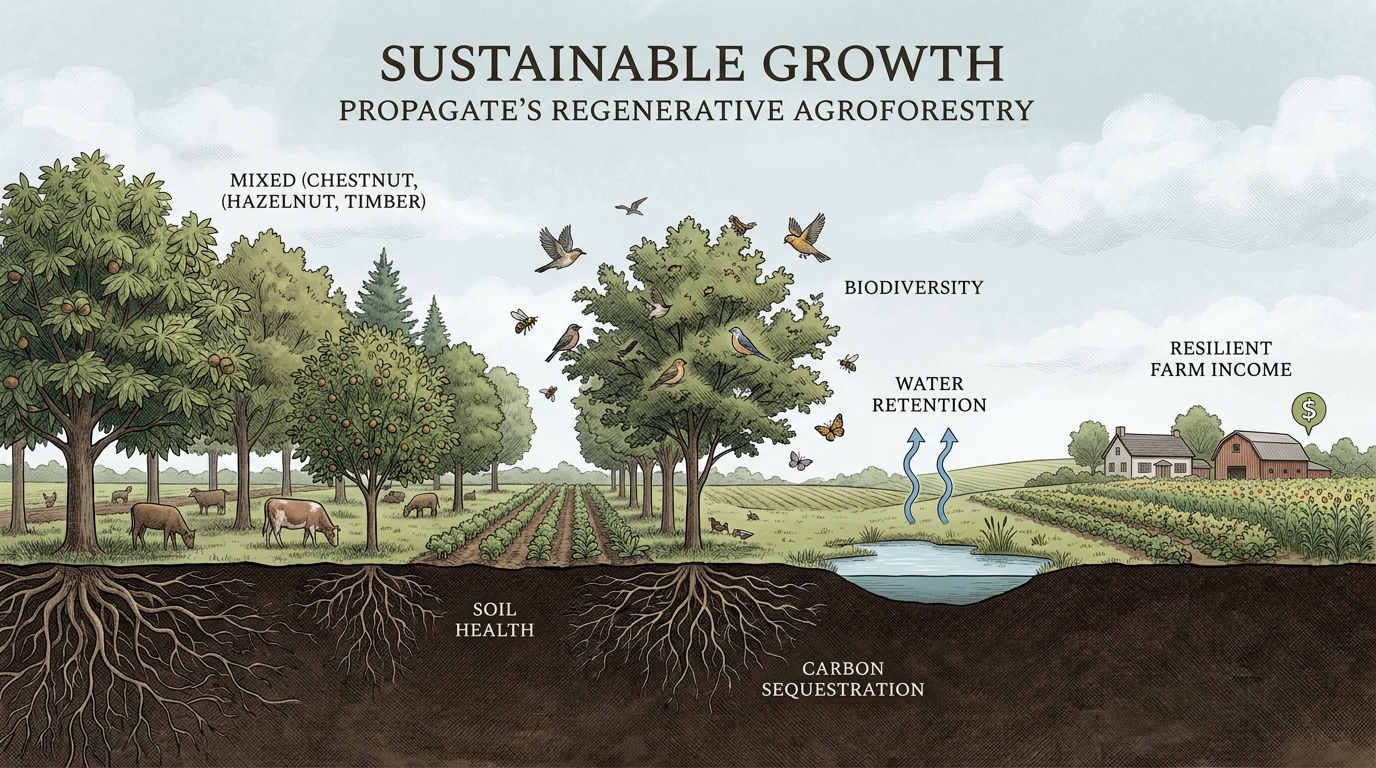
Agroforestry has the potential to create value across all three sustainability dimensions:
Economic outcomes
Diversified farm income
Stronger long-term land productivity
Potential improvement in profit per acre
Better resilience against volatility
Social outcomes
More durable rural livelihoods
Improved farm resilience and stewardship capacity
Knowledge transfer around regenerative land management
Stronger alignment between production and community resilience
Environmental outcomes
Improved soil health
Enhanced biodiversity
Better water retention and watershed performance
Carbon sequestration
Reduced erosion
Greater landscape resilience under climate stress
This is why Propagate’s model is strategically important. It is not simply selling a greener version of the same farm system. It is proposing that environmental restoration can be integrated into a commercially viable agricultural model.
That said, sustainability at scale still depends on proof. The company will need to continue demonstrating that agroforestry systems can perform both ecologically and economically across different crops, regions, and operating conditions.
Strategic Dilemmas
Every promising business model carries tension. For Propagate, the strategic dilemmas are especially important:
How do you scale a high-touch agroforestry model without losing quality?
Advisory-led implementation builds trust, but can slow scale and increase costs.How do you balance short-term farmer economics with long-term tree-crop payback periods?
Producers may support regenerative systems in principle but still need near-term cash flow confidence.How do you avoid value dilution as more channel partners enter the model?
If lenders, brands, investors, and advisors all shape the offer, customer clarity can suffer.How do you secure enough planting material and operational capacity at scale?
Agroforestry growth may outpace nursery and service infrastructure.How do you maintain biological and economic performance across diverse geographies?
Agroforestry is location-specific; standardization has limits.How do you prove outcomes credibly?
Sustainability claims will increasingly require robust measurement for soil, biodiversity, carbon, and farm profitability.How do you manage partnership dependency?
Heavy reliance on grants, public funding, or institutional partners may create strategic vulnerability.Which parts of the model are still operationally unsustainable?
Travel-intensive service delivery, fragmented implementation, and long ROI cycles may pressure margins unless digitization and local networks improve efficiency.
Key Takeaways
Propagate is building a full-stack agroforestry business model that combines planning, operations, and financing logic.
Its value proposition is strongest for farmland owners who want regenerative transition without carrying all the complexity alone.
The company’s distribution strategy is consultative and execution-focused, which improves adoption but may slow scale.
Partnerships are central to the model, especially in public funding, capital, implementation, and downstream market development.
Sustainability is embedded in the company’s core business logic, not treated as a side claim.
The biggest long-term challenge is scaling agroforestry with strong economics, reliable delivery, and measurable outcomes.
Continue your learning journey
If you want to better understand how agribusinesses create value across production, partnerships, distribution, and sustainability, explore IFAL’s Agribusiness Value Chains Learning Pathway.
It is a practical foundation for understanding how better food and agriculture businesses are built
👉 Learn more: https://www.avila.edu/avila-agribusiness-programs/foundation-certificate-in-agribusiness-value-chains/
References
https://agfundernews.com/propagate-raises-10m-to-help-more-farmers-reap-the-benefits-of-agroforestry
https://trellis.net/article/agroforestry-regenerative-technique-getting-overlooked-us/
https://www.revithaca.com/propagate-growing-profits-and-unlocking-farmlands-potential/
Disclaimer
This article is for educational and informational purposes only. We are not affiliated with or endorsed by Propagate or any company mentioned. All trademarks and images are the property of their respective owners, and readers use this information at their own risk.