
Winnow Solutions Business Model: How AI Is Helping Commercial Kitchens Cut Food Waste and Protect Margins
Introduction
In commercial kitchens, waste rarely announces itself.
It slips quietly into bins after breakfast buffets, conference lunches, banquets, and high-volume meal prep. A little overproduction here. A little spoilage there. Slightly too much trimming, slightly too much caution, slightly too much food cooked “just in case.” Over time, those invisible losses become a major drain on margins.
That is the world Winnow Solutions decided to challenge.
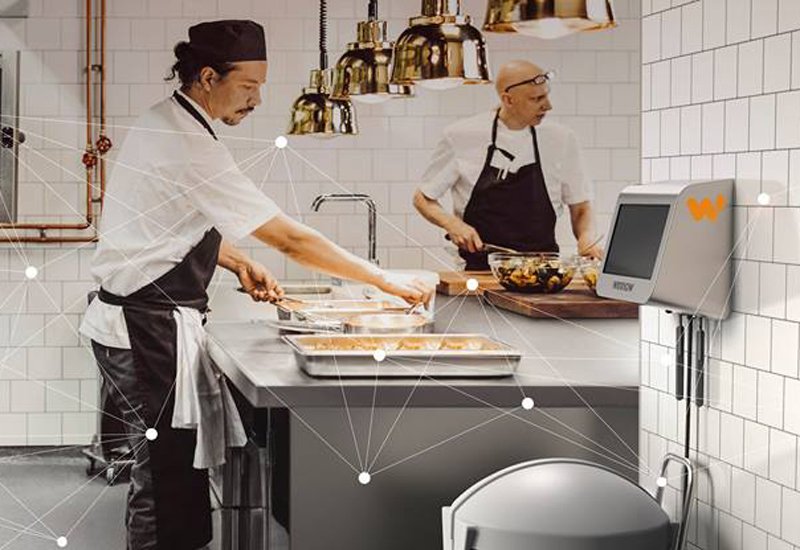
Source: Winnow Solutions
Founded in 2013 by Marc Zornes and Kevin Duffy, Winnow was built on a simple management truth: what gets measured gets managed. The company developed technology to help commercial kitchens track exactly what food is being wasted, how much it costs, and where operational improvements can make a difference. In doing so, Winnow transformed food waste from a vague sustainability concern into a measurable business problem with clear financial consequences.
The timing could hardly have been better. Hospitality groups, caterers, institutional kitchens, and large foodservice operators have all been squeezed by rising food costs, labor pressure, tighter operating margins, and growing expectations around environmental accountability. In this context, a solution that helps kitchens reduce waste while improving profitability becomes strategically valuable.
The market opportunity is large. Food waste is not just an ethical or environmental issue; it is also a supply chain efficiency issue and a profitability issue. Commercial kitchens operate under uncertainty every day, balancing availability, customer experience, menu consistency, and service speed. That complexity makes overproduction common and waste hard to control.
Winnow’s value proposition fits this gap precisely. Its platform uses AI-enabled food waste tracking and analytics to give chefs and operators better visibility into losses, helping them make smarter production, purchasing, and process decisions.
Winnow has worked with major hospitality and foodservice operators globally, reinforcing its positioning as an enterprise-focused kitchen intelligence platform rather than just a standalone hardware tool.

Co- Founder - Marc Zornes

Co-Founder - Kevin Duffy
Introduce the IFAL Business Model Framework
At IFAL, business model potential is assessed around four critical elements:
Value Proposition: Defines the core target customer/consumer segment and the key product/service attributes the targeted segment pays for
Distribution Strategy: The revenue model offered to the channels through which the product/service is delivered to the target customer/consumer segment
Complementary Partnerships: External alliances and interdependencies that are critical to produce and deliver the value proposition at optimal scale and profitable unit economics
Sustainability Elements: Economic, Social and Environmental outcomes delivered by the value proposition
This framework is particularly useful for analyzing Winnow because the company sits at the intersection of hospitality operations, artificial intelligence, enterprise software, and sustainability. Its model is not simply about selling equipment. It is about helping commercial kitchens improve performance through better visibility, better decisions, and better resource use.
Target Segment & Value Proposition
Winnow’s core customer is the commercial kitchen operator.
That includes:
hotels
contract caterers
institutional kitchens
restaurants
cruise and travel hospitality foodservice environments
large multi-site foodservice groups
These customers do not buy Winnow because AI sounds impressive. They buy it because food waste is expensive, persistent, and often hidden in day-to-day operations.
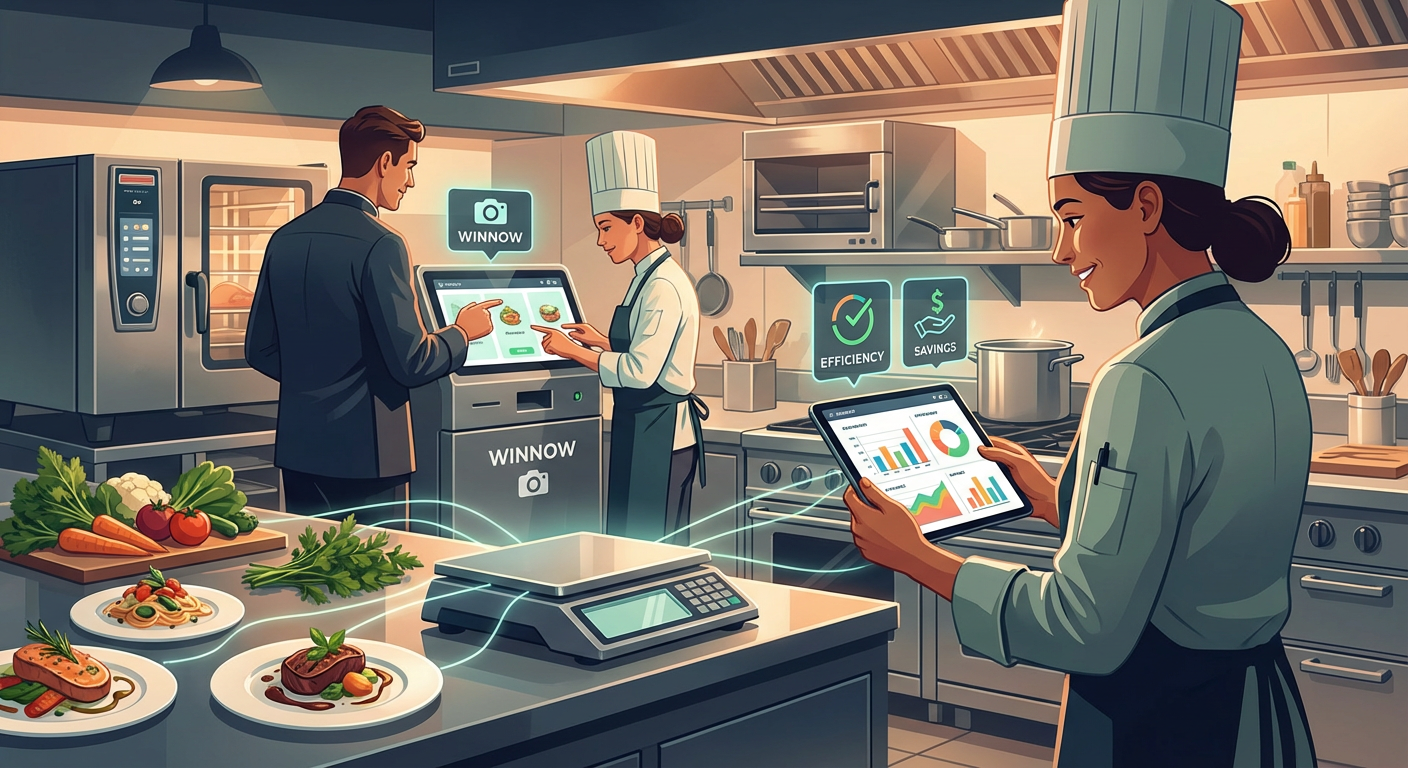
Winnow’s value proposition is compelling because it converts an invisible loss into a visible management metric. Its system helps teams identify:
what food is being wasted
how much waste is generated
where waste occurs in kitchen workflows
what that waste costs
where corrective action can improve margins
That matters because kitchens are under pressure to maintain service quality while controlling cost. Overproduction is often driven by fear of stockouts, inconsistent forecasting, buffet service complexity, and a desire to protect guest experience. Winnow gives teams the operational intelligence to reduce that uncertainty.
The company’s strongest differentiation appears to come from its ability to combine:
AI-powered recognition
food waste measurement
operational analytics
kitchen workflow integration
sustainability reporting relevance
From a business model perspective, Winnow is selling more than technology. It is selling profit recovery, operational discipline, and decision support.
For enterprise customers, this creates a particularly attractive proposition:
reduce food costs
improve kitchen efficiency
support ESG and sustainability targets
generate measurable ROI
That combination helps Winnow appeal to both operational buyers and strategic decision-makers.
Distribution Strategy
Winnow’s distribution strategy is best understood as a B2B enterprise solution model.
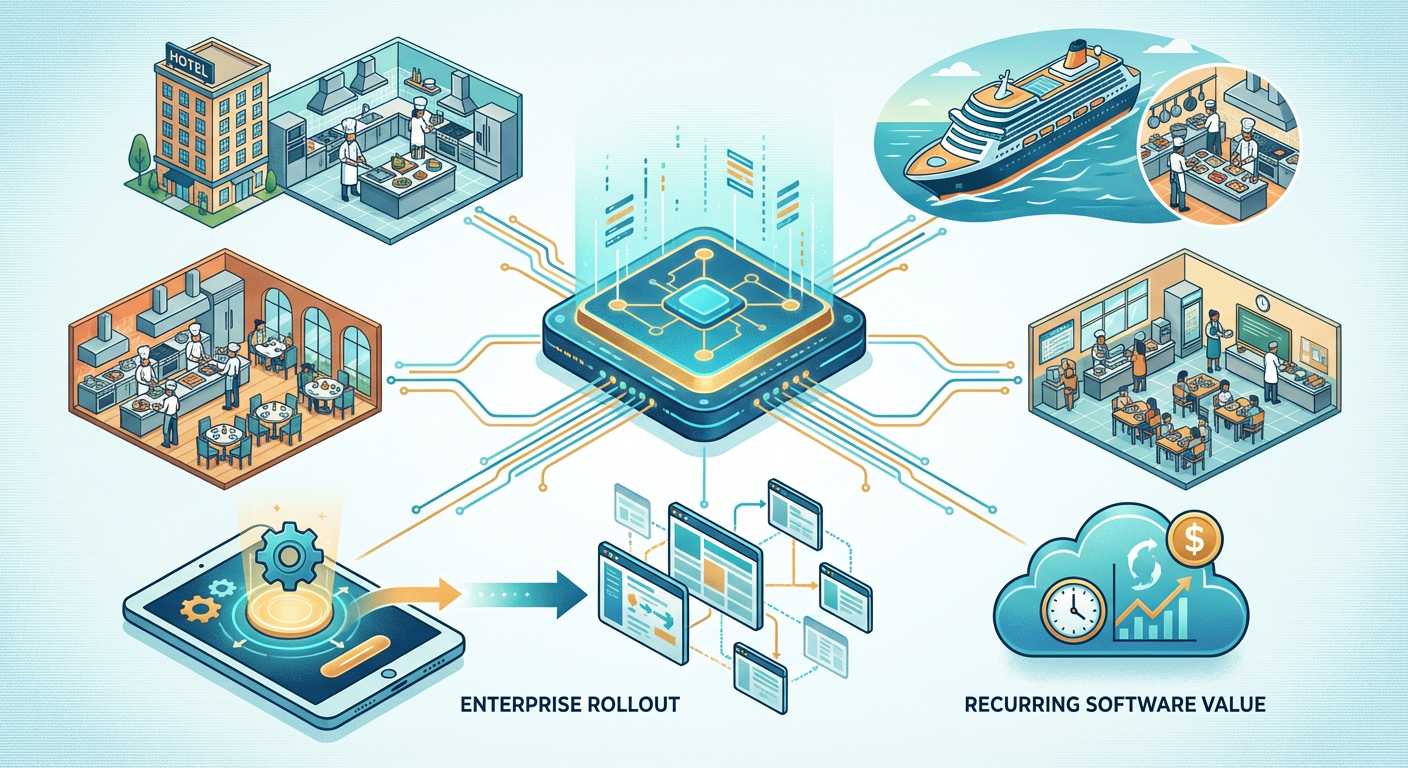
Its product is designed for professional kitchens, not consumers. That means the route to market likely depends on direct enterprise sales, multi-site deployments, onboarding, training, and ongoing customer success support.
This makes sense because the product must do more than arrive in the kitchen. It must be adopted, used consistently, and converted into measurable results.
Key characteristics of Winnow’s distribution strategy likely include:
direct sales into hotel groups and foodservice operators
multi-site rollout for enterprise accounts
recurring software and service revenue
hardware-supported deployment
implementation and training support
account management and expansion potential
This model offers important advantages.
First, enterprise customers can generate significant lifetime value. A single hospitality group may represent dozens or hundreds of kitchens. Second, once results are demonstrated at one site, the business can expand across a portfolio. Third, the recurring value of analytics and reporting can strengthen retention.
Potential scale pathways may include:
partnerships with hospitality management groups
integration with broader kitchen-tech ecosystems
collaboration with sustainability advisors
channel partnerships in foodservice digitization
co-selling into ESG and operational efficiency programs
The distribution challenge, however, is real. Enterprise selling can be slow. Procurement processes are layered. Internal buy-in often requires proof of results. Different kitchen formats may require slightly different implementation approaches.
So the real genius of Winnow’s distribution strategy is not just that it sells to enterprises. It is that it ties product adoption directly to financial and sustainability outcomes that large organizations increasingly care about.
Complementary Partnerships
Winnow’s business model depends on a wider ecosystem of complementary partnerships to create and deliver value effectively.
These partnerships likely fall into several strategic groups:
Enterprise customer partners
Large hotel groups, catering operators, and institutional foodservice organizations are not just buyers. They are also implementation environments that help validate the solution, generate case studies, and support wider rollout.
Technology and AI ecosystems
Because Winnow’s offering relies on data capture, recognition, and analytics, continuous product improvement is critical. This depends on strong internal technology capabilities and potentially external infrastructure relationships that support scaling and reliability.
Kitchen operations and training support
The system only works when kitchen teams use it consistently. Operational adoption is therefore a form of partnership in itself. Staff training, site leadership, and behavioral reinforcement are all essential to value creation.
Sustainability and circular economy networks
Partnerships with food waste, climate, and circular economy organizations can strengthen Winnow’s credibility and help position the business inside broader sustainability conversations.
Foodservice ecosystem influencers
Consultants, hospitality technology advisors, procurement networks, and related service providers can all influence adoption. In enterprise markets, these relationships often shape decision-making more than brand marketing alone.
In short, Winnow’s product becomes more valuable when embedded inside a network that helps translate insight into action. Its partnership model is therefore not optional. It is part of how the business works.
Sustainability at the Core of the Business Model
Sustainability is not decorative in Winnow’s business model. It is foundational.
Food waste represents wasted water, land, energy, labor, logistics, and capital. In commercial kitchens, these losses accumulate every day, often without structured visibility. That makes waste reduction one of the clearest examples of how sustainability and efficiency can reinforce each other.
Winnow’s model stands out because it operationalizes sustainability.
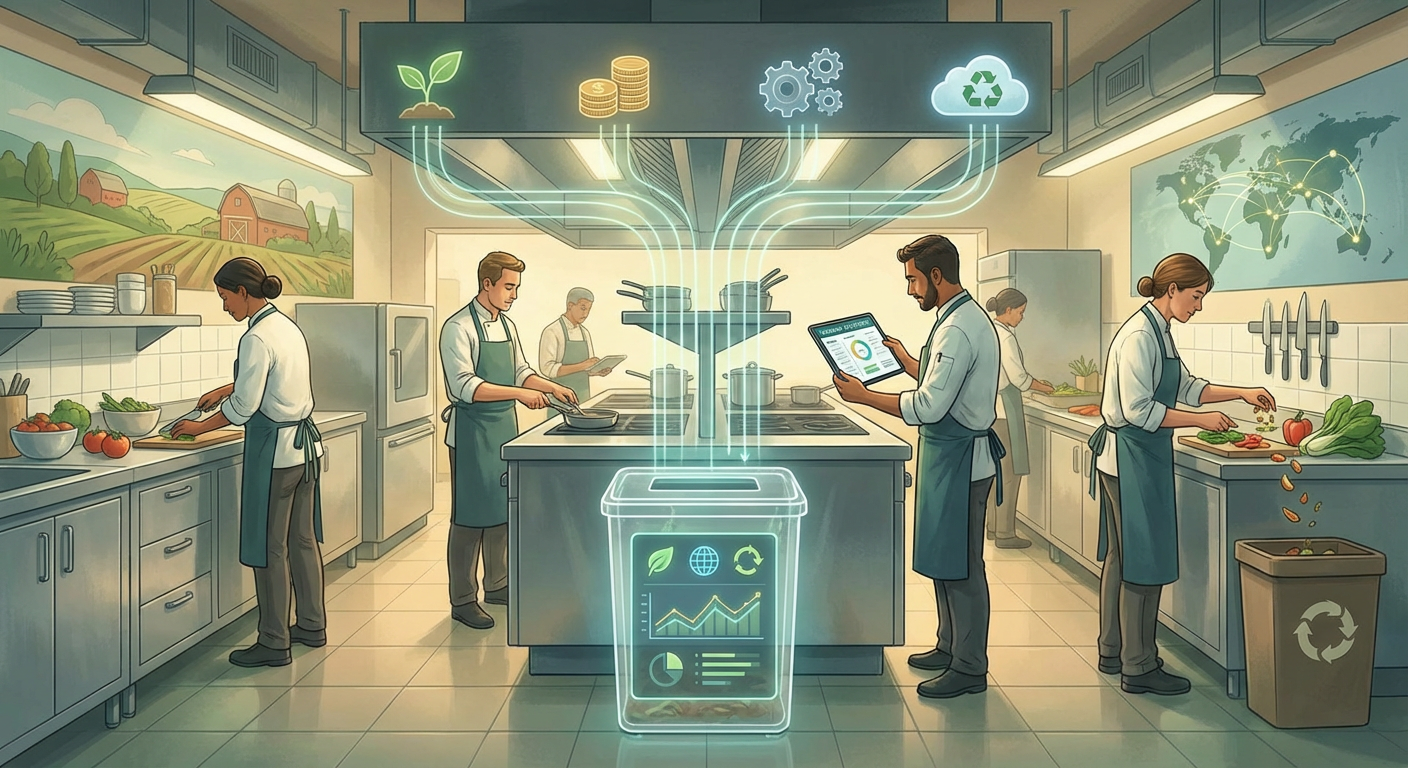
Rather than asking kitchens to adopt abstract environmental values, it gives them a practical system for reducing waste in measurable ways. That creates benefits across all three sustainability dimensions:
Economic outcomes
lower food waste-related cost
stronger kitchen margins
improved production planning
better purchasing discipline
Social outcomes
greater awareness among kitchen teams
stronger culture of accountability
improved resource stewardship inside operations
Environmental outcomes
lower avoidable food waste
reduced embedded greenhouse-gas emissions
more efficient use of food system resources
support for circular economy thinking
This is why Winnow’s model is strategically strong. It aligns sustainability with incentives that commercial operators already understand: cost control, operational excellence, and measurable improvement.
That alignment often makes the difference between a pilot project and a scalable business model.
Strategic Dilemmas
Even strong business models face tensions. Winnow’s strategic dilemmas likely include the following:
Scaling without losing implementation quality
The technology creates value only when kitchen teams use it properly and act on the data.Balancing enterprise focus with broader market reach
Large accounts bring scale, but enterprise sales cycles can be long and resource-intensive.Maintaining strong ROI across different kitchen types
High-volume hotel kitchens may differ significantly from institutional or smaller-format operations.Avoiding commoditization
Winnow must continue positioning itself as a performance platform, not just a smart bin or recognition device.Driving behavior change, not just data capture
Measurement alone is not enough. The business model depends on operational follow-through.Managing channel expansion carefully
Partnerships can accelerate growth, but poor-fit channels may dilute value delivery or customer experience.Improving the sustainability of its own deployment model
Hardware, servicing, and maintenance bring their own footprint and economic implications.
Key Takeaways
Winnow addresses a major hidden cost in foodservice: commercial kitchen food waste.
Its value proposition is strongest where cost savings, operational intelligence, and sustainability intersect.
The business model is well suited to enterprise hospitality and institutional foodservice.
Distribution success depends on training, adoption, and proof of ROI, not just sales.
Complementary partnerships are central because Winnow’s value is ecosystem-dependent.
Sustainability is embedded in the model as an operating advantage, not merely a brand message.
The key strategic challenge is scaling results consistently across diverse kitchen environments.
Continuing the Learning Journey
Want to understand how innovative food businesses create value, build resilient distribution, and scale sustainably across agribusiness and food systems?
Explore Foundation Certificate in Agribusiness Value Chains:
👉 https://www.avila.edu/avila-agribusiness-programs/foundation-certificate-in-agribusiness-value-chains/
References
Winnow Solutions official website: https://www.winnowsolutions.com/
Winnow company page: https://www.winnowsolutions.com/company
Why Winnow: https://www.winnowsolutions.com/why-winnow
Winnow blog, “A Decade of Winnow”: https://blog.winnowsolutions.com/a-decade-of-winnow
Winnow blog, funding announcement: https://blog.winnowsolutions.com/winnow-raises-10-million-in-series-c-funding-to-accelerate-growth-and-further-develop-ai-powered-food-waste-prevention
Ellen MacArthur Foundation, Winnow case: https://www.ellenmacarthurfoundation.org/circular-examples/winnow
Food Planet Prize, Winnow overview: https://foodplanetprize.org/initiatives/winnow-revolutionizing-kitchen-sustainability-with-ai-to-cut-food-waste-and-emissions/
Business Insider coverage: https://www.businessinsider.com/hotels-offices-kitchens-winnow-ai-tool-reduce-food-waste-costs-2024-7
Hospitality Net product page: https://www.hospitalitynet.org/product/5000054.html
Waste360 overview: https://www.waste360.com/food-waste/winnow-s-ai-technology-in-food-waste-prevention-reduction-and-rescue
11. Disclaimer
This article is for educational and informational purposes only. We are not affiliated with or endorsed by Winnow Solutions or any company mentioned. All trademarks and images are the property of their respective owners, and readers use this information at their own risk.