
Critical Thinking Just Became L&D's Top Priority. What That Means for Agribusiness Workforce Training
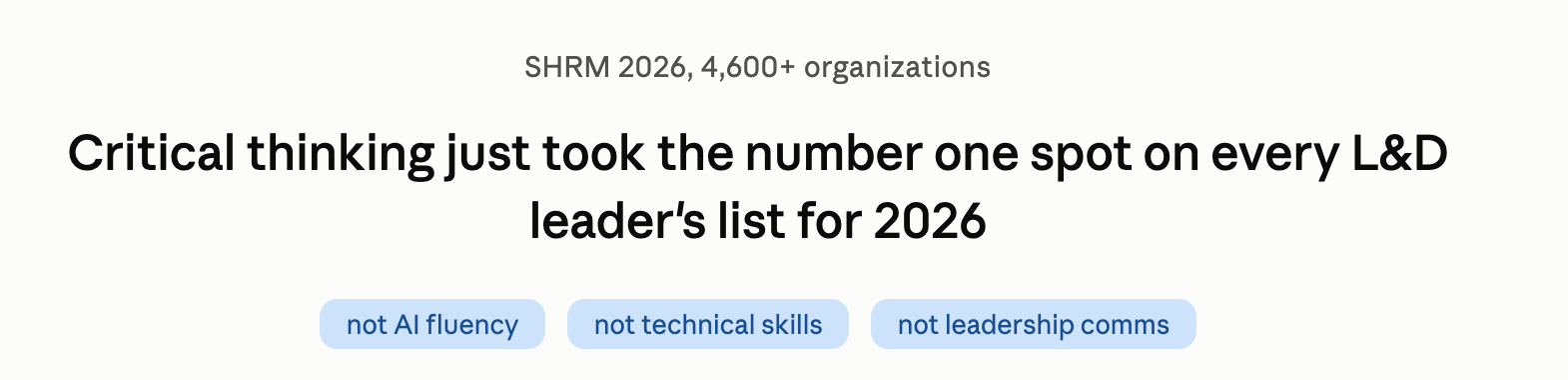
Every year, SHRM (Society for Human Resource Management) collects data from organizations to understand where L&D teams are placing their bets for the next five years. In its 2026 Learning and Development Executives Benchmarking report, which draws on data from more than 4,600 organizations, one finding stood out. For the first time, critical thinking, paired with judgment and decision making, took the top spot. AI fluency did not top the list. Neither did technical skills or leadership communication. Critical thinking came first, and it did so across every industry SHRM tracks.

It is not just a US finding either. Voxy's 2026 Global L&D Benchmark Survey asked 377 HR and L&D leaders across six continents the same question SHRM did, and the answer came back the same way. Organizations everywhere are betting on judgment for the next three to five years, not technique. Deloitte's 2026 Global Human Capital Trends report pushes the point further. It describes decision making as a discipline that can be learned, improved, and scaled, then warns that most companies are not actually teaching it. Deloitte found that 57 percent of organizations operate at low decision-making maturity. Put simply, most have never made the skill explicit enough to train in the first place.
There is a reason this particular skill is climbing the list right when AI fluency is too. AI can execute a task quickly once someone tells it what to do, but it cannot decide what the right call is in a specific business context. That decision still sits with a person. So as more of the routine, technical work gets automated, the judgment calls left for people to make get harder, not easier, and organizations are starting to notice that gap. SHRM, Voxy, and Deloitte all point at the same shift from different angles, but the underlying story is simple. As execution becomes cheaper and faster, judgment becomes the thing that is actually scarce.
This creates a rare moment of alignment. L&D leaders around the world agree on what matters most for the next five years. The harder question is what an organization actually does about it, especially in a sector like food and agribusiness, where the judgment calls people make every day do not resemble the case studies most critical thinking training is built around.
The problem with generic critical thinking training
Open almost any corporate critical-thinking course and you'll find the same raw material: a tech startup pivoting its business model, a retail chain optimizing a supply chain, a consulting-style framework for "structured problem solving." None of it is wrong, exactly. It's just not transferable in the way L&D teams assume it is.
Judgment doesn't travel well without context. A commercial manager who's sharp at generic case-study reasoning can still make a costly call on a real decision — how to price against a consolidating competitor, whether to renegotiate a distribution agreement with a cooperative, how to read a commodity price signal before it moves — because the pattern recognition that actually matters was never built. Critical thinking in the abstract and commercial judgment in a specific sector are not the same skill, even though they get taught as if they are.
This gap shows up clearly in workforce data. USDA and Purdue's employment outlook for 2025–2030 projects more than 100,000 annual openings across food, agriculture, and renewable resources roles in the US alone — and separately, industry analysis has found that only around 18% of new commercial hires in the sector arrive with real business-model thinking already in place. The technical knowledge is usually there. The commercial judgment — the ability to read a value chain, weigh a distribution trade-off, or make a sound call under margin pressure — is what's missing, and it's exactly the skill category L&D leaders just ranked first.
Agribusiness employers are already living this. In a recent interview, ADM's APAC (Archer Daniels Midland Company, Asia Pacific) HR Director described the sector's persistent shortage of professionals with specialised expertise in commodity trading, commercial risk, and global operations, and pointed to workforce planning that anticipates skill needs early rather than reacting to hiring gaps as they appear. For L&D leaders, the takeaway is that identifying these capability gaps is only the first step. The bigger opportunity is to build those sector-specific capabilities before they become hiring or performance gaps.
This means moving beyond generic critical-thinking programmes and giving employees opportunities to develop judgment in the commercial contexts they actually work in. For agribusiness organisations, that could mean building capability around the decisions their teams face across value chains, distribution, partnerships, and commercial risk.
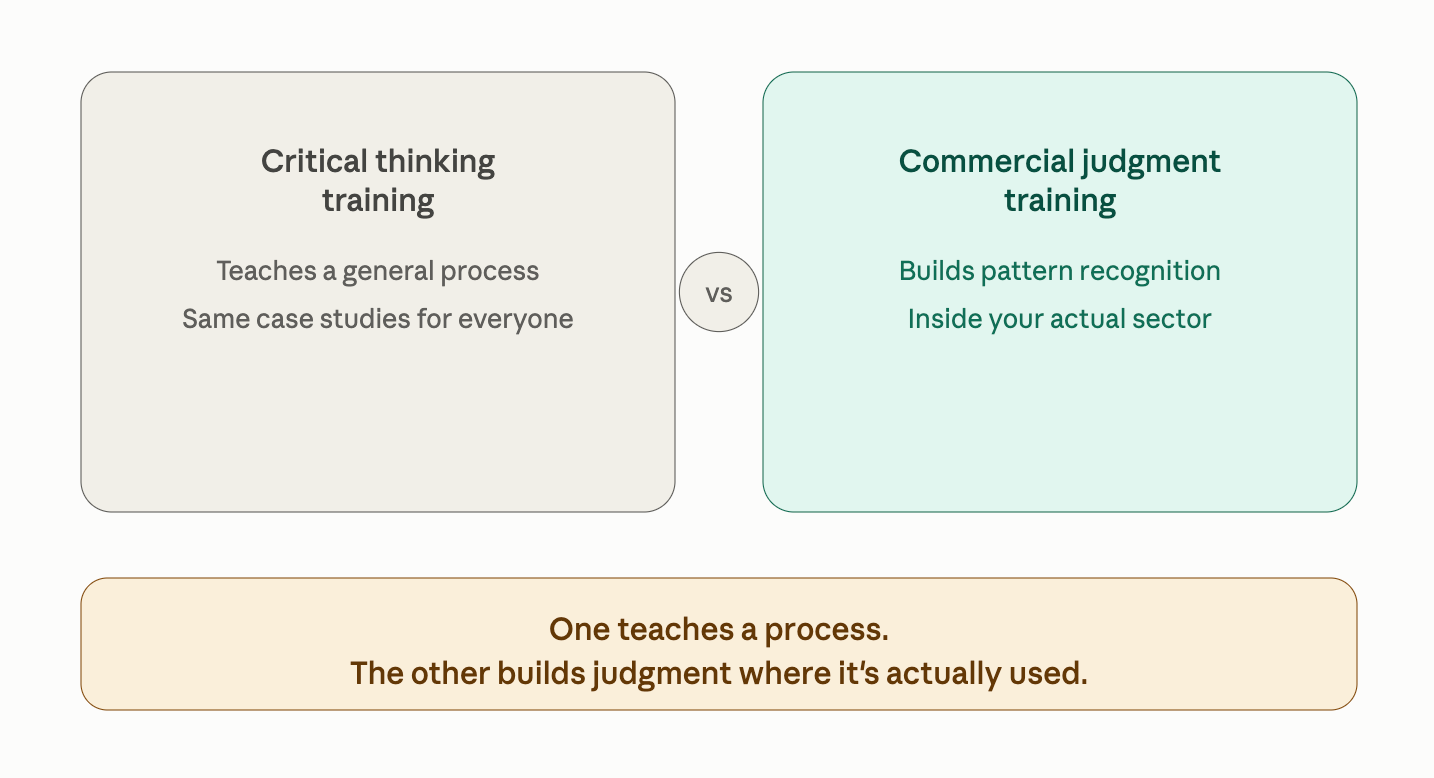
This is where the distinction between critical-thinking training and commercial judgment training becomes important. If the problem is that employees need to make better decisions within a specific sector, then the training should reflect the complexity of that sector rather than teach judgment in isolation.
Why this is an L&D budget conversation too
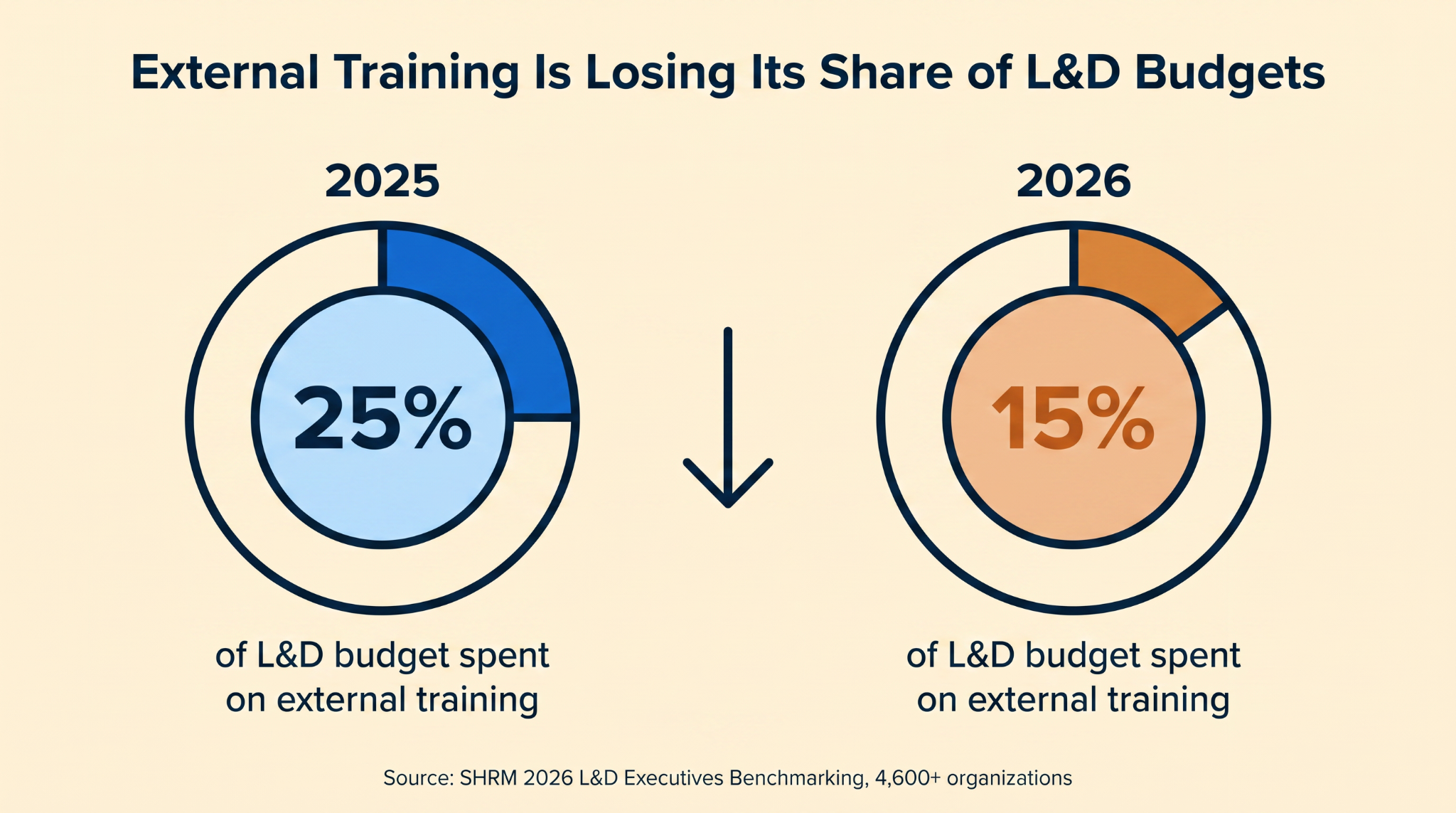
There's a second piece of 2026 data worth putting next to the critical-thinking finding. SHRM's benchmarking of more than 4,600 organizations found L&D spend per FTE fell 28% in 2026, and the share of L&D budgets going to external training dropped from 25% to 15% — the steepest cuts landing at small and midsize organizations. Training hours per employee held steady. Budgets didn't.
The strength of the proposition lies in the way the certificate is designed around the realities of the agribusiness sector. Learners are not simply introduced to broad concepts of critical thinking or decision making. They work through the structures, relationships, and trade-offs that shape real agrifood businesses, allowing the learning to remain closely connected to the environment in which those skills will ultimately be applied.
The delivery model also makes the certificate practical for organizations looking to develop these capabilities across their teams. At approximately 45 hours and delivered in a self-paced format, it allows learners to engage with the material alongside their existing responsibilities, while cohort-level completion tracking and reporting give L&D teams visibility into participation and progress. At $499 per learner, the certificate is also positioned as an accessible option for organizations evaluating how to allocate limited training budgets.
What commercial judgment training actually looks like
The IFAL Foundation Certificate in Agribusiness Value Chains was built around this exact distinction. Rather than teaching critical thinking as an abstract skill, it's structured around four components that map to real commercial decisions in food and agribusiness:
A differentiated value proposition — what actually makes an agrifood business worth choosing, and how to build or evaluate one
Distribution strategy aligned with that value proposition — how route-to-market decisions either reinforce or undermine the value a business claims to offer
Complementary chain partnerships — the supplier networks, co-investment structures, and integration models that make or break scale in agribusiness
Sustainability as a commercial decision — not a compliance checkbox, but a factor in how leading agrifood businesses actually compete
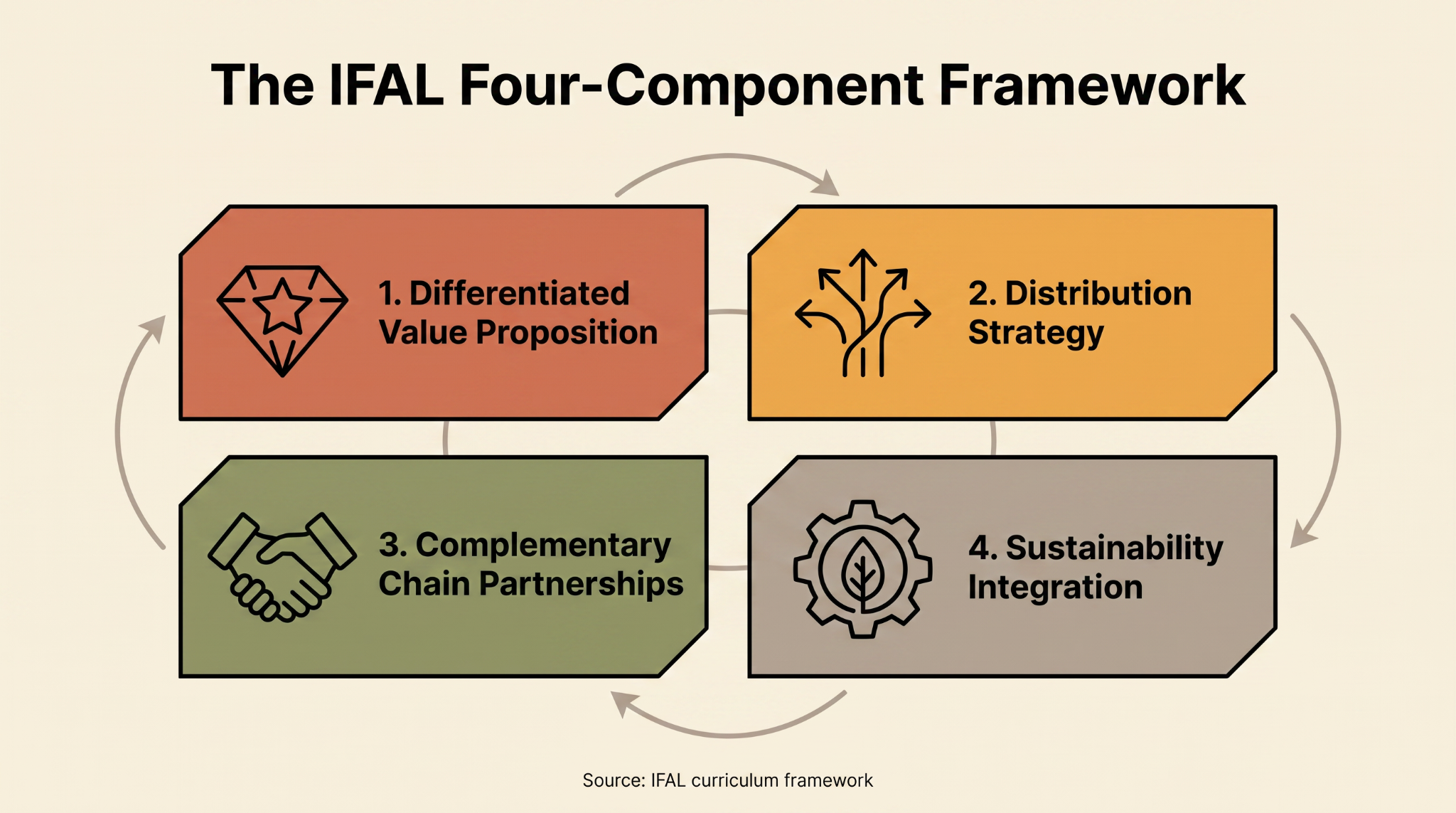
Each component is taught through real business model analysis — the curriculum draws on 300+ agrifood businesses already studied in depth — so learners are reasoning through actual sector complexity rather than a generic framework bolted onto unfamiliar material. That's the difference between critical thinking training and commercial judgment training: one teaches a process, the other builds pattern recognition inside the domain where your team actually has to use it.
The certificate takes about 45 hours, is self-paced, and is co-issued with Avila University (HLC-accredited), giving it institutional weight on a résumé or LinkedIn profile without requiring a multi-year commitment from your team. For organizations deploying it across a cohort, completion tracking and reporting make it straightforward to show the outcome, not just the activity, to leadership.
Where this fits in your 2026 L&D plan
If critical thinking and judgment are already on your priority list — and SHRM's data suggests they probably are — the practical question isn't whether to invest in that skill. It's whether the investment builds judgment your team can actually apply, or judgment that stays theoretical. Sector-specific commercial training is the version of this that shows up in decisions, not just in a training completion report.
For teams looking to deploy this at scale — cohort pricing, LMS integration, and completion analytics are all available through IFAL's Employers page, built specifically for L&D buyers evaluating team-wide rollout rather than individual enrollment.
To see the full curriculum and enroll a team member or cohort, visit the Foundation Certificate in Agribusiness Value Chains.
Sources: SHRM 2026 L&D Executives Benchmarking (4,600+ organizations); SHRM 2026 L&D Executives: Priorities and Perspectives (223 L&D executives); Voxy 2026 Global L&D Benchmark Survey (377 leaders, six continents); Deloitte 2026 Global Human Capital Trends; USDA/Purdue University Employment Outlook 2025–2030; Human Resources Online interview with ADM APAC HR Director.
