
Publix Business Model: How Service and Strategy Win in Grocery Retail
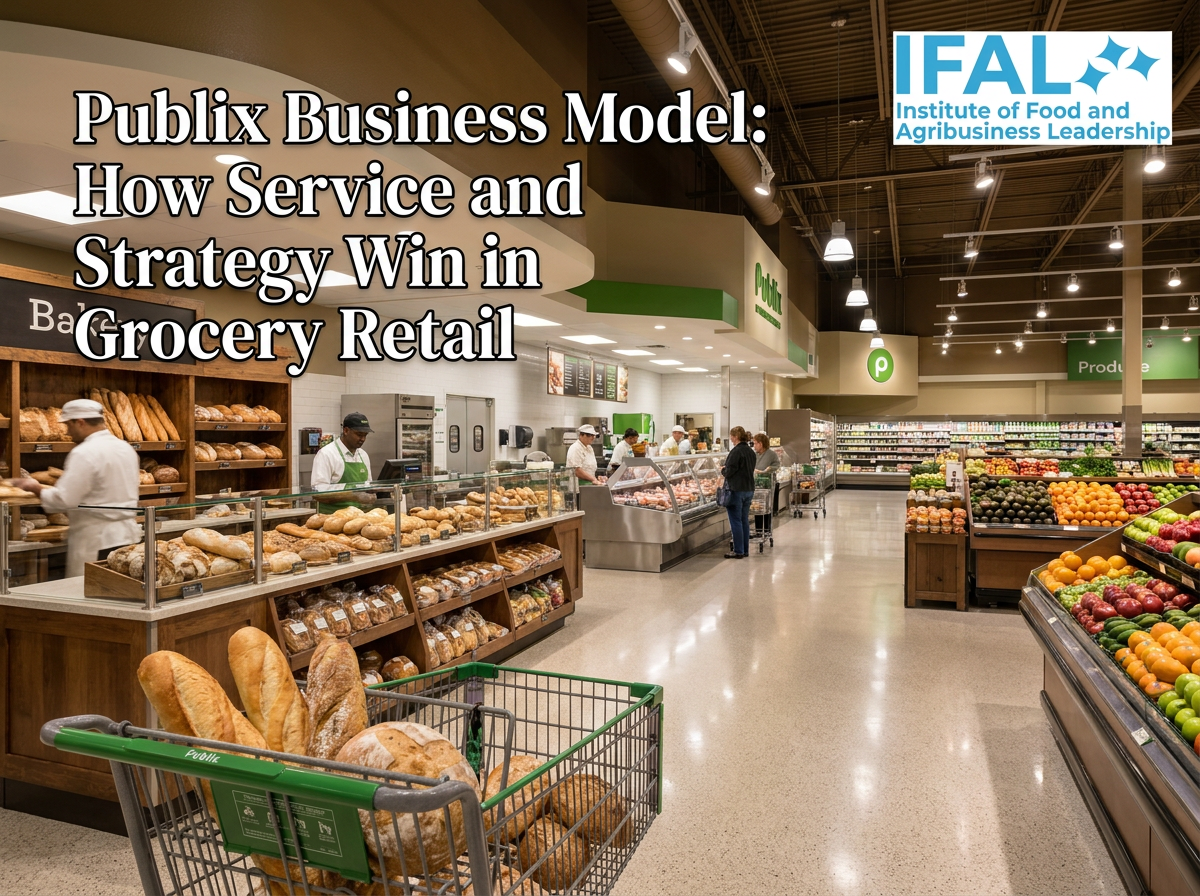
Introduction
In 1930, while the United States was deep in the Great Depression, George W. Jenkins opened the first Publix Food Store in Winter Haven, Florida. It was not an easy time to start a business, especially not in food retail, where margins were tight and customer budgets were even tighter. But Jenkins was building more than a store. He was building an experience. He believed grocery shopping could be cleaner, friendlier, and more dependable than what most shoppers were used to. That belief later took form in Publix’s first full supermarket in 1940, a store so ambitious for its time that it became known as a kind of “food palace.”
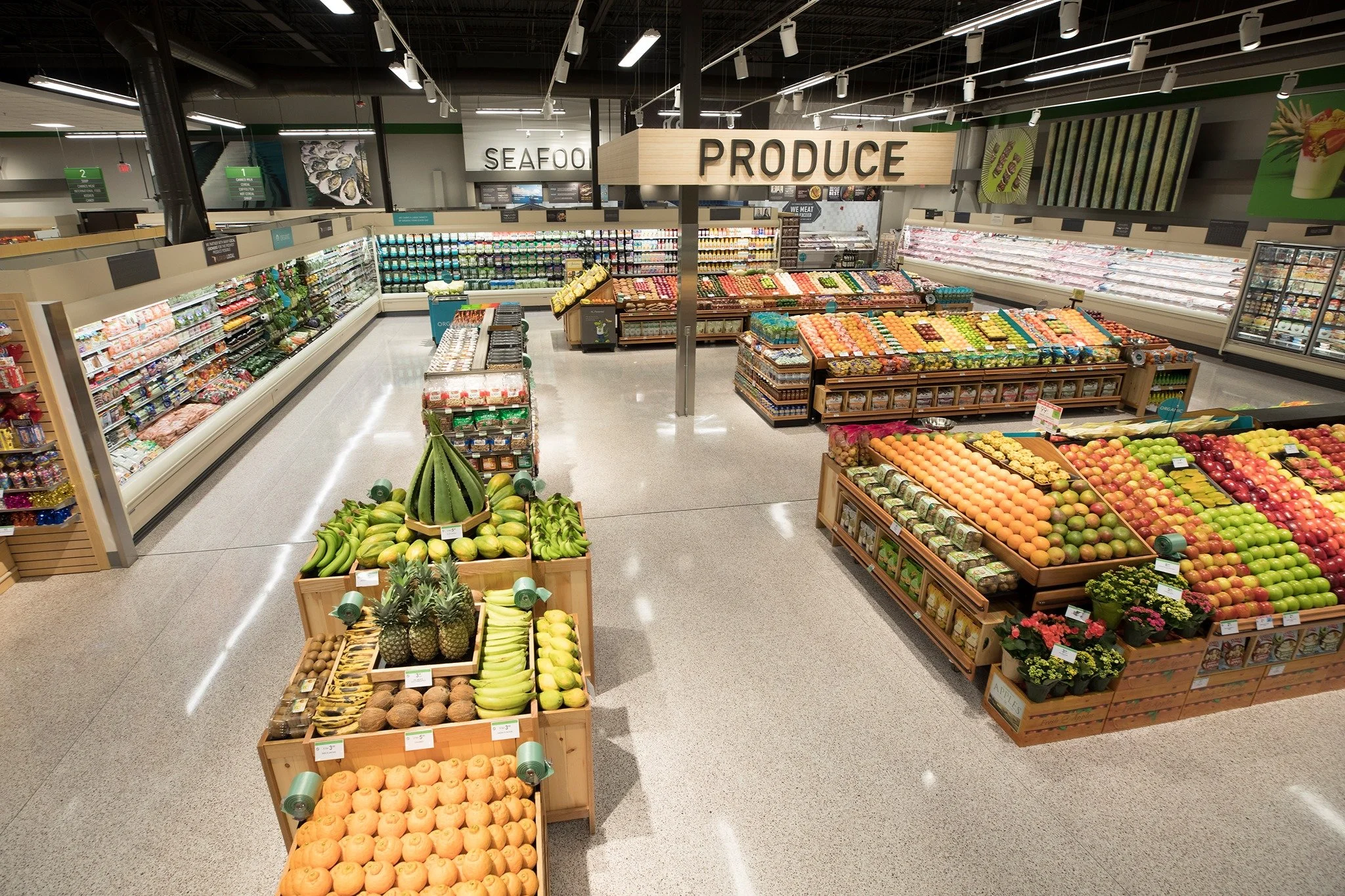
Source: https://theburn.com/
That founding story still matters because it explains the logic behind Publix’s business model today. Publix is not just selling groceries. It is selling confidence in the shopping trip. Customers walk in expecting fresh produce, reliable prepared foods, organized shelves, courteous service, and a store environment that feels consistent. In an industry often driven by price wars, that consistency becomes a serious competitive asset.
Publix has grown into the largest employee-owned company in the United States, with more than 1,400 stores, over 260,000 employees, and $59.7 billion in retail sales in 2024. Its footprint across the Southeast gives it a strong regional density advantage, helping it operate with brand familiarity, local convenience, and supply-chain focus.
The grocery retail market is changing fast. Consumers want low friction, higher quality, and convenience across both in-store and digital channels. They also increasingly expect fresh food options, quick meal solutions, and trusted essentials in one place. Publix’s response has been to build a business model where service and strategy reinforce one another. Its service culture makes the brand memorable, while its strategy around store density, category strength, and disciplined expansion makes that promise scalable.
Subtly, this is also where Publix gains from being more than a food store alone. The addition of pharmacy and everyday household essentials helps make the store a more complete destination, strengthening routine traffic and customer loyalty without needing to define the brand solely around that feature.
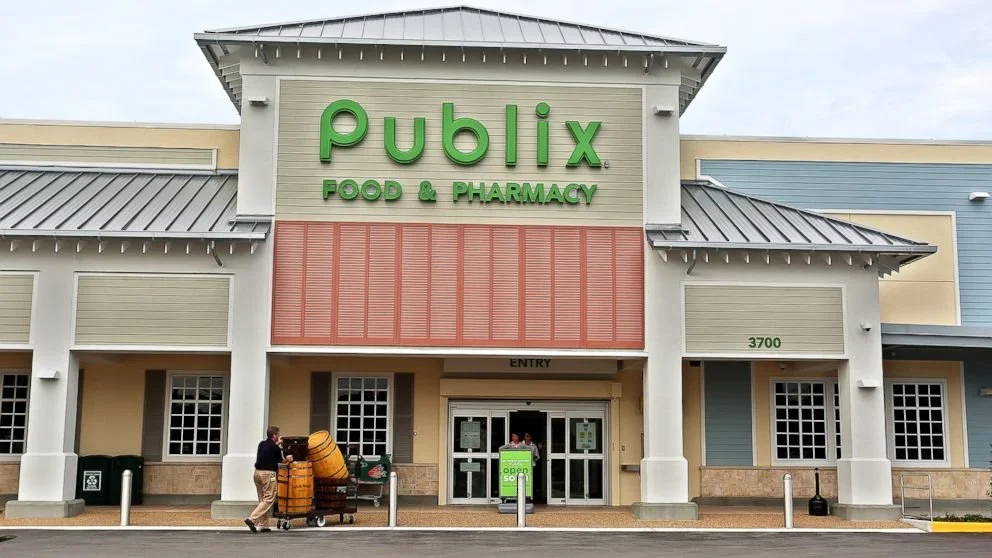
A new Publix store opened, Oct. 9, 2014, is St. Petersburg, Fla.
Scott Keeler/Tampa Bay Times/Zuma Press/Newscom
IFAL Business Model Framework
At IFAL, business model potential is assessed around four critical elements:
Value Proposition: Defines the core target customer/consumer segment and the key product/service attributes the targeted segment pays for
Distribution Strategy: The revenue model offered to the channels through which the product/service is delivered to the target customer/consumer segment
Complementary Partnerships: External alliances and interdependencies that are critical to produce and deliver the value proposition at optimal scale and profitable unit economics
Sustainability Elements: Economic, Social and Environmental outcomes delivered by the value proposition
Using this framework, Publix can be understood not simply as a supermarket operator, but as a regional grocery retail system built to convert trust into repeat transactions, local relevance, and durable scale.
Target Segment & Value Proposition
Publix serves a wide customer base, but its most commercially important segment is the shopper who wants grocery retail to feel reliable, pleasant, and efficient. That includes families managing weekly household baskets, working professionals looking for convenience, older consumers who value service and accessibility, and customers who care about fresh departments like produce, bakery, deli, and prepared foods.
What are these customers really paying for?
Not just packaged products. Not just low prices. They are paying for a smoother and more trustworthy shopping experience.
Publix’s value proposition combines:
Clean, well-organized stores
Friendly, service-led staff interactions
Strong fresh-food departments
One-stop convenience across grocery and household essentials
Trusted private-label products that balance quality and value
A shopping environment that feels dependable from visit to visit
This matters because grocery retail is full of functional substitutes. A shopper can buy milk, bread, cereal, or snacks from many different stores. What makes Publix more defensible is that it competes on how the shopping trip feels, not only on what is sold. That emotional and operational consistency creates a real business advantage. It encourages repeat visits, larger baskets, and word-of-mouth trust.
Its employee-owned structure also supports this proposition in an important way. In many retail businesses, service quality is uneven because labor is treated mainly as a cost line. Publix appears to treat store-level execution more strategically. If associates feel more invested in outcomes, customers are more likely to experience the brand promise in a tangible way.
Another subtle layer of value comes from category adjacency. Fresh food, prepared meals, pharmacy access, and household basics all make the Publix trip more useful to everyday routines. But the core proposition remains broader than any one category: a trusted neighborhood grocery experience.
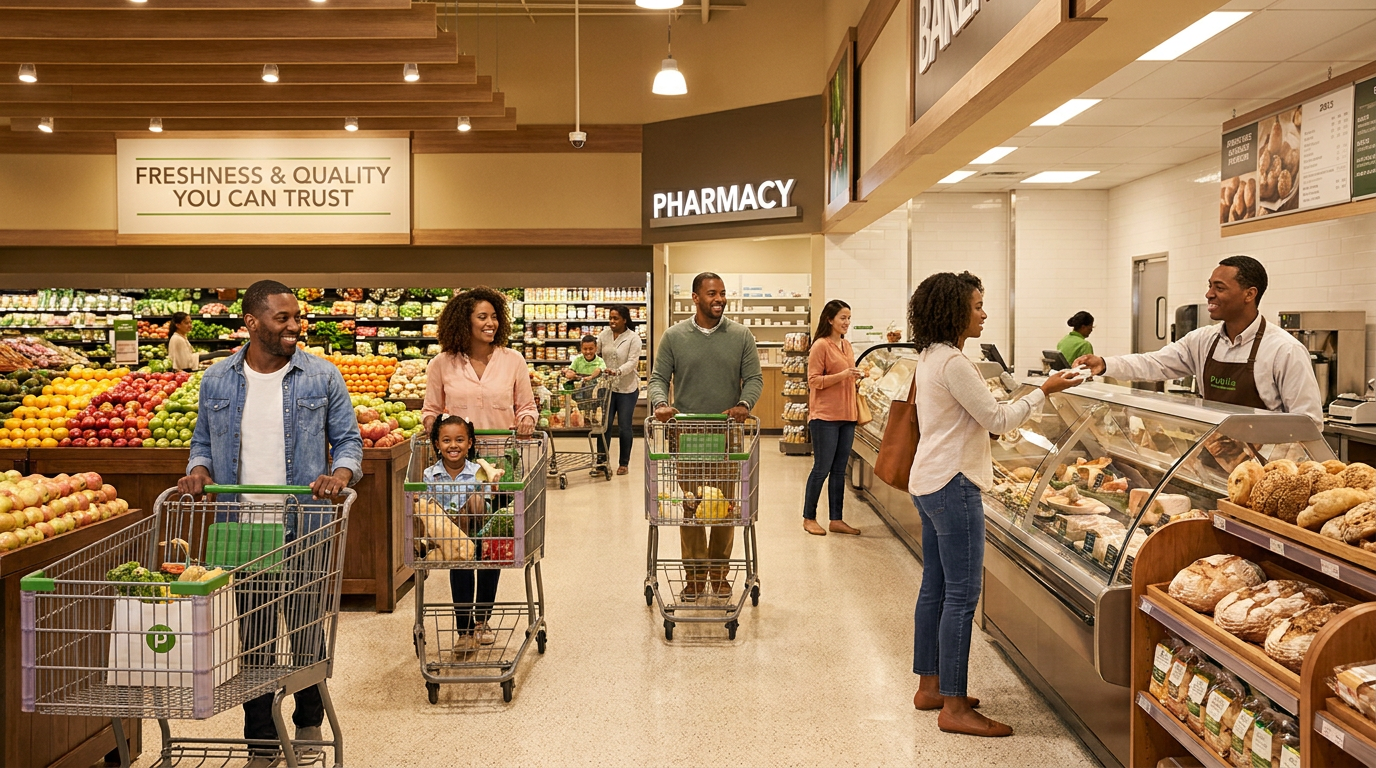
Distribution Strategy
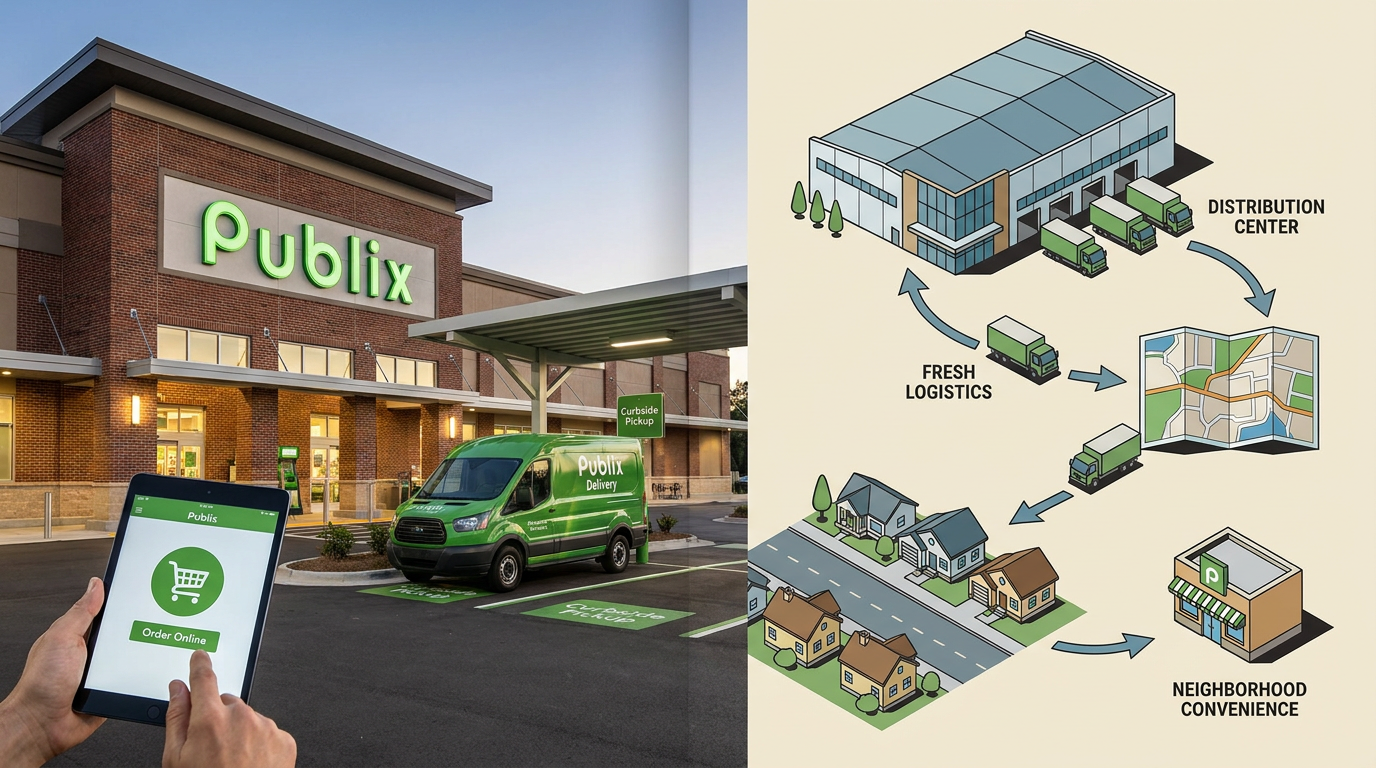
In grocery retail, distribution strategy is never only about logistics. It is about how a retailer creates access, drives repeat behavior, and captures revenue efficiently across channels. Publix’s model is anchored in its physical store network, but its real strategic strength comes from how those stores function within a broader system of proximity, convenience, and local market density.
Publix’s footprint in the Southeast is one of its biggest strategic assets. Rather than stretching thin across the country, it has built a concentrated regional network. That density improves brand recall, simplifies operational focus, and supports more efficient replenishment and category management. A dense regional model often allows a retailer to perform better than a wider but shallower footprint.
Its distribution strategy appears to rest on several layers:
Store-led distribution
Publix’s supermarkets remain the primary revenue engine. These stores are where the brand promise comes alive through assortment, fresh departments, service, and merchandising.
Omnichannel convenience
As customer behavior shifts, Publix also participates in digital grocery ordering, pickup, and delivery in ways that extend convenience without abandoning the store-centric model. This matters because convenience expectations now shape grocery loyalty as much as assortment once did.
Category-based revenue reinforcement
Distribution at Publix is not just about location. It is also about channeling traffic into higher-value categories such as bakery, deli, prepared foods, and pharmacy-linked trips. That raises the strategic value of each store beyond simple shelf-based sales.
Local market embedment
Because Publix is highly visible within many Southeastern communities, it benefits from habitual shopping patterns. In grocery retail, habit is powerful. The closer, easier, and more dependable the store feels, the stronger the recurring demand.
Future distribution opportunities
Looking ahead, Publix may continue strengthening:
digital ordering integration
local fulfillment efficiency
customer personalization
store-based convenience services
higher-margin prepared meal occasions
The central challenge is balance. Publix must extend convenience without weakening the service and quality that made customers trust the store in the first place.
Complementary Partnerships
No grocery retailer creates value in isolation. Publix’s ability to deliver its customer promise depends on a wide network of complementary partnerships and operating interdependencies.
These likely include:
Upstream supply and sourcing partners
Fresh produce growers
Meat, dairy, and seafood suppliers
Packaged food manufacturers
Private-label production partners
Seasonal and regional sourcing partners
Technology and systems partners
Digital commerce platforms
payment systems providers
pharmacy and health systems infrastructure
data analytics and forecasting tools
refrigeration and energy-management technologies
Logistics and fulfillment partners
freight and transportation providers
warehouse and supply-chain equipment specialists
last-mile delivery collaborators where applicable
packaging and inventory handling partners
Real estate and expansion partners
property developers
construction firms
local permitting and community stakeholders
facilities management providers
Community ecosystem partners
nonprofit organizations
food donation partners
local institutions and schools
health and community well-being initiatives
These partnerships matter because Publix’s value proposition depends on consistency. If suppliers fail, shelves go empty. If refrigeration or transport underperforms, fresh quality suffers. If digital systems are weak, convenience erodes. So the real role of complementary partnerships is not just cost efficiency. It is protecting trust at scale.
A retailer like Publix therefore needs partnerships that support both daily execution and long-term resilience.
Sustainability at the Core of the Business Model
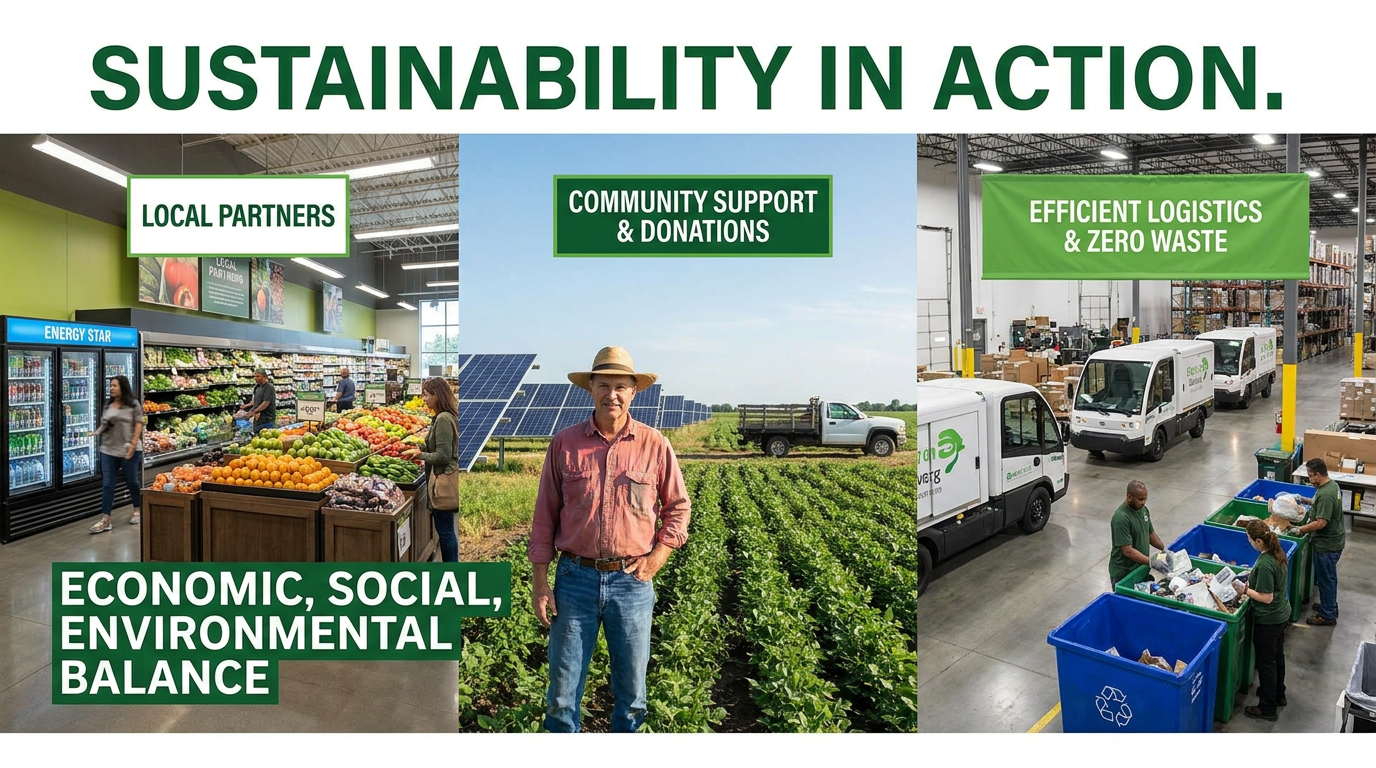
The best business models in food systems do not treat sustainability as a public-relations layer. They build it into how value is created and delivered. That is especially important in grocery retail, where supermarkets influence sourcing choices, refrigeration energy use, packaging, food waste, labor practices, and access to essential goods.
Publix has publicly communicated sustainability-related commitments and community support initiatives. But strategically, the deeper question is not whether sustainability exists as a statement. It is whether it strengthens the business model.
For Publix, sustainability can be viewed through three outcomes:
Economic outcomes
long-term business durability through loyal repeat customers
efficient regional scale in a highly competitive market
operational improvements that can strengthen margins over time
stable employment supported by employee ownership
Social outcomes
broad employment footprint across Southeastern communities
access to food, pharmacy, and household essentials
community investment and philanthropy through Publix Charities
potential contributions to food donation and local well-being
Environmental outcomes
energy efficiency in stores and refrigeration systems
waste reduction and better food handling
donation pathways for unsold but usable food
more responsible packaging and sourcing improvements over time
The strongest sustainability logic for Publix is practical. In grocery retail, reducing waste is not only good for the planet; it can improve economics. Improving refrigeration efficiency is not only good for emissions; it reduces operating costs. Building community trust is not only socially valuable; it strengthens brand resilience.
That is what makes sustainability powerful when embedded in the business model. It becomes a source of operating discipline, not just brand messaging.
Strategic Dilemmas
Publix’s business model is strong, but like any successful retailer, it faces trade-offs that become sharper as the market evolves.
Service quality vs. cost pressure
How can Publix maintain a high-service grocery retail experience in a market where customers remain highly price sensitive?Store-first strength vs. digital acceleration
How far should Publix push pickup, delivery, and digital convenience without weakening the economics and identity of the in-store experience?Regional focus vs. geographic expansion
Should Publix deepen its dominance in existing markets or accelerate into new territories where brand familiarity is lower?Private-label growth vs. assortment balance
How aggressively should the company expand its own brands while still protecting shopper choice and national-brand relevance?Fresh differentiation vs. operating complexity
Can Publix keep scaling fresh departments and prepared foods without introducing inconsistency in quality, labor intensity, or waste?Partnership leverage vs. control
Which capabilities should remain tightly owned, and where should Publix rely on third-party partners for delivery, technology, and logistics?Sustainability ambition vs. short-term economics
Which environmental and social investments create both measurable impact and strong commercial returns?
These dilemmas do not signal weakness. They are the normal tensions of a business model trying to stay premium, scalable, and trusted at the same time.
Key Takeaways
Publix succeeds in grocery retail by combining service quality with strategic discipline.
Its value proposition is built around trust, convenience, fresh-food strength, and store consistency.
Regional density is a major strategic advantage because it supports both brand familiarity and operating focus.
The store is not just a sales point; it is also a fulfillment asset, brand experience hub, and loyalty engine.
Complementary partnerships are essential for protecting quality, convenience, and scale.
Sustainability is most valuable when tied to waste reduction, efficiency, community trust, and long-term resilience.
Publix’s biggest challenge is to modernize convenience while preserving the service standards that made it trusted in the first place.
Call to Action
If you want to better understand how agribusinesses create value across production, partnerships, distribution, and sustainability, explore IFAL’s Agribusiness Value Chains Learning Pathway.
It is a practical foundation for understanding how better food and agriculture businesses are built
👉 Learn more: https://www.avila.edu/avila-agribusiness-programs/foundation-certificate-in-agribusiness-value-chains/
References
Public sources only:
Publix Corporate - Company Overview
https://corporate.publix.com/about-publix/company-overviewPublix Corporate - Facts & Figures
http://corporate.publix.com/about-publix/company-overview/facts-figuresPublix Corporate - History
http://corporate.publix.com/about-publix/culture/historyPublix Corporate - Publix Through the Decades
https://corporate.publix.com/newsroom/news-stories/publix-through-the-decadesPublix 2024 Annual Report
https://images.publixcdn.com/cms/documents/stockholder-annual-meeting/2025-annual-meeting/2024-annual-report-on-form-10-k.pdfPublix Good Together / CSR
https://csr.publix.comPublix Sustainability newsroom article
https://corporate.publix.com/newsroom/news-stories/04212026---growing-a-greener-future-with-publixs-ongoing-commitment-to-sustainabilityGrocery Dive - Publix strategy coverage
https://www.grocerydive.com/news/publix-grocery-shopping-private-label-store-growth/803438/
Disclaimer:
This article is for educational and informational purposes only. We are not affiliated with or endorsed by Publix or any company mentioned. All trademarks and images are the property of their respective owners, and readers use this information at their own risk.