
Of Course. Kitchen & Company Business Model: Building a Chef-Led South Asian Fusion Brand Around Experience and Flavor
Introduction
Some restaurant concepts are built around a location. Others are built around a trend. Of Course. Kitchen & Company feels different: it is built around a chef’s point of view.
Founded by Swetha Newcomb with her husband Jesse Newcomb, the restaurant opened in the Bluhawk district in Overland Park after Swetha’s work as a private chef and years of culinary ambition. Public profiles describe Swetha as a chef who wanted to create something personal—global in inspiration, grounded in Indian and South Asian flavors, yet approachable enough for local diners looking for a memorable night out.
That timing matters. Across U.S. food service, consumers continue to seek more than convenience. They increasingly want experience, story, shareability, and flavor discovery. In suburban growth corridors like southern Overland Park, that creates an opening for restaurants that can offer something beyond the expected steakhouse, chain concept, or standard brunch formula. Of Course appears to meet that unmet need with a menu that combines refined plating, bold spice profiles, and an inviting atmosphere rather than old-school fine dining stiffness.
Its opportunity sits at the intersection of several trends:
growing consumer interest in globally inspired cuisine
rising appreciation for chef-led independent restaurants
demand for premium casual dining experiences
and a stronger willingness to travel for “destination” food moments within metropolitan areas
In other words, Of Course is not just selling dinner. It is selling novelty with credibility—the comfort of hospitality combined with the excitement of culinary discovery.
That is what makes the business model interesting. The restaurant’s value proposition is distinctive, but distinctiveness in hospitality also raises hard questions: Can a founder-led concept scale? Can quality remain exceptional at higher volume? Can destination dining become a repeatable business engine?
Those are exactly the kinds of questions the IFAL framework helps unpack.
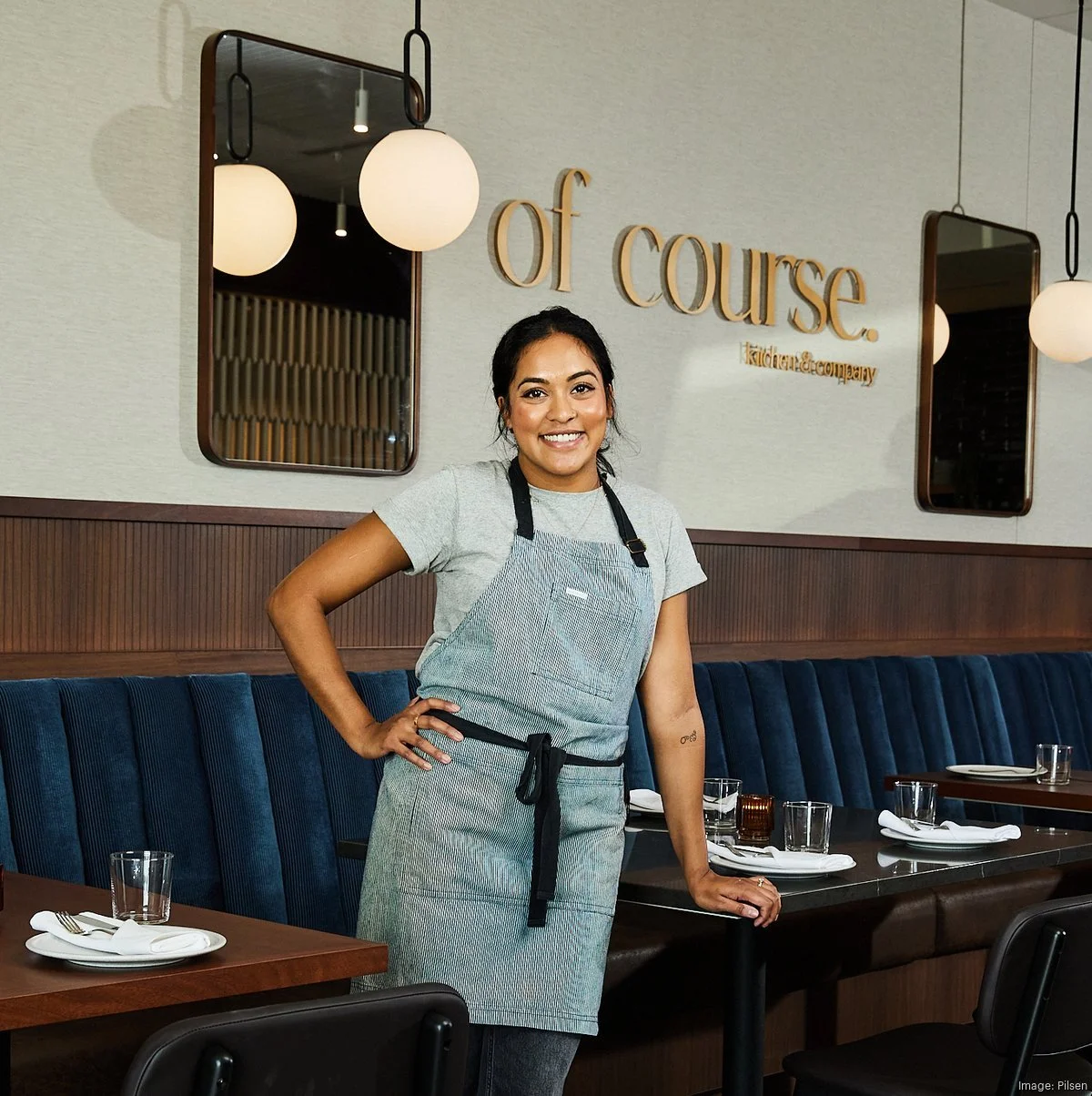
Founder - Swetha Newcomb (Source: https://www.bizjournals.com/)
IFAL Business Model Framework
At IFAL, business model potential is assessed around four critical elements:
Value Proposition: Defines the core target customer/consumer segment and the key product/service attributes the targeted segment pays for
Distribution Strategy: The revenue model offered to the channels through which the product/service is delivered to the target customer/consumer segment
Complementary Partnerships: External alliances and interdependencies that are critical to produce and deliver the value proposition at optimal scale and profitable unit economics
Sustainability Elements: Economic, Social and Environmental outcomes delivered by the value proposition
Using this framework, Of Course can be understood as more than a restaurant. It is a chef-led hospitality platform whose success depends on aligning culinary creativity, customer experience, local demand, operational discipline, and long-term brand expansion.
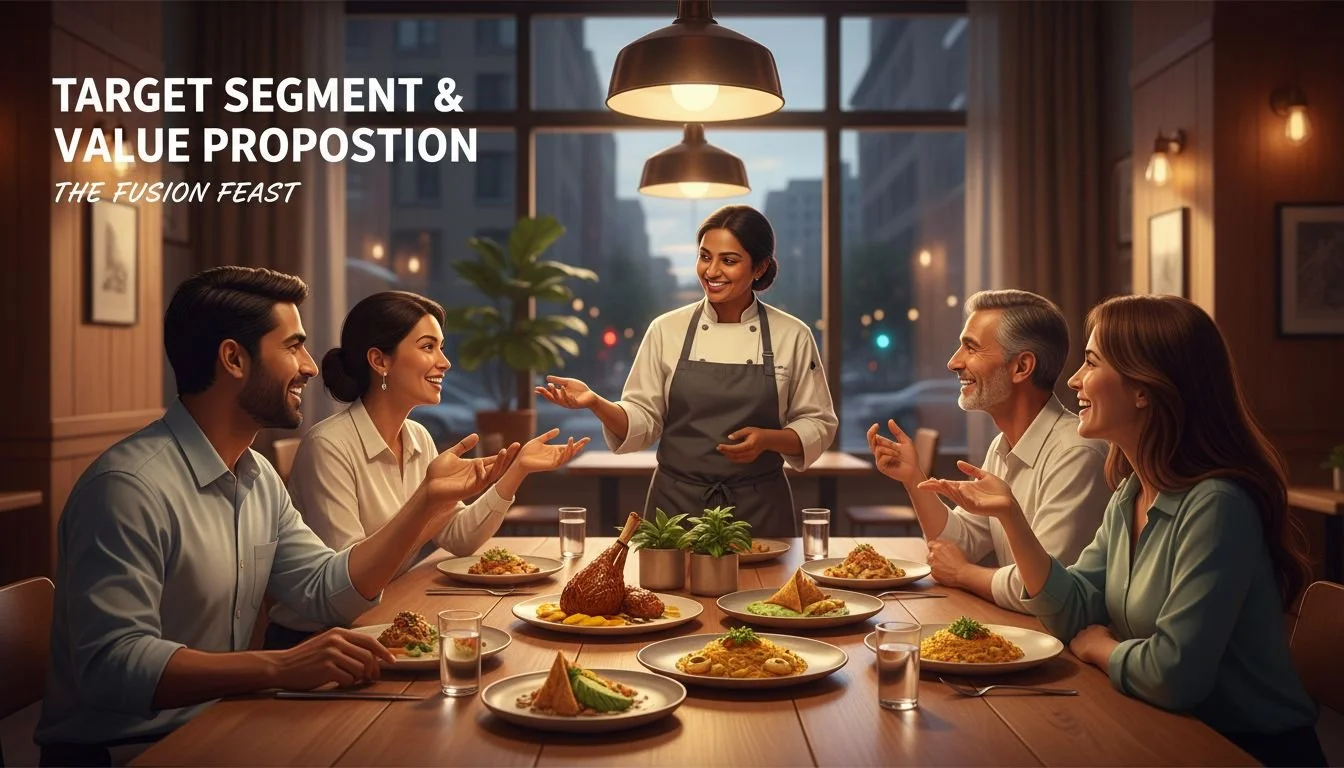
Target Segment & Value Proposition
Of Course serves customers who are not simply hungry—they are looking for an elevated, memorable dining experience.
Its core target segment likely includes:
affluent or aspirational suburban diners in Johnson County and greater Kansas City
professionals, couples, and groups seeking destination dining
consumers interested in global flavors and chef-driven menus
diners who want premium food in an environment that feels modern and welcoming rather than overly formal
What are they paying for?
They are paying for a combination of:
culinary originality
South Asian and Indian flavor differentiation
shareable menu design
chef credibility
atmosphere and hospitality
social currency of discovering a standout local concept
This is important. In hospitality, the food alone is rarely the whole product. The real product is the experience bundle: menu, service, setting, story, and emotional payoff. Of Course appears to differentiate itself by combining bold flavor architecture with an upscale but approachable setting. That makes it easier to appeal to both adventurous diners and customers who may be newer to Indian or South Asian-inspired fine dining.
Competitive advantage appears to come from:
founder-led culinary identity
differentiated flavor profile in a suburban market
strong media and word-of-mouth traction
premium positioning without excessive formality
The risk, however, is also embedded in the strength: when the value proposition is tightly tied to a founder-chef, consistency and scalability become critical strategic issues.
6. 🛒 Distribution Strategy
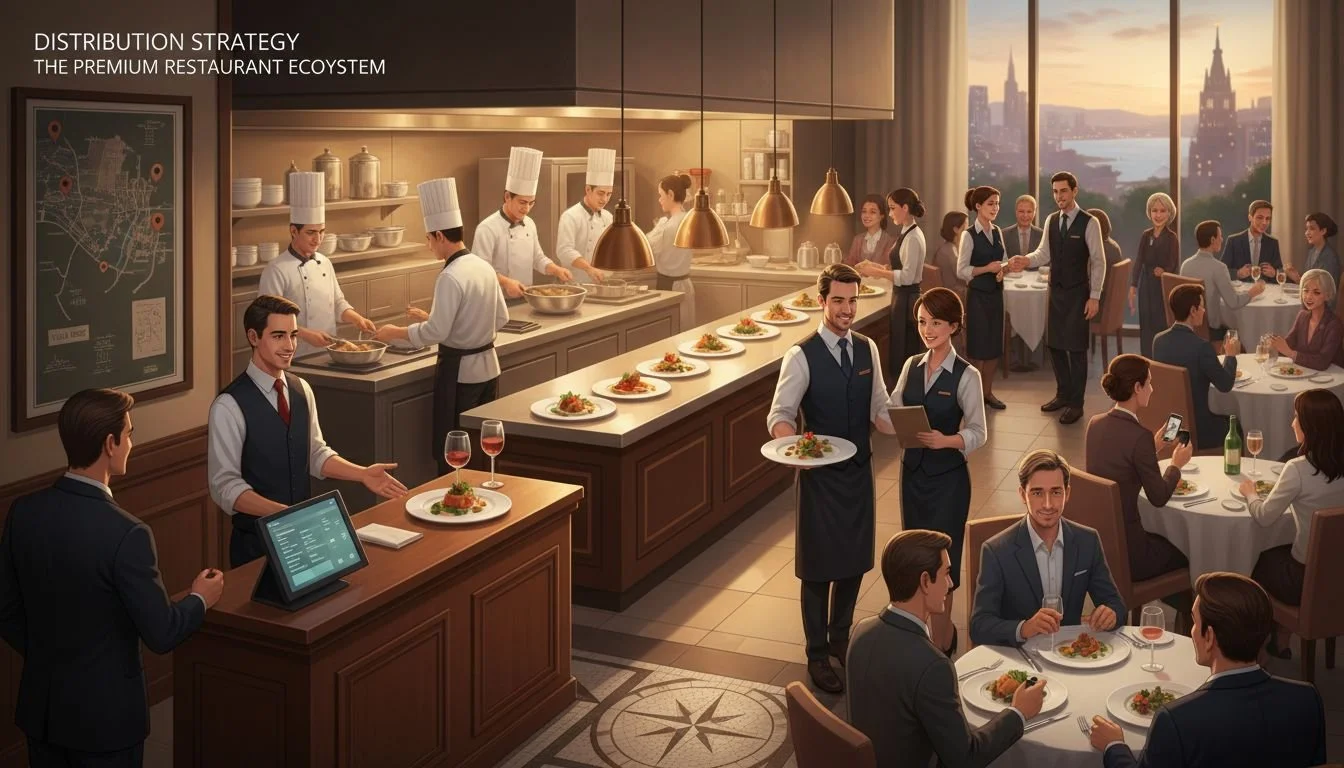
For a restaurant, distribution strategy is not just “where food is sold.” It is about how demand is captured, monetized, and repeated.
Of Course’s current distribution model appears centered on:
on-premise dining
a premium dine-in experience
bar revenue
shareable dishes that support higher-ticket ordering behavior
destination traffic in the Bluhawk district
That model makes sense. The restaurant’s value is partly sensory and atmospheric, so dine-in is the most powerful channel. The open kitchen, interior design, plating, and service are part of the product itself.
Its current revenue logic likely benefits from:
food + beverage mix
premium menu architecture
check growth through sharing occasions
dinner-led traffic rather than purely convenience-led transactions
Potential future channel extensions could include:
private dining and special events
chef’s table experiences
catering for premium occasions
branded sauces, spice blends, or pantry products
collaborations and pop-ups
curated tasting nights or ticketed cultural dining events
The strategic question is whether expansion should happen through more seats, more formats, or more monetization per brand.
A founder-led concept often creates the most value by deepening brand economics before scaling real estate. For Of Course, that could mean strengthening reservation demand, event programming, and premium beverage pairings before considering second-unit growth.
Complementary Partnerships
No restaurant delivers a premium value proposition alone. Complementary partnerships are essential.
For Of Course, the most important partnership categories likely include:
1. Ingredient and supply partners
A menu built on seasonal, refined, globally inspired dishes depends on reliable sourcing of proteins, produce, spices, and specialty ingredients. Quality drift at the supplier level can quickly erode customer trust.
2. Beverage and bar collaborators
Public coverage notes a professionally designed beverage program. In premium dining, bar partnerships and beverage strategy are major contributors to margin, brand perception, and repeat traffic.
3. Property and location ecosystem partners
Being in the Bluhawk district creates built-in visibility and traffic adjacency. Retail neighbors and destination clustering can help reduce customer acquisition costs.
4. Media and reputation partners
Independent restaurants benefit from press coverage, food critics, tourism boards, and local influencer ecosystems. These are not “traditional” supply-chain partners, but they are highly complementary to demand generation.
5. Talent and training partners
Hospitality businesses often rise or fall on recruitment, kitchen systems, and service quality. As a chef-led brand grows, talent partnerships become as important as ingredient sourcing.
6. Community and event collaborators
Guest-chef dinners, local artisan collaborations, and regional food events can extend the brand without requiring permanent footprint expansion.
From an IFAL perspective, Of Course’s partnership model is likely strongest when it supports both:
consistent execution of a premium dining experience
and brand amplification beyond the physical dining room
Sustainability at the Core of the Business Model
Sustainability in hospitality is often misunderstood as only packaging or food waste. In reality, better business models create value across economic, social, and environmental dimensions.
Of Course shows early sustainability relevance in at least three ways:
Economic sustainability
A differentiated restaurant concept can create stronger pricing power than undifferentiated competitors. If customers perceive originality, quality, and experience, the business has more room to sustain healthy gross margins.
Social sustainability
Of Course contributes to cultural visibility by bringing South Asian and Indian culinary influence into a premium local dining setting. That matters. Food businesses can expand representation, deepen cultural appreciation, and build more diverse local food ecosystems.
Environmental sustainability
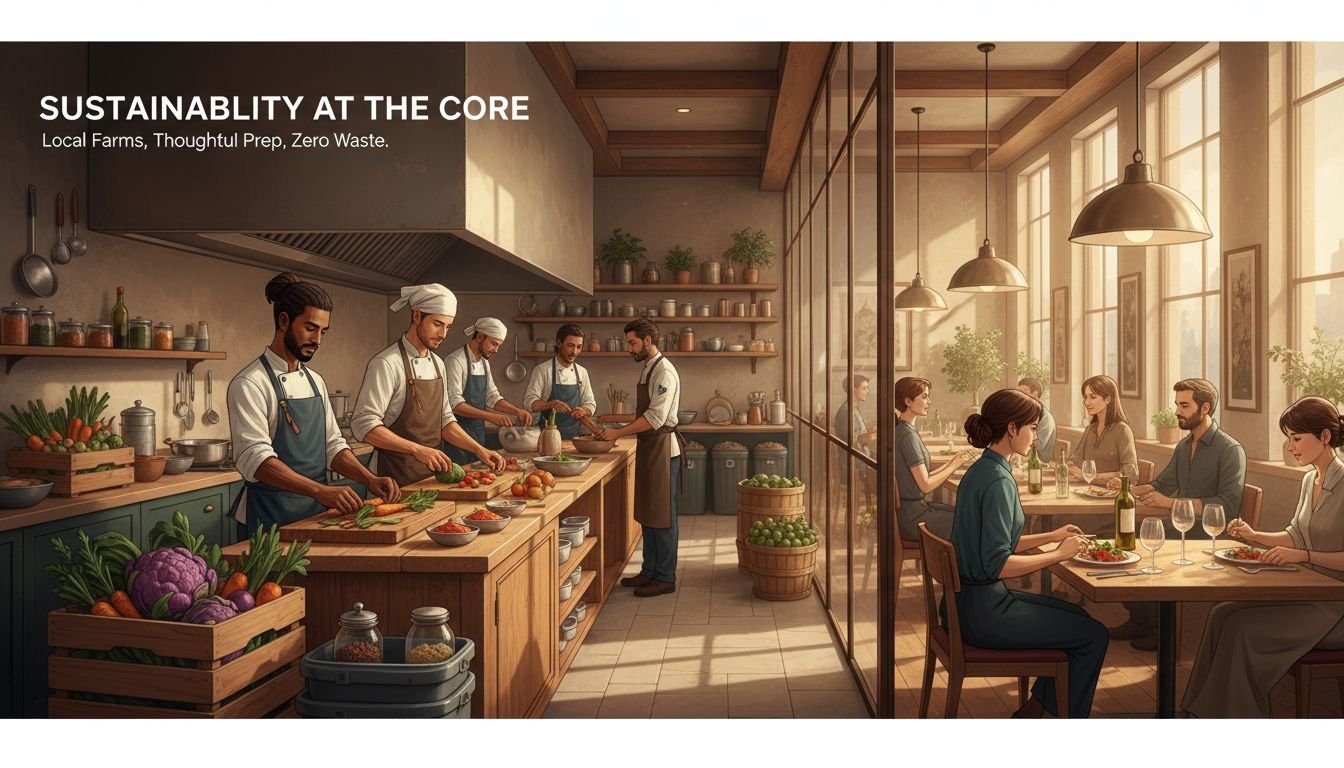
Public sources mention seasonal and locally sourced ingredients. While this alone does not make a restaurant fully sustainable, it can support:
shorter supply chains
fresher product quality
seasonal menu agility
potentially lower waste through tighter purchasing and menu planning
To strengthen sustainability strategically, the business could deepen its model through:
formal local sourcing targets
kitchen waste tracking
menu engineering for byproduct utilization
staff sustainability training
transparent supplier storytelling
For hospitality brands, sustainability works best when it is not bolted on as marketing. It should improve unit economics, brand trust, and operational resilience at the same time.
Strategic Dilemmas
Every strong business model eventually meets hard trade-offs. For Of Course, the key strategic dilemmas may include:
Founder dependency vs. scale
Can the restaurant maintain its identity if the customer experience is closely tied to Swetha Newcomb’s direct presence and creative leadership?Exclusivity vs. accessibility
Premium positioning strengthens brand value, but could narrow audience reach if price perception becomes a barrier.Destination dining vs. repeat frequency
Memorable restaurants attract buzz, but the model also needs repeat local traffic, not just special-occasion visits.Menu creativity vs. operational simplicity
Highly inventive menus create differentiation, but too much complexity can hurt consistency, labor efficiency, and margin discipline.Dine-in excellence vs. channel expansion
Off-premise, catering, retail, and events could diversify revenue, but may dilute the experience if executed poorly.Supplier quality vs. cost pressure
Seasonal and premium sourcing strengthens the value proposition, yet creates volatility in food costs and purchasing complexity.Brand growth vs. unit economics
Should the company prioritize a second location, branded packaged goods, private events, or deeper monetization of the first site?Sustainability ambition vs. execution bandwidth
Many good sustainability practices require systems, data, and staff training that small founder-led businesses may struggle to implement immediately.
Key Takeaways
Of Course has built a distinctive chef-led value proposition around South Asian-inspired premium dining.
Its strongest business advantage is culinary differentiation paired with approachable hospitality.
The current distribution model is best suited to high-value dine-in experiences, not commodity takeout competition.
Complementary partnerships in sourcing, beverage, media, and talent are essential to preserving quality.
The biggest strategic challenge is scaling without losing founder-led authenticity.
Sustainability can become a stronger advantage if tied directly to sourcing, waste reduction, and local ecosystem storytelling.
Near-term growth may be more attractive through events, private dining, and brand extensions than rapid physical expansion.
Continuing the Learning Journey
Want to understand how innovative food businesses create value, build resilient distribution, and scale sustainably across agribusiness and food systems?
Explore Foundation Certificate in Agribusiness Value Chains:
👉 https://www.avila.edu/avila-agribusiness-programs/foundation-certificate-in-agribusiness-value-chains/
References
Of Course. Kitchen & Company — About
https://www.ofcoursekc.com/aboutOf Course. Kitchen & Company — News
https://www.ofcoursekc.com/newsVisit Overland Park — Of Course Kitchen & Company
https://www.visitoverlandpark.com/directory/of-course-kitchen-company/Kansas City Business Journal — Swetha Newcomb opens her first fine-dining restaurant at Overland Park’s Bluhawk
https://www.bizjournals.com/kansascity/news/2023/08/04/swetha-newcomb-of-course-kitchen-co-bluhawk.htmlThe Pitch KC — Of Course Kitchen & Company review
https://www.thepitchkc.com/of-course-kitchen-company-curry-our-favor-but-current-crunch-distracts-from-the-flavor/IN Kansas City Magazine — Reservation for One: Of Course Kitchen & Company
https://www.inkansascity.com/eat-drink/restaurants/reservation-for-one-of-course-kitchen-company/The Infatuation — Of Course review
https://www.theinfatuation.com/kansas-city/reviews/of-course
Disclaimer
This article is for educational and informational purposes only. We are not affiliated with or endorsed by Of Course. Kitchen & Company or any company mentioned. All trademarks and images are the property of their respective owners, and readers use this information at their own risk.