
Agribusiness Value Chains Certificate: Why Value Chain Thinking Is the New Competitive Advantage
The future of food and agriculture will not be shaped by better production alone. It will be shaped by better coordination across the entire system.
That is why the Foundation Certificate in Agribusiness Value Chains from Avila University, powered by IFAL, is increasingly relevant for professionals, founders, and organizations looking to strengthen decision-making across modern agribusiness.
Agribusiness Is No Longer About One Role—It’s About the Entire System
Agribusiness today is no longer defined by farming, processing, or distribution alone.It is defined by how effectively these elements work together as a connected system.
A pricing decision at the farm level impacts processing margins.Processing efficiency affects distribution costs.Distribution determines market access and competitiveness.
Yet, most professionals are trained in isolated functions—not in systems.
And that is where the real gap lies.
The Problem: Skilled Professionals, But Limited Value Chain Thinking
Across the food and agribusiness sector:
Agronomists understand production—but not always markets
Supply chain teams optimize logistics—but not always sourcing strategy
Founders build products—but often struggle with distribution and scale
The result?
👉 Missed opportunities👉 Fragmented decisions👉 Limited profitability
Because in agribusiness, value is not created in silos—it is created across the value chain.
What Is an Agribusiness Value Chain?
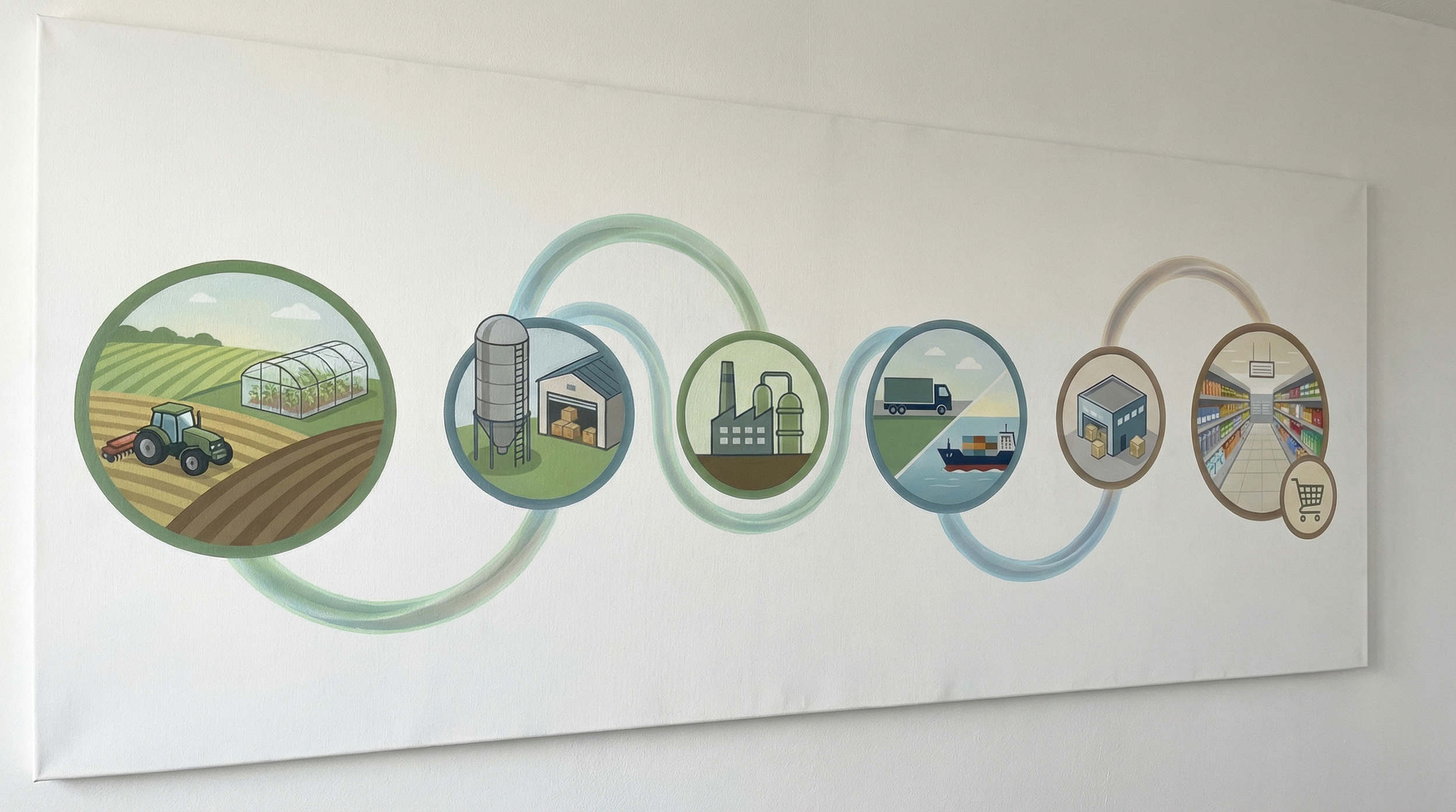
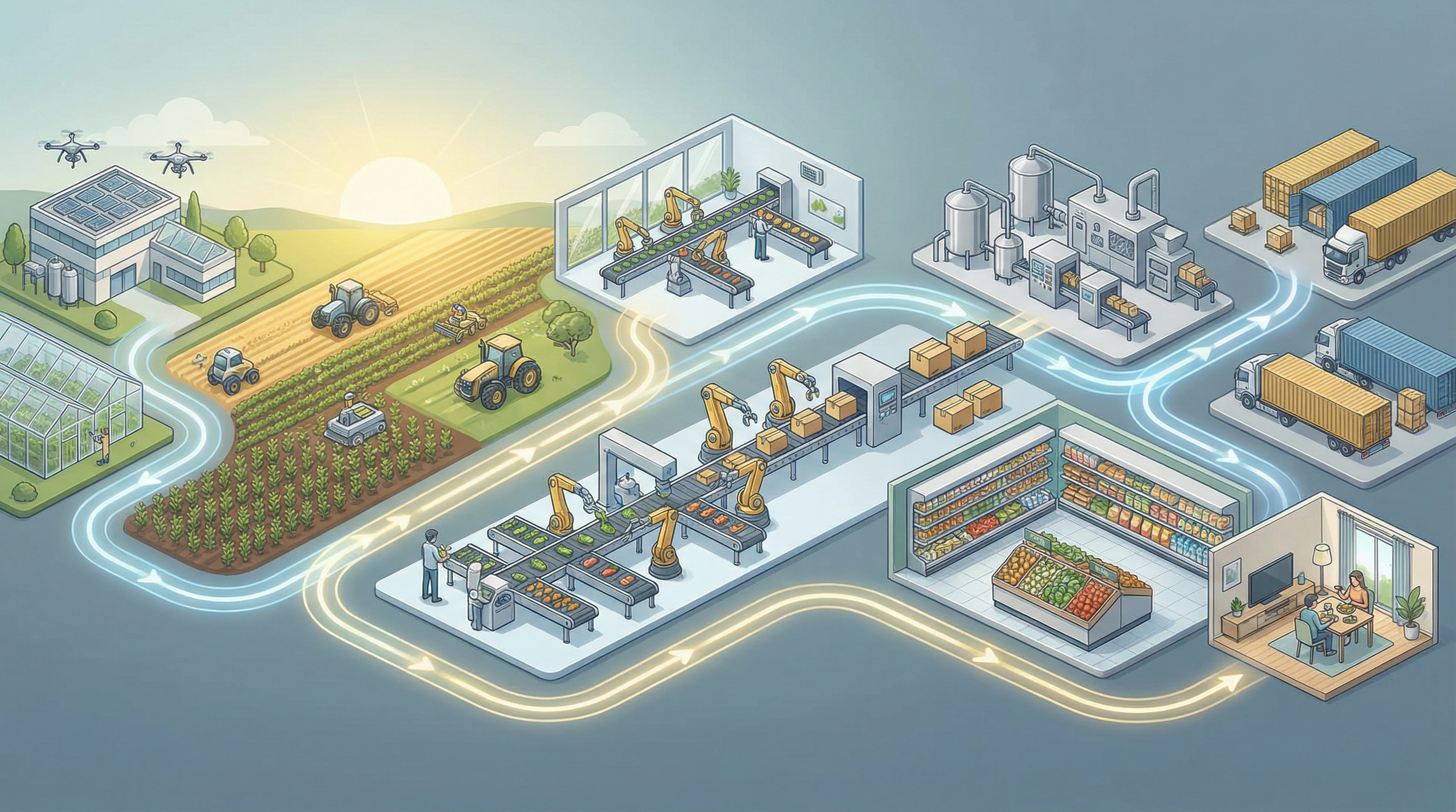
An agribusiness value chain refers to the complete journey of food and agricultural products—from input supply and farming to processing, distribution, retail, and final consumption.
It includes:
Farm-level production decisions
Post-harvest processes like sorting, grading, and packaging
Aggregation and distribution networks
Food service and retail systems
Consumer demand and market trends
Every stage is interconnected—and every decision influences cost, quality, and profitability.
Why Value Chain Thinking Is the New Competitive Advantage
In today’s rapidly evolving food system, success depends on how well professionals and organizations understand and design across the system.
Value chain thinking enables professionals to:
Improve margins through better decision alignment
Build resilient and efficient supply chains
Adopt the right technologies at the right stage
Identify new business opportunities across the chain
Connect operational execution with strategic outcomes
👉 In simple terms:It helps professionals move from execution to strategy.
Introducing the Foundation Certificate in Agribusiness Value Chains
To address this gap, Avila University offers the Foundation Certificate in Agribusiness Value Chains, designed in collaboration with the Institute of Food & Agribusiness Leadership (IFAL).
This program is not just academic—it is industry-driven, application-focused, and built for real-world decision-making.
At its core, the program helps learners understand:
👉 How value is created, captured, and scaled across agribusiness systems
According to the course outcomes, the program includes 14 courses and a reflection assignment designed to help learners:
Understand key actors in agribusiness value chains and the decisions they make
Explore product, process, and technology innovations across the chain
Learn the principles of business model design and competitiveness
Build understanding of accounting, finance, and value chain financing
Apply learning to questions and dilemmas relevant to specific job roles
Powered by IFAL’s Business Model Framework
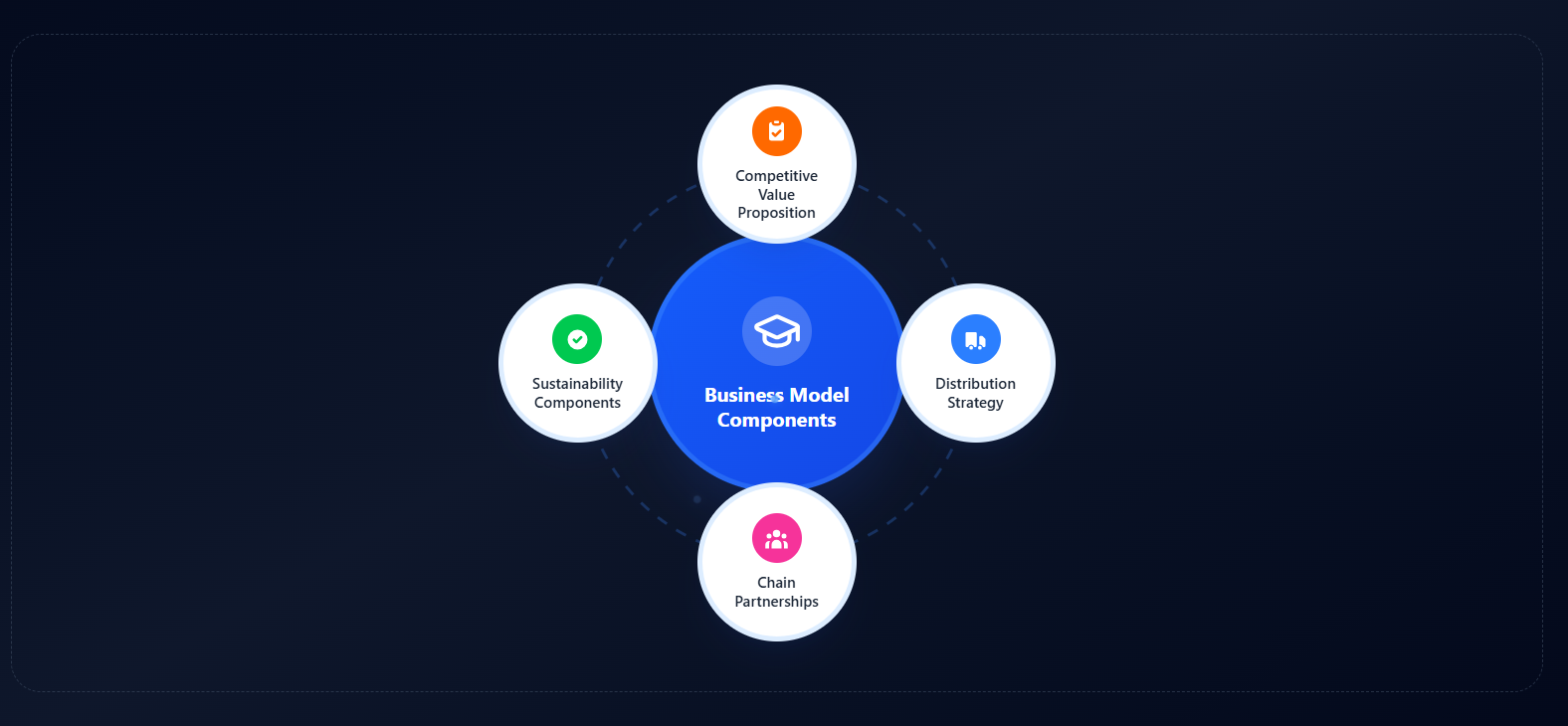
What makes this program truly differentiated is its foundation in IFAL’s Business Model Framework, which introduces learners to four critical pillars of business model design:
Value Proposition – What unique value is being delivered?
Distribution Strategy – How does the product reach the market?
Complementary Partnerships – Who enables scale and efficiency?
Sustainability Elements – How is long-term value sustained?
Instead of just learning what happens in agribusiness systems, learners are trained to:
👉 Analyze, design, and improve agribusiness business models
This is what shifts professionals from operators → strategists.
What You Actually Learn: From Concepts to Decisions
The pathway includes 14 structured courses and a reflection exercise, designed to build both knowledge and application skills.
Key capabilities you develop:
✅ Understand Decisions Across the Value Chain
Learn how farmers, producer organizations, aggregators, processors, distributors, food service operators, and retailers make interconnected decisions.
✅ Evaluate Technology and Innovation
From agritech to post-harvest systems, understand how innovation improves productivity and profitability across the agribusiness value chain.
✅ Build Business Model Thinking
Use structured frameworks to design competitive and scalable agribusiness models.
✅ Strengthen Financial Understanding
Learn key concepts in accounting and value chain financing in agribusiness, making financial thinking more relevant to real business decisions.
✅ Apply Learning to Real-World Challenges
Through reflection exercises and decision scenarios, connect learning directly to your role, enterprise context, or business challenge.
A Quick Look at the Course Areas
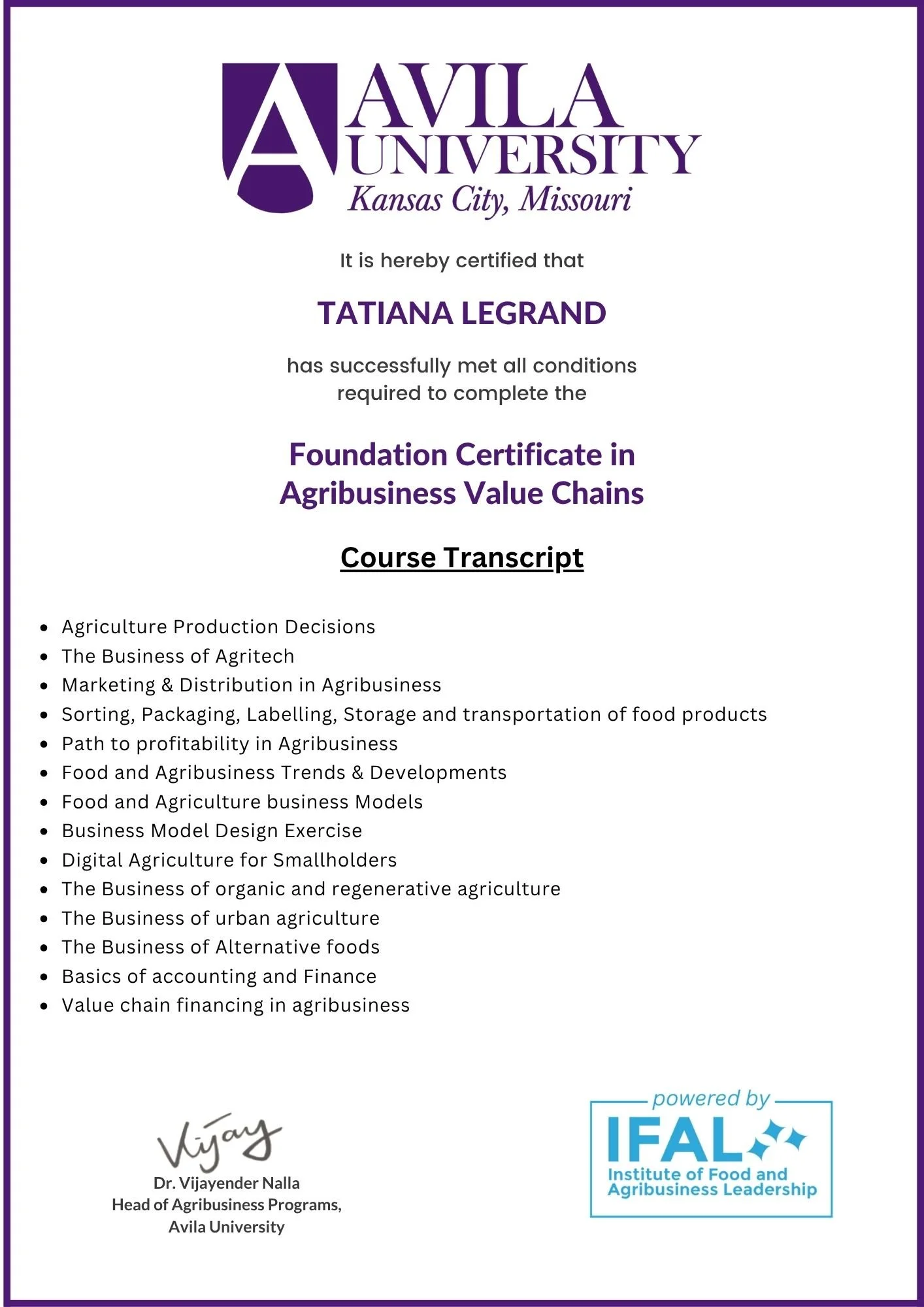
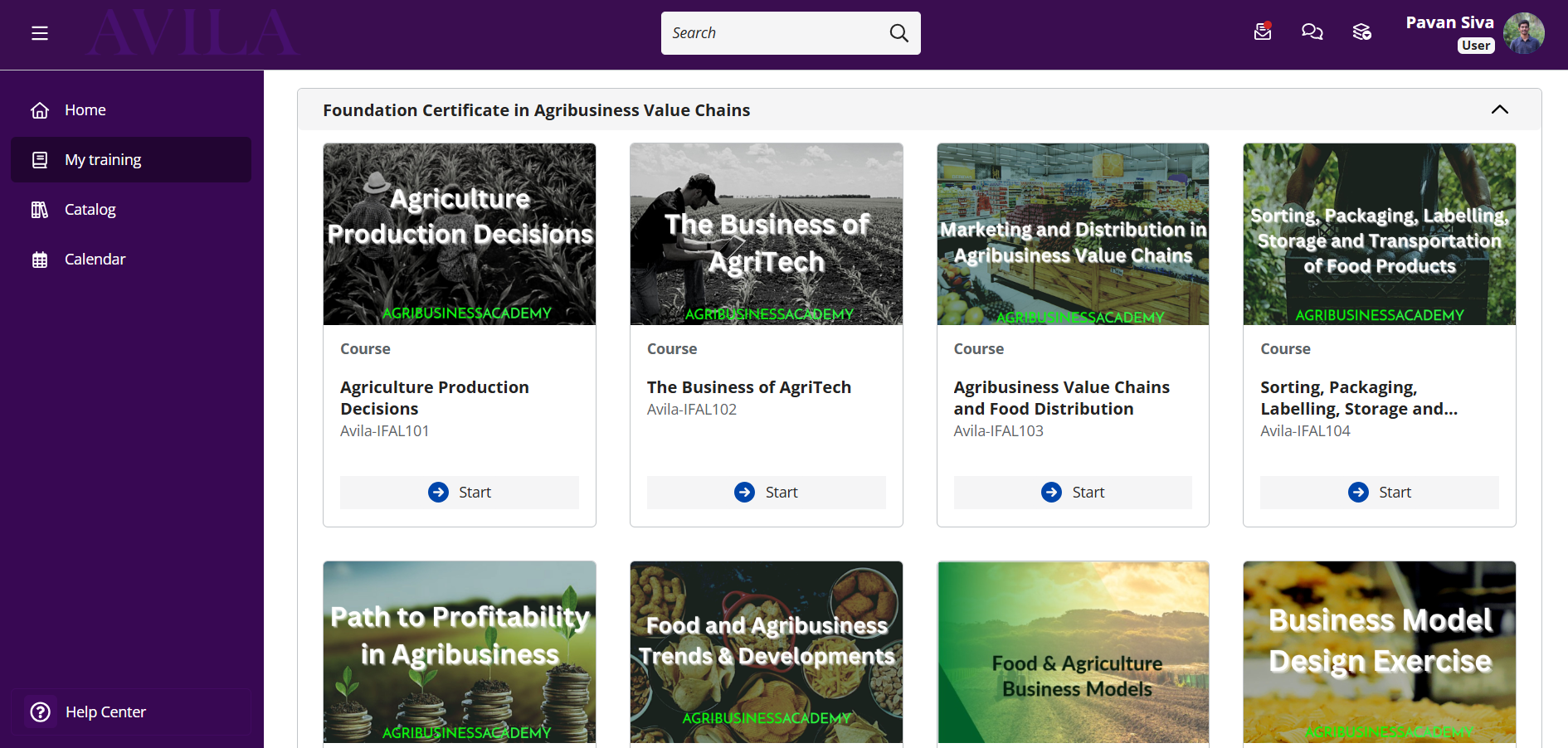
The 14-course structure covers the full agribusiness system, including:
Agriculture Production Decisions
The Business of Agritech
Marketing and Distribution in Agribusiness Value Chains
Sorting, Grading, Packaging, Labeling, and Transportation of Food Products
Path to Profitability in Agribusiness
Food and Agribusiness Trends and Developments
Food and Agriculture Business Models
Business Model Design Exercise
Digital Agriculture for Smallholder Farmers
The Business of Organic and Regenerative Agriculture
The Business of Urban Agriculture
The Business of Alternative Foods
Basics of Accounting and Finance
Value Chain Financing in Agribusiness
This breadth is what makes the certificate especially useful for professionals who want a systems-level understanding rather than isolated functional knowledge.
Flexible, Practical, and Designed for Working Professionals
One of the biggest strengths of this program is its flexible and application-driven delivery model.
Self-Paced Learning
Learn anytime, anywhere—designed for working professionals balancing career growth with existing responsibilities.
Assessments That Build Thinking
Each course includes assessments that go beyond recall and focus on application, interpretation, and decision-making.
Reflection Exercise
A structured reflection component allows learners to:
Apply concepts to real business situations
Solve job-role-specific challenges
Develop strategic clarity
AI Coaching for Continuous Support
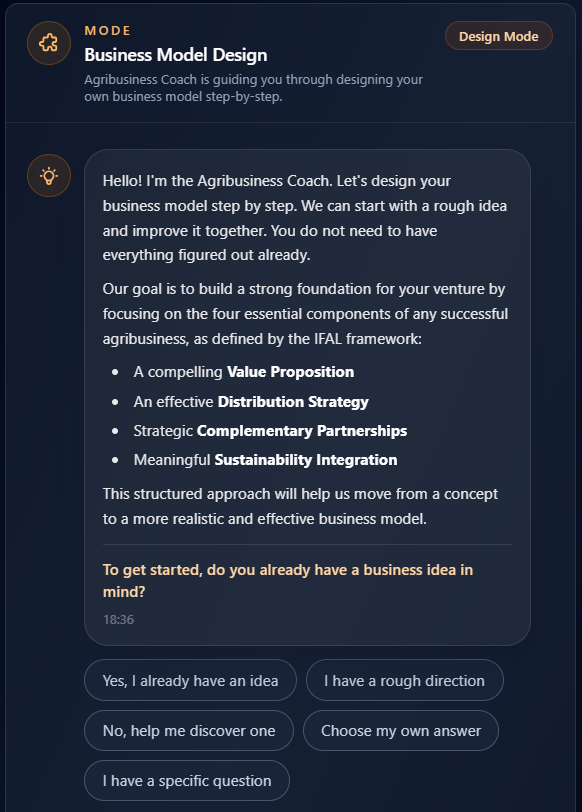
Learners also benefit from an Expert Powered Agribusinesscoach.ai that helps them ask questions, clarify concepts, explore case-based situations, and connect course learning to real job-role or business dilemmas. This makes the pathway not only flexible, but also more guided, practical, and application-focused—especially for professionals who want to turn learning into better decision-making.
Learning Platform
Expert powered AgribusinessCoach.AI
Who Is This Program Designed For?
For Professionals
Move beyond execution into strategic roles
Understand how your decisions affect the full agribusiness system
For Founders and Entrepreneurs
Design stronger, more scalable agribusiness models
Identify opportunities across production, distribution, and market positioning
For Organizations, HR Teams, and L&D Leaders
Build teams with cross-functional understanding
Improve decision-making across departments
Enable workforce transformation at scale
For Students and Career Switchers
Build foundational knowledge in food systems and agribusiness
Develop practical insight into how value chains actually work
From Learning to Real Business Impact
The true value of this program lies in its ability to bridge:
👉 Knowledge → Application → Decision → Impact
It is not just about completing courses—it is about:
Making better decisions
Improving business outcomes
Building long-term strategic capability
Understanding how value is created and captured across the food system
Why This Matters Now
As food systems become more complex—with sustainability pressures, supply chain disruptions, technology shifts, and evolving consumer demand—there is a growing need for professionals who can:
Think across the value chain
Adapt to change
Design resilient and profitable systems
Connect operations with strategy
And that capability starts with understanding how the system works.
Final Thought
Agribusiness is evolving rapidly.The question is: are your capabilities evolving with it?
If you want to move beyond functional expertise and start thinking like a strategist—
👉 Understanding agribusiness value chains is the first step.
The Foundation Certificate in Agribusiness Value Chains offers a practical pathway to build that capability.
Call to Action
Explore the Foundation Certificate in Agribusiness Value Chains by Avila University, powered by IFAL, and start building the skills that matter in today’s global food system.
Learn more here:https://www.avila.edu/foundation-certificate-in-agribusiness-value-chains/
FAQ Section
What is an Agribusiness Value Chains Certificate?
An Agribusiness Value Chains Certificate is a structured learning program that helps learners understand how value is created across food and agriculture systems, from farming and post-harvest management to distribution, business models, and financing.
Who should take an Agribusiness Value Chains Certificate?
It is relevant for agribusiness professionals, founders, students, career switchers, HR leaders, and organizations that want stronger cross-functional understanding across the food system.
What do you learn in an Agribusiness Value Chains Certificate?
Learners explore production decisions, agritech, marketing and distribution, post-harvest systems, business model design, sustainability, accounting, and value chain financing.
Why is value chain thinking important in agribusiness?
Because value in agribusiness is created across interconnected decisions. Better value chain thinking helps improve profitability, resilience, efficiency, and strategic decision-making.