
Oats Overnight Business Model: Turning Rushed Mornings into a High-Protein Habit
The Oats Overnight Story & Market Opportunity
Brian Tate did not start as a food entrepreneur; he spent over a decade as a professional poker player, living a lifestyle where early meetings and clean, protein-rich breakfasts were not exactly compatible. Rushing between sessions and travel, he wanted something that was fast, filling, high in protein, and didn’t require a stove, blender, or drive-thru detour. When he could not find a ready-made product that matched this need, he began mixing high-protein oatmeal in his own kitchen, leaving it in the fridge overnight and drinking it the next morning. That simple hack became the seed of Oats Overnight in 2016.
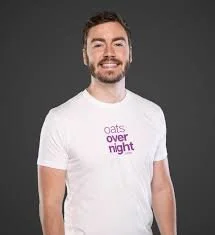
Brian Tate - Founder of Oats Overnight
From his kitchen table in Arizona, Tate bootstrapped early production, iterating flavors based on feedback from friends and early customers before building his first facility. Today, Oats Overnight has over 2.4 million customers, a 300+ person team, and self-operated manufacturing facilities in Arizona and Ohio, a scale that reflects both operational discipline and a strong brand–community fit. The core product is “oatmeal you drink”: single-serve pouches of high-protein oats designed to be mixed with milk, refrigerated overnight, and consumed straight from a shaker bottle—“spoon-free” by design for commuters, gym-goers, parents, and remote workers who want breakfast solved before the day begins.
The broader overnight oats market is expanding rapidly as consumers seek convenient, high-fiber, high-protein, and lower-sugar breakfast options. Global estimates suggest the overnight oats segment was valued around 2.4 billion USD in 2024 and could reach roughly 6.1 billion USD by 2033, growing at a CAGR of about 10–11%, driven by health, convenience, and sustainability trends. Health-conscious consumers increasingly favour whole grains, clean labels, and low-glycemic options, while retailers and foodservice operators expand offerings to capture this demand. Oats Overnight’s focus on high protein, gluten-free, non-GMO, and “No BS” ingredients (no artificial colors, sweeteners, or preservatives) positions it squarely within these macro trends, giving its business model strong market tailwinds.
Introducing the IFAL Business Model Framework
At IFAL, business model potential is assessed across four critical elements that must work together for profitable and sustainable growth.
Value Proposition: Defines the core target customer/consumer segment and the key product/service attributes this segment is willing to pay for.
Distribution Strategy: Describes how the product/service reaches the target segment and the revenue model embedded in those channels.
Complementary Partnerships: Captures external alliances—suppliers, manufacturers, technology partners, retailers, and others—needed to deliver the value proposition at optimal scale and economics.
Sustainability Elements: Encompasses the economic, social, and environmental outcomes created by the business model, especially how the value proposition and value chain contribute to “People, Planet, Profit.”
Using this lens, Oats Overnight offers a rich example of a digitally native, convenience-first food brand evolving into an omnichannel, manufacturing-led business in a high-growth, health-oriented category.
🎯 Target Segment & Value Proposition
Oats Overnight primarily targets time-poor but health-conscious consumers—knowledge workers, young professionals, parents, students, and fitness-oriented customers—who want a filling, macro-friendly breakfast that requires zero morning prep. These consumers are willing to pay a premium over commodity oats for:
Pre-portioned, high-protein servings (often 20g or more) that support satiety and muscle maintenance.
Spoon-free convenience—just add milk, refrigerate, shake, and drink on the go.
Differentiated attributes include:
Format innovation: Turning oatmeal into a drinkable, on-the-go product with a “shaker bottle plus pouch” ritual that fits commuting, gym, and work-from-home lives.
Nutritional positioning: High protein, high fiber, certified gluten-free, non-GMO, and low glycemic index, with no artificial sweeteners, colors, or preservatives.
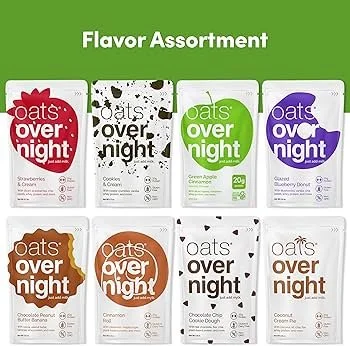
Flavor strategy: Dessert-inspired flavors—Birthday Cake, Glazed Blueberry Donut, Cookies & Cream, S’mores, Oatmeal Raisin Cookie—co-created and prioritized with a highly engaged online community.
Risk-reversal guarantees: Free shaker bottle on the first order, money-back and “Love it or Swap it” guarantees that reduce trial anxiety and increase subscription conversion.
This combination turns a staple commodity (oats) into a branded ritual that commands strong loyalty and repeat purchase behaviour, especially via direct-to-consumer subscriptions.
🛒 Distribution Strategy
Distribution is central to Oats Overnight’s economics and brand story. The company began as a digitally native, direct-to-consumer (DTC) brand, using its website and social channels to acquire customers, ship starter kits with shaker bottles, and build recurring revenue through subscriptions. DTC enables:
Control over storytelling, education (“mix, fridge, shake”), and flavor launches.
First-party data on flavor preferences, reorder patterns, and price sensitivity, which then shape product development and marketing.
As the brand grew, it added major retail channels such as Target and Costco, giving it national shelf presence and instant credibility beyond the digital niche. Retail packs often target trial and impulse purchases, while DTC remains powerful for customization (e.g., build-your-own bundles) and deeper customer relationships.
Looking ahead, potential future distribution avenues include:
Foodservice and on-the-go outlets: Gyms, university campuses, corporate cafeterias, and coffee chains that want a premium, ready-to-prepare breakfast option requiring minimal labour.
International expansion: Urban markets in Asia-Pacific and Europe where demand for convenient, health-oriented, whole-grain breakfasts is rising quickly.
Digital marketplaces: Deeper integration with Amazon and specialty e-commerce platforms, while carefully managing pricing and brand positioning to avoid commoditisation.
Done well, this creates an omnichannel flywheel: retail builds awareness and trial, online channels capture loyalty and lifetime value.
🤝 Complementary Partnerships
Complementary partnerships multiply Oats Overnight’s ability to design, manufacture, and distribute at scale while keeping close to its community. Early on, the company relied on co-packers and flavour suppliers, but it now self-produces over 50 flavours in its own facilities in Arizona and Ohio, giving it tight control over quality and innovation cycles. Key partnership dimensions include:
Ingredient suppliers: Certified gluten-free oats, whey and pea protein suppliers, and providers of functional add-ins like chia, flax, hemp hearts, and premium cocoa support the “No BS” promise and nutritional claims.
Retail partners: Target, Costco, and other chains that give access to mainstream shoppers, shared promotion, and category visibility alongside established cereal brands.
Capital and strategic partners: Investment partners such as EHI (2024) provide growth capital and strategic support in scaling operations, marketing, and distribution while sharpening positioning in the “craveable, protein-rich” space.
Community & creator ecosystem: Collaborations with gaming communities, influencers, and content creators build brand relevance with younger audiences and sustain engagement around flavor launches and limited editions.
These partnerships allow Oats Overnight to punch above its weight against legacy cereal and bar brands, while keeping its brand voice nimble and digitally native.
🌎 Sustainability at the Core of the Business Model
While Oats Overnight is not marketed as a pure “sustainability brand,” several elements align with sustainability expectations in modern food systems. First, oats themselves have a relatively favourable footprint versus many animal-based breakfast options and some other grains, particularly when considered in terms of land use and input intensity per gram of fiber and complex carbohydrates. Second, the model promotes a planned, at-home breakfast ritual that can reduce reliance on single-serve, heavily packaged convenience foods and drive better portion control.
Operationally, in-house production in Arizona and Ohio gives the company increasing control over sourcing, quality assurance, and potential optimisation of energy use and waste reduction in manufacturing. As it scales, Oats Overnight can strengthen its sustainability profile by:
Prioritising certified sustainable oat and protein suppliers.
Optimising packaging formats for recyclability and material efficiency.
Using data from its DTC channel to better match production with demand, thereby reducing food waste across flavours and SKUs.
From an IFAL standpoint, there is clear alignment with the “People, Planet, Profit” logic: healthier, more convenient breakfasts; potential for lower resource intensity per serving than many hot, animal-heavy morning meals; and scalable unit economics through high-margin, value-added processing.
Oats Overnight Business Model Snapshot
IFAL ElementOats Overnight TodayStrategic OpportunityValue PropositionDrinkable, high-protein overnight oats with dessert-style flavours, clean-label ingredients, gluten-free and low-GI benefits for time-poor, health-conscious consumers. Deepen personalisation (macro targets, plant-only lines) and expand functional benefits (e.g., gut health, energy, specific diets). Distribution StrategyDTC e-commerce with subscriptions plus retail presence at chains like Target and Costco; strong use of social media and community polls for flavor decisions. Grow foodservice and international channels while carefully managing pricing, channel conflict, and brand narrative across touchpoints. Complementary PartnershipsIngredient suppliers, national retailers, strategic investors (e.g., EHI), and creator/gaming communities; in-house manufacturing in AZ and OH. Add co-branded flavours with gyms, nutrition coaches, or wellness platforms; integrate with digital health and meal-planning apps. Sustainability ElementsOat-based, portion-controlled breakfasts; potential for lower footprint than many animal-based or ultra-processed breakfast alternatives; growing control over production. Make sustainability more explicit through sourcing standards, packaging innovation, and transparent metrics communicated via DTC channels.
Strategic Dilemmas in the Oats Overnight Business Model
Even with strong growth, Oats Overnight faces strategic dilemmas typical of fast-scaling food brands:
Scaling the Value Proposition Without Dilution
As the company adds more flavours and formats, complexity increases in procurement, production, inventory, and marketing.
The dilemma: how many SKUs can the system handle before operational friction erodes the “always available, always delicious” promise that underpins repeat purchase?
Price vs. Accessibility in a Premium Niche
High-quality proteins, specialty ingredients, and domestic production drive up costs, placing Oats Overnight well above generic oats or even many RTD shakes.
The dilemma: how to maintain premium positioning and margins while capturing a wider slice of the breakfast market—including more price-sensitive consumers—without trading down the brand.
Distribution at Scale: Omnichannel Tension
Retail expansion boosts reach but can create channel conflicts on pricing, promotions, and assortment between DTC, big-box retail, and online marketplaces.
The dilemma: how to design an omnichannel strategy where each channel has a clear role (e.g., retail for trial, DTC for depth and customisation) without losing brand control or compressing margins.
Manufacturing Focus vs. Strategic Partnerships
In-house facilities provide control and speed but require significant capital and operational expertise.
The dilemma: which parts of production should remain internal and where could strategic co-manufacturing partnerships or regional plants unlock scale and resilience, especially for international growth.
Community-Driven Innovation vs. Portfolio Discipline
Leaning heavily on community votes for flavours and limited editions encourages engagement but can lead to a fragmented portfolio with overlapping or niche SKUs.
The dilemma: how to strike a balance between being “the brand that listens” and enforcing portfolio discipline based on contribution margin, supply chain fit, and long-term positioning.
Sustainability Depth vs. Marketing Claims
Oats Overnight already operates in a relatively sustainability-aligned category, but consumer and retailer pressure for verifiable ESG credentials is rising.
The dilemma: whether to invest heavily in traceable sourcing, life-cycle assessments, and packaging innovation now—or risk lagging behind as competitors differentiate more explicitly on sustainability credentials.
Addressing these dilemmas requires an integrated view of value proposition, distribution, partnerships, and sustainability, exactly the sort of systemic thinking emphasised in IFAL’s Mini MBA programs.
Key Takeaways
Turning a commodity ingredient into a ritualised, high-margin format hinges on a clear value proposition (high-protein, spoon-free oats) and a tightly defined target segment (busy, health-conscious consumers).
Direct-to-consumer foundations give powerful data and brand control, but long-term growth typically requires a thoughtful omnichannel strategy that avoids channel conflict and margin erosion.
In-house manufacturing can be a strategic asset when combined with complementary partnerships in retail, community, and capital, but it also raises questions about focus and scalability across geographies.
Sustainability is baked into the category but must be made explicit—from sourcing to packaging—if the brand wants to stay ahead of tightening expectations from consumers and retailers.
Frameworks like IFAL’s four-component model help founders and managers systematically surface dilemmas around value creation, distribution, partnerships, and sustainability before those frictions become growth ceilings.
Professionals who want to design or scale similar food and agribusiness ventures—whether in breakfast, functional foods, or novel ingredients—can go deeper into these frameworks in the Mini MBA in Sustainable Food Supply Chains and Mini MBA in Food and Agribusiness Leadership from IFAL, These programs focus on building profitable, sustainable business models and reimagining value chains for a world where convenience, health, and sustainability must coexist.