
Which Wich Business Model: How Custom Sandwiches Became a Scalable Franchise Growth Engine
Introduction
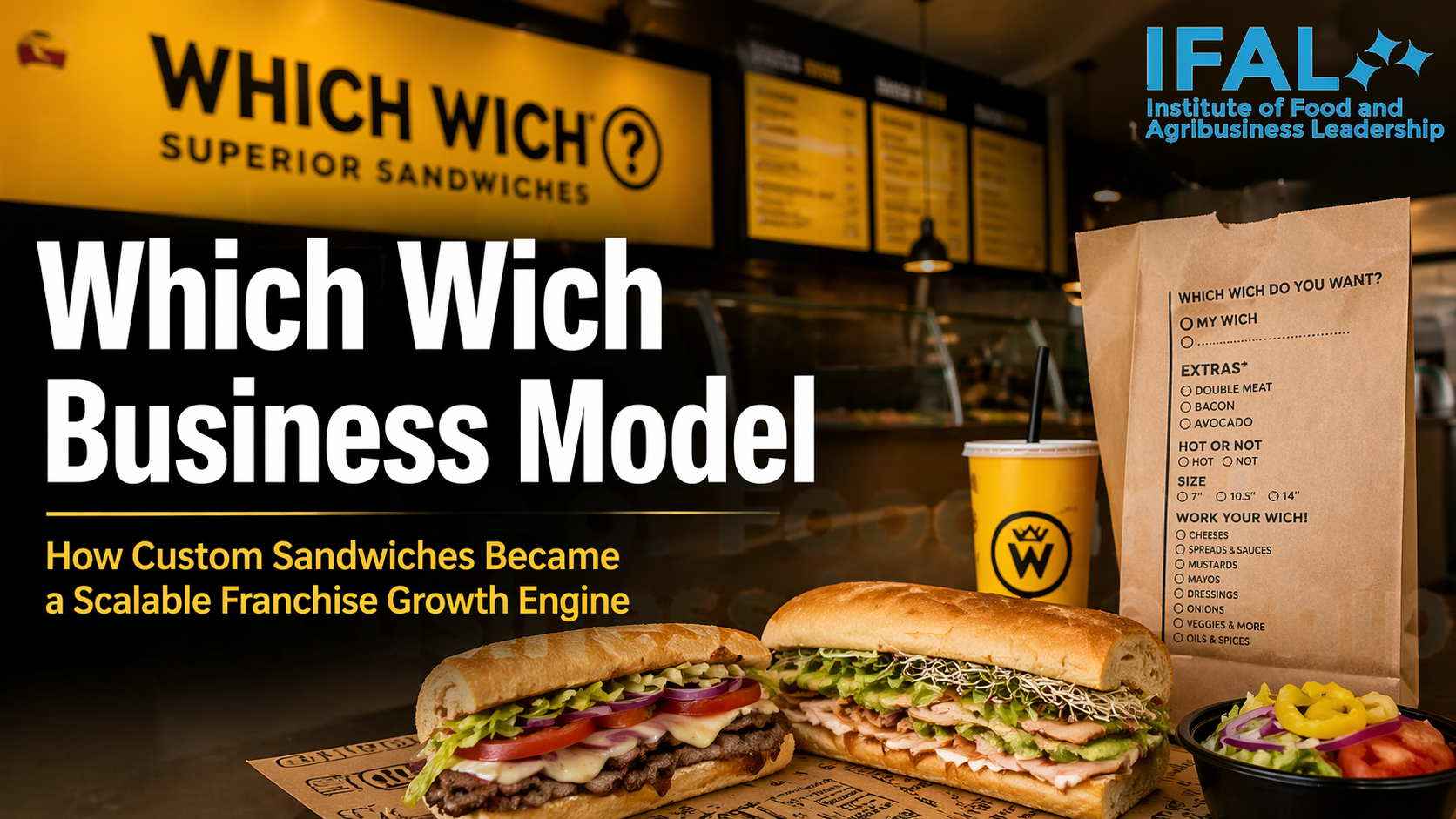
In 2003, entrepreneur Jeff Sinelli opened the first Which Wich in downtown Dallas with a simple but powerful idea: sandwich ordering did not have to feel generic. Instead of a routine counter transaction, Which Wich turned the customer into the designer of the meal. The now-signature bag-marking system made personalization part of the brand experience, helping the company stand out in a crowded fast-casual category.
Sinelli’s timing was sharp. The early 2000s were already seeing consumers shift toward fast-casual dining that promised better ingredients, more control, and a more premium feel than traditional quick-service restaurants. Which Wich entered that market with a proposition that blended convenience with choice: dozens of sandwich combinations, fresh customization, and a playful brand identity built around “vibe.”
The unmet need was clear. Many sandwich chains competed on speed, but fewer made customization feel central to the experience. Which Wich’s model appealed to office workers, students, families, and franchise investors alike: consumers got a tailored meal, while operators got a repeatable format with broad menu appeal.
That opportunity still matters. Consumers continue to expect convenience, digital access, and menu flexibility, while restaurant brands face rising pressure to balance food quality, labor costs, and channel complexity. For Which Wich, the challenge is no longer just differentiation at the counter. It is how to preserve brand distinctiveness while scaling through franchises, nontraditional locations, and changing customer behavior.
At its best, Which Wich sits at the intersection of three enduring trends: personalized food experiences, franchise-enabled growth, and convenience-driven eating occasions. Its business model shows how a brand can turn customization into both a customer promise and an operating system.

Founder image: Jeff Sinelli, Founder and Chief Vibe Officer
Source: Which Wich UK leadership page – https://www.whichwich.co.uk/about-us/chief-vibe-officer/
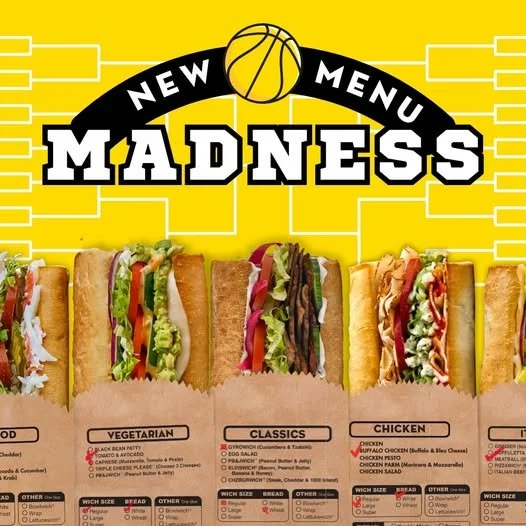
Source: Which Wich FB
IFAL Business Model Framework
At IFAL, business model potential is assessed around four critical elements:
Value Proposition: Defines the core target customer/consumer segment and the key product/service attributes the targeted segment pays for
Distribution Strategy: The revenue model offered to the channels through which the product/service is delivered to the target customer/consumer segment
Complementary Partnerships: External alliances and interdependencies that are critical to produce and deliver the value proposition at optimal scale and profitable unit economics
Sustainability Elements: Economic, Social and Environmental outcomes delivered by the value proposition
Using this framework, Which Wich becomes more than a sandwich chain. It becomes a case study in how a foodservice brand structures differentiation, scales through channels, and manages the operational trade-offs of growth.
Target Segment & Value Proposition
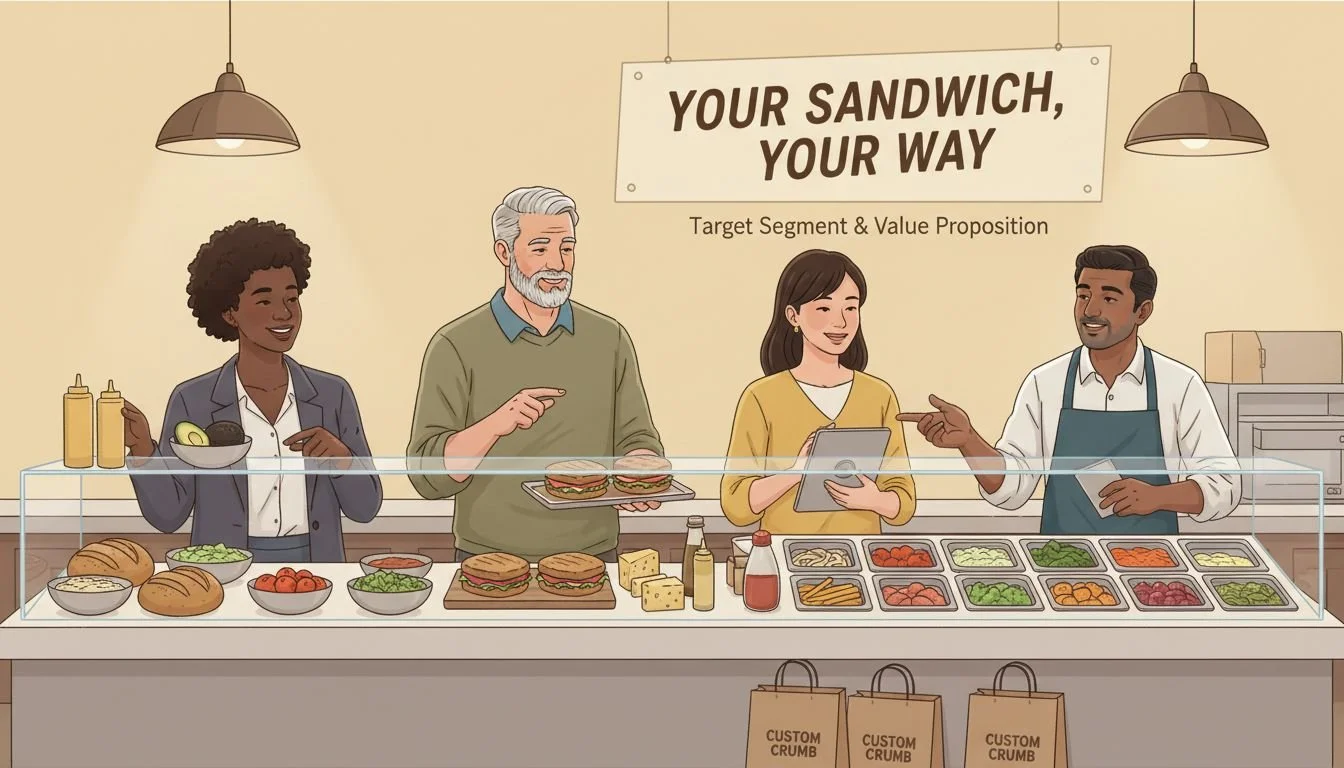
Which Wich serves a broad but very recognizable target segment: consumers who want a fast, personalized, higher-quality sandwich experience without the formality or price point of full-service dining.
Its core customer groups likely include:
Office workers seeking fast lunch solutions
Students and younger consumers who value personalization
Families wanting flexible menu choices
Catering buyers for office and group occasions
Franchisees looking for a recognizable, scalable fast-casual format
What these customers pay for is not just a sandwich. They pay for:
Customization
Convenience
Menu variety
Perceived freshness
A more memorable brand experience
Which Wich’s differentiation comes from the combination of these attributes. The brand is known for its custom ordering format, broad menu range, and upbeat “vibe”-driven identity. In a category where many players compete on similar ingredients, this experience layer matters.
Competitive advantages include:
Strong customization positioning
Brand personality that is more playful than many sandwich rivals
Flexible format for different dayparts and use cases
Appeal across dine-in, takeout, and catering occasions
The challenge, of course, is that customization can also increase complexity. So the value proposition only works if personalization remains easy, fast, and consistent.
Distribution Strategy
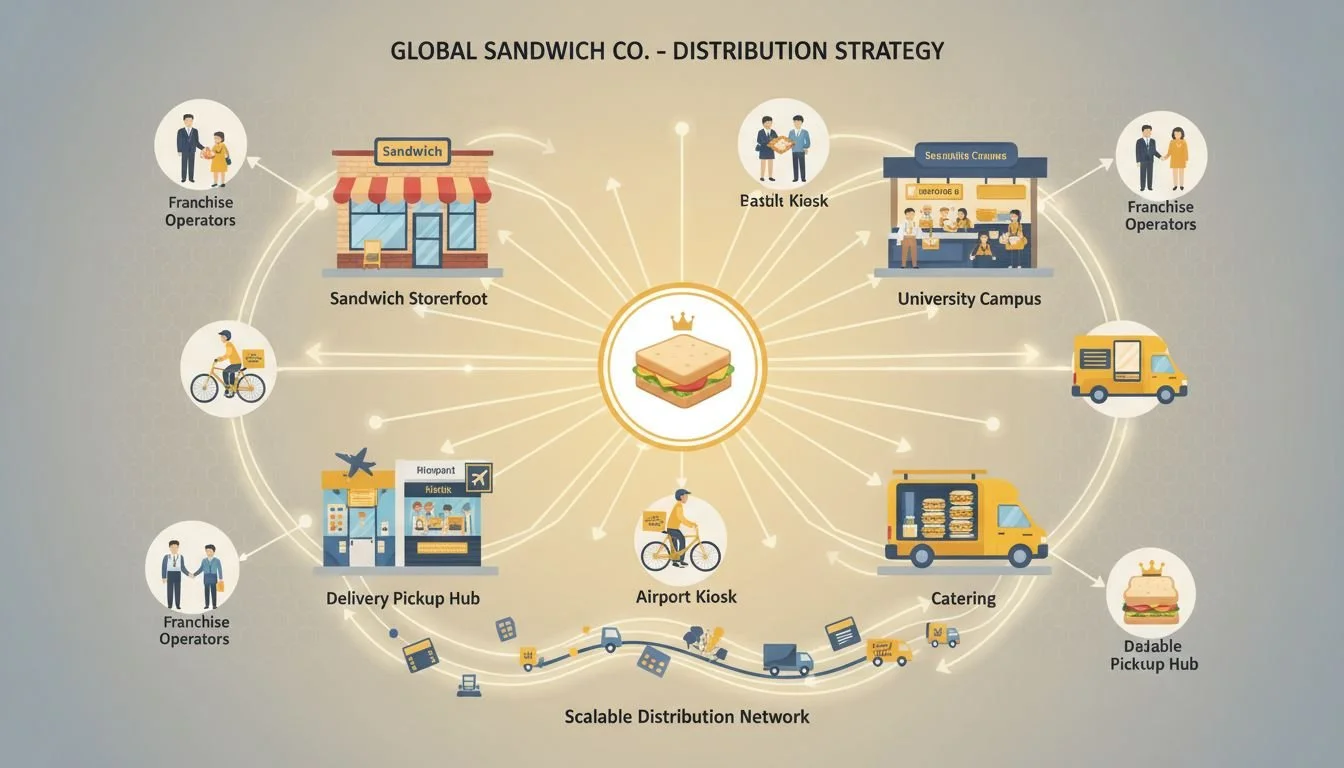
Distribution is where Which Wich’s business model becomes especially interesting. This is not just a restaurant chain selling sandwiches through stores. It is a franchise-driven platform that uses multiple channels to reach customers and multiple formats to reach growth.
Its distribution strategy appears to rest on several layers:
Core channels
Traditional brick-and-mortar restaurants
Franchise-owned outlets
Nontraditional venues such as campuses, airports, hospitals, and retail-adjacent sites
Catering
Takeout and likely third-party/off-premise demand pathways
Revenue logic
For corporate leadership, the business model is built around:
Franchise fees
Royalties
Brand system support
Sales through company-operated locations where applicable
For franchisees, the model depends on:
High throughput lunch and convenience occasions
Repeat local demand
Multi-occasion ordering, including groups and catering
Site-level operational efficiency
This matters because distribution is not only about customer access. It is also about capital-efficient scaling. Franchising allows Which Wich to expand with lower capital intensity than a fully company-owned model, while nontraditional locations allow the brand to capture foot traffic in high-convenience environments.
Future distribution opportunities could include:
Stronger digital ordering integration
Loyalty-led repeat purchase systems
More travel and institutional channels
Smaller-format or hybrid footprints tailored to off-premise demand
The strategic tension is channel consistency. As more demand shifts off-premise, the brand must make sure the customized Which Wich experience does not become diluted.
Complementary Partnerships
Which Wich’s business model depends on more than brand recognition. To deliver its value proposition at scale, it needs a strong network of complementary partnerships.
These likely include:
Franchise partners who execute the brand locally
Food and ingredient suppliers who support menu consistency
Packaging partners that reinforce the branded ordering experience
Real estate and venue partners for nontraditional placements
Technology providers for POS, digital ordering, and delivery integration
Logistics and distribution partners to maintain supply reliability
Training and operations support teams that protect service consistency
Historically, Which Wich has also explored co-branding and adjacent concepts within the broader Sinelli ecosystem. That matters because restaurant growth often depends on ecosystem thinking, not just store count.
From an IFAL perspective, these partnerships are critical because they influence:
Speed of rollout
Unit economics
Quality control
Customer consistency
Ability to adapt formats for different channel environments
In a franchise system, partnerships are not optional add-ons. They are part of the operating backbone.
Sustainability at the Core of the Business Model
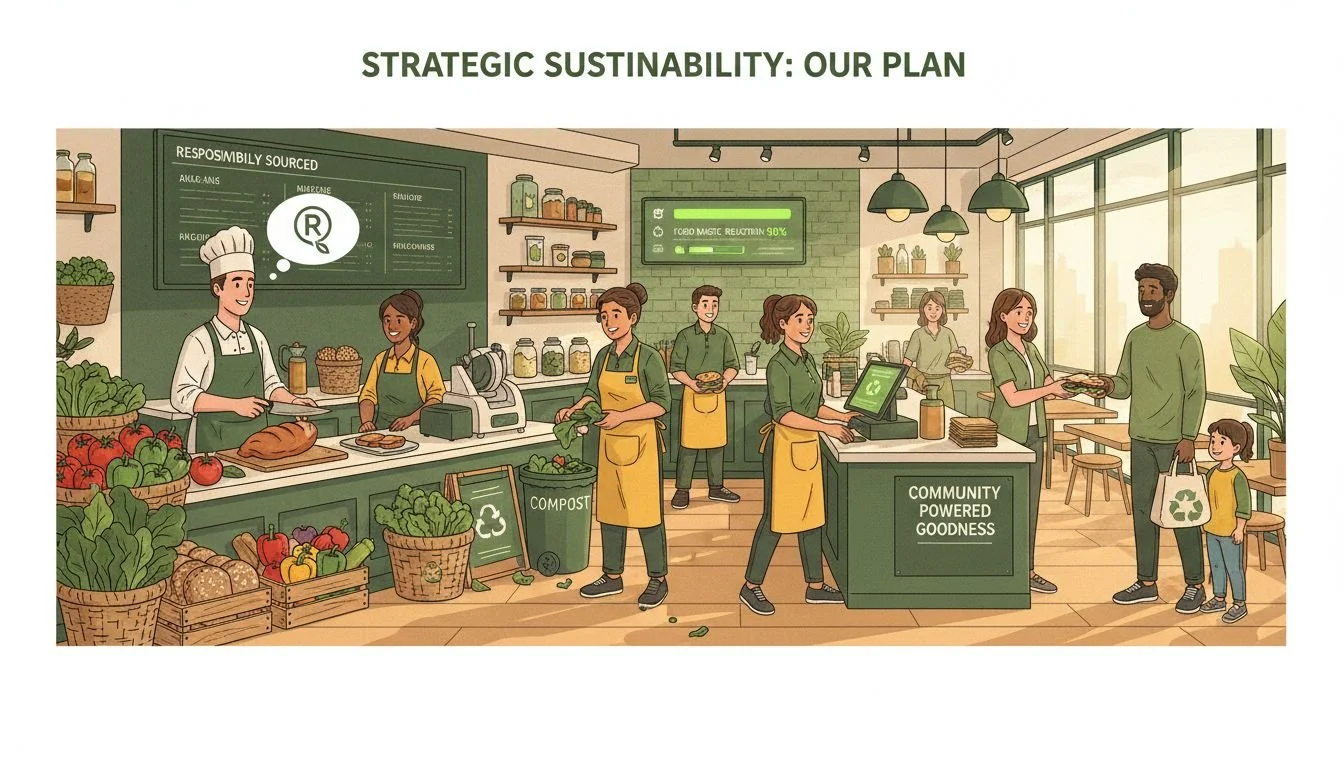
Sustainability in restaurant models is often harder to evaluate than in food manufacturing or agriculture, because the impact is distributed across sourcing, labor, packaging, logistics, and food waste. Still, the IFAL lens is useful because it asks whether the business model creates meaningful economic, social, and environmental outcomes.
For Which Wich, the strongest visible sustainability elements today are likely to be indirect rather than heavily branded.
Economic outcomes
Franchise entrepreneurship creates local business ownership opportunities
Nontraditional formats can increase access to high-traffic demand zones
Menu flexibility may improve revenue resilience across different consumer segments
Social outcomes
Job creation across franchised locations
Community presence through local operators
Catering and accessible menu formats for everyday consumer convenience
Environmental considerations
Foodservice packaging use remains an area of scrutiny
Ingredient sourcing practices and waste management matter increasingly
Operational efficiency, portion management, and supply coordination can reduce waste intensity
This creates an opportunity. In today’s market, food brands that connect convenience with visible responsible sourcing, lower waste, and better packaging choices can strengthen both trust and relevance.
Strategic Dilemmas
Which Wich’s business model is proven in many respects, but scale always brings trade-offs.
1. Protecting customization while maintaining speed
The brand’s value proposition depends on personalized ordering. But too much menu or process complexity can slow service and hurt consistency.
2. Franchise expansion versus brand control
Franchise-led growth is capital efficient, but execution quality can vary across operators and markets.
3. Off-premise growth versus experience dilution
If digital ordering, delivery, and pickup become dominant, Which Wich must preserve the “custom sandwich experience” beyond the in-store bag-marking ritual.
4. Broad menu appeal versus operational simplicity
A wide menu attracts more customers, but can complicate training, inventory, and labor productivity.
5. Nontraditional channel growth versus format fit
Campuses, airports, and hospitals offer traffic, but each environment may require adaptation in labor models, pricing, and menu mix.
6. Partnership dependence versus resilience
The model depends heavily on suppliers, franchisees, and venue partners. Any weakness in that ecosystem can affect customer experience.
7. Sustainability expectations versus current positioning
As consumers and investors increasingly value responsible sourcing and waste reduction, Which Wich may need a clearer sustainability story to stay competitive.
Key Takeaways
Which Wich built a differentiated sandwich brand around customization and personality
Its business model scales primarily through franchising, which improves capital efficiency
The brand’s strongest assets are menu flexibility, recognizable ordering experience, and format adaptability
Distribution is broader than storefront retail, with potential in nontraditional venues and off-premise channels
Franchise and supply-chain partnerships are essential to delivering consistency at scale
Sustainability is an opportunity area where clearer public positioning could strengthen the brand
The biggest strategic challenge is preserving a distinctive customer experience as channels and formats multiply
Continuing the Learning Journey
Want to understand how innovative food businesses create value, build resilient distribution, and scale sustainably across agribusiness and food systems?
Explore Foundation Certificate in Agribusiness Value Chains:
👉 https://www.avila.edu/avila-agribusiness-programs/foundation-certificate-in-agribusiness-value-chains/
References
Which Wich official website: https://whichwich.com/
Which Wich Franchising, About Us / History: https://www.whichwichfranchising.com/about-us/
Which Wich UK, Chief Vibe Officer page: https://www.whichwich.co.uk/about-us/chief-vibe-officer/
Restaurant Business, leadership/growth coverage: https://restaurantbusinessonline.com/leadership/which-wich-elevates-former-franchisee-president-it-preps-growth
NRN, founder-related coverage: https://www.nrn.com/restaurant-segments/which-wich-founder-debuts-burger-concept
1851 Franchise, Jeff Sinelli profile: https://1851franchise.com/founders-to-know-jeff-sinelli-which-wich-2067
Adam Mendler interview with Jeff Sinelli: https://www.adammendler.com/blog/jeff-sinelli/
Which Wich franchising news page: https://www.whichwichfranchising.com/news/
Disclaimer:
This article is for educational and informational purposes only. We are not affiliated with or endorsed by ButcherBox or any company mentioned. All trademarks and images are the property of their respective owners, and readers use this information at their own risk.